Author Recent Posts Rabia Anwaar Latest posts by Rabia Anwaar (see all) Militarization of Strategic Naval gateways and Energy Security – October 12, 2026 The Hague Ruling on the Indus Waters Treaty – September 30, 2026 Expansion of Makkah Joint Defence Agreement – September 30, 2026
It is not the first time ever that Pakistan is playing a mediatory role in easing tensions between the two long-standing adversaries; however, this time the difference lies in its direct, cautious, and responsible approach. It dates to facilitating the secret U.S.-China rapprochement in 1971 to supporting peace efforts in Afghanistan and attempting to reduce tensions between Saudi Arabia and Iran; Islamabad has repeatedly offered its good offices for conflict resolution. Pakistan’s recent mediatory role in the U.S.-Iran conflict marks a significant departure from its previous diplomatic interventions. It is not merely another instance of shuttle diplomacy; rather, it represents a qualitative shift in Pakistan’s diplomatic profile, international credibility, and strategic relevance.
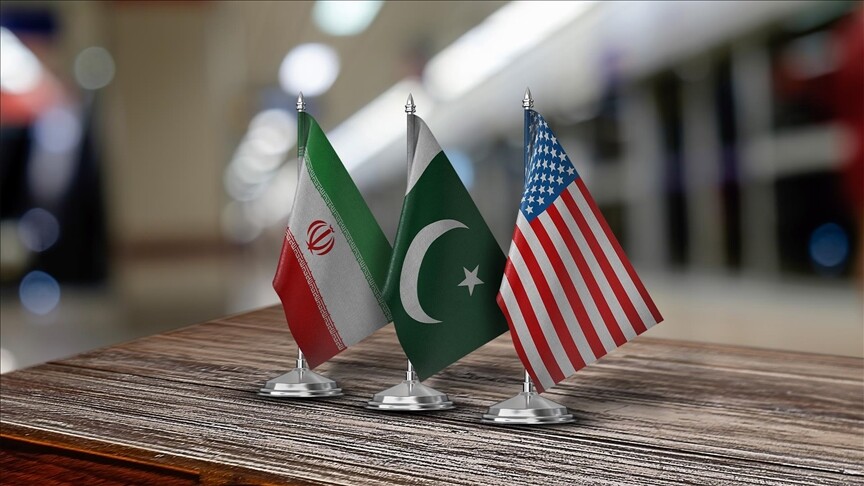
The recent U.S.-Iran peace process culminated in the signing of the Islamabad Memorandum of Understanding (MoU), with Pakistan serving as an acknowledged and applauded mediator between two long-standing adversaries. Pakistan facilitated negotiations that eventually led to a framework agreement aimed at ending hostilities, reopening critical Strait of Hormuz, and facilitating talks to achieve a permanent, long-lasting regional peace. Pakistan’s leadership not only hosted and facilitated discussions but also formally endorsed the agreement as a mediator. This development is unprecedented in Pakistan’s contemporary diplomatic history.
What makes this mediation different from Pakistan’s previous efforts is, first and foremost, the nature of the parties involved. Historically, Pakistan has mostly mediated in conflicts where it possessed direct strategic stakes or where its influence was limited to one side. In Afghanistan, for instance, Pakistan’s role was often viewed through the prism of its own security concerns. Similarly, its attempts to facilitate dialogue between Saudi Arabia and Iran were constrained by perceptions that Islamabad leaned more toward one side of the regional divide.
In contrast, the U.S.-Iran conflict placed Pakistan in the middle of two states with which it enjoys fundamentally different yet important relationships. The United States remains a major global power with longstanding security and economic links to Pakistan. Iran, meanwhile, is a neighboring country with shared borders, cultural ties, and strategic importance for regional stability. Successfully engaging both sides required Pakistan to demonstrate a level of diplomatic neutrality that many observers previously doubted it could maintain.
Pakistan showed up as a direct, influential mediator. Unlike earlier mediation efforts that were largely informal or behind-the-scenes, Pakistan’s role in the U.S.-Iran talks was publicly recognized. During the U.S.-China rapprochement of the early 1970s, Pakistan served as a cautious facilitator, but the diplomatic spotlight remained on Washington and Beijing. Likewise, in Afghanistan, Pakistan often acted as a facilitator rather than a formally acknowledged mediator. The Islamabad MoU is different as Pakistan emerged as an internationally recognized intermediary. Statements from both diplomatic and media sources repeatedly highlighted Pakistan’s role in bringing the parties together and sustaining negotiations during critical moments. Reuters described the process as a product of “high-wire diplomacy,” which highlights the central role played by Pakistan’s political and military leadership.
The other distinction lies in the geopolitical context. Pakistan’s earlier mediation efforts often took place in a unipolar or regionally confined environment. Emerging and middle powers are gaining prominence as mediators because major powers are often viewed with suspicion by rival camps. In this changing environment, Pakistan’s mediation reflects the emergence of what scholars call “middle-power diplomacy.” Pakistan may not be considered a full-fledged middle power status, but rather than aligning exclusively with one bloc, Islamabad sought to maintain working relationships with multiple actors, including the United States, Gulf states, and Iran.
Pakistan’s mediation in the U.S.-Iran conflict carried significant global economic implications. Looking at the previous Pakistani mediation initiatives, they were primarily focused on regional security concerns. The U.S.-Iran conflict, however, directly affected global energy markets, maritime trade routes, and international economic stability. The Strait of Hormuz, through which a substantial portion of the world’s oil supply passes, became a focal point of negotiations. The reported reopening of maritime routes and de-escalation measures gave Pakistan’s diplomatic intervention consequences extending far beyond South Asia or the Middle East. This global dimension also enhanced Pakistan’s international visibility. This successful mediation could improve Pakistan’s diplomatic standing, attract investment opportunities, and strengthen its reputation as a responsible stakeholder in international affairs. Although diplomacy alone cannot solve Pakistan’s structural economic challenges, it can generate political capital that was largely absent in previous mediation attempts and hold potential for attracting more FDI and opening new avenues for economic cooperation between Pakistan and the world.
The essence of Pakistan’s diplomatic achievement lies in the implementation of the Islamabad MoU. The history of international diplomacy is filled with accords that generated optimism but later collapsed under political pressures. The U.S.-Iran agreement still faces significant challenges related to Israel’s attack on Lebanon, sanctions, and mutual distrust. Pakistan’s reputation as a mediator will ultimately depend on whether the peace process endures. Yet even with these caveats, the significance of Pakistan’s role cannot be understated. Unlike its previous mediation efforts, this intervention combined neutrality, international recognition, strategic balancing, and global economic relevance. It demonstrated that Pakistan could move beyond being merely a frontline state in geopolitical contests and instead position itself as a facilitator of dialogue between adversaries.
The lesson driven from this achievement is that Pakistan’s diplomatic value in the twenty-first century may increasingly derive not from its ability to choose sides but from its ability to bring opposing sides together. In a world marked by growing polarization, countries capable of fostering dialogue occupy a unique and influential space. The U.S.-Iran mediation suggests that Pakistan may finally be learning how to leverage that space effectively. If sustained, this role could mark the beginning of a new chapter in Pakistan’s foreign policy, one defined less by geopolitical dependency and more by diplomatic agency.

- Militarization of Strategic Naval gateways and Energy Security - October 12, 2026
- The Hague Ruling on the Indus Waters Treaty - September 30, 2026
- Expansion of Makkah Joint Defence Agreement - September 30, 2026