Author Recent Posts Mahmood ul Hassan Latest posts by Mahmood ul Hassan (see all) Did Pakistan Overestimate Its Influence over the Taliban After the Doha Agreement? – September 4, 2026 Is Pakistan Prepared for the Economic Costs of a ProlongedUS–Iran War? – September 4, 2026 Can the Makkah Joint Defence Agreement Deter Conflict Without Increasing
The renewed Iran–US conflict was not simply a repeat of the opening campaign. Initially, it was based on the expectation that military destruction would weaken Iran’s political system and force change to bring a regime favorable to the US, while the renewed conflict became a struggle over bargaining power, maritime pressure and preferable settlement terms for both parties. At the beginning of the conflict, leadership attacks and President Trump’s statements encouraging Iranians to take control of their government suggested that regime change, or at least serious weakening of the political system, was expected, but Iran proved this expectation wrong and showed great resilience. US and Israel caused major destruction in Iran. Senior leaders, including the supreme leader, were killed, the command system came under severe pressure and military capabilities were badly damaged. But the Iranian authorities replaced lost officials, and its main institutions continued to function and survived. US could claim military success, but it could not turn that success into political collapse. The campaign weakened the state, but it did not break it.
Iran also showed that the cost of war would not remain inside its borders. It could not match the US in direct military power, but it could attack US interests and bases in Gulf countries and put commercial shipping under pressure. Around one quarter of global maritime oil trade normally passes through the Strait of Hormuz. Iran did not need to defeat the US Navy. It only needed to create enough danger to discourage shipping and raise the cost for US to continue the war. This also increased the personal political cost for Trump as mid-term elections were approaching and public dissatisfaction was growing, this gave Iran enough leverage to resist.
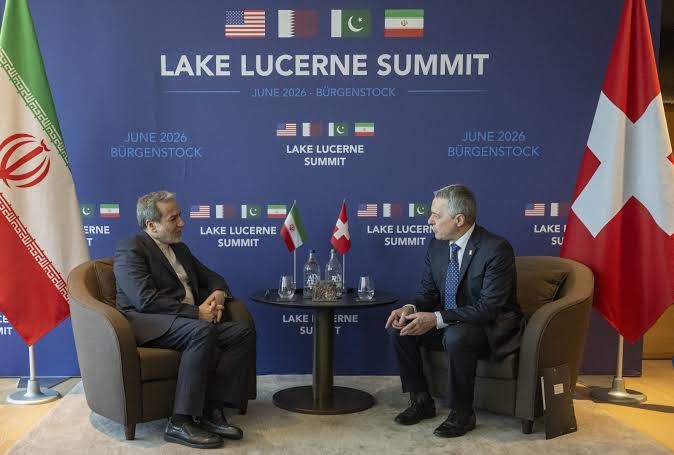
These pressures helped Pakistan broker a ceasefire, mediate direct US–Iran talks in Islamabad and, eventually, in June, the two sides signed the Islamabad MOU after continued Pakistani and Qatari mediation. This established a framework for further talks, a 60-day process and a direct communication line around Hormuz. But the main disagreements were delayed, not solved. The US wanted Iranian concessions and the Strait of Hormuz to be completely open before giving any economic relief, while Iran did not want to give up its remaining leverage
only in return for promises. Israel was not part of the negotiations, while continued bombing and aggression against Lebanon made the MOU very fragile.The issue of Hormuz was not only about keeping the strait open, but also about who would control the conditions of passage. The US argued that Hormuz is an international route and commercial ships should pass without Iranian permission, restrictions or payment because allowing Iran to control passage would give it permanent leverage over global trade and Gulf countries. Iran argued that it is the main coastal state, that its own security was under attack and that it could not be expected to give up its strongest remaining leverage while US strikes and the blockade continued. From the Iranian point of view, reopening the strait without guarantees would allow the US to gain its main demand while keeping pressure on Iran. The US position on free passage was stronger for commercial shipping, but its blockade and continued strikes weakened its claim that it wanted only stability. Iran had a reasonable security concern and did need guarantees, but attacking commercial ships and trying to control passage made its position harder to defend. This was why the real disagreement was not simply whether Hormuz should open, but which side would move first and what it would receive in return.
This environment of mistrust culminated when conflict returned in July. Commercial ships tried to pass through the Strait of Hormuz from the Omani side without coordinating with Iran, and in return they were attacked. In response, the US resumed strikes and a naval blockade against Iran, as both parties accused each other of violating the MOU. Unlike the first campaign, Israel did not directly take part in the renewed American bombing, although it remained involved in the wider conflict. The struggle was now less about bringing down Iran’s political system, changing the regime and destroying its nuclear capability, and more about free passage in Hormuz, face-saving for the US, and controlling settlement terms to get a preferred exit for both parties. The US was trying to turn military superiority into political concessions, while Iran was trying to prevent US from dictating the final terms and use its leverage as much as it could. Recent developments like Iranian strikes on US bases in Jordan, US–Saudi strikes in Iraq, and Houthi attacks on Saudi oil facilities and Red Sea shipping showed that the conflict had broadened and become much more volatile.
Pakistan is directly affected by this conflict. According to the IMF, 81 percent of Pakistan’s fuel imports come from GCC countries, while 55 per cent of its remittances come from the same region. A prolonged war would raise fuel and transport costs, increase inflation and place further pressure on Pakistan’s balance of payments. Pakistan is also Iran’s neighbour and a
close partner of Gulf countries. Its neutrality must protect its national interest rather than mean political inaction.
Pakistan should not simply call for another broad round of negotiations. It should first work with Qatar and other partners like China to restore the maritime part of the Islamabad framework and resolve its grey areas. The priorities should be safe passage for commercial ships, direct communication and quick investigation of attacks. US should state the conditions for ending the blockade and strikes. Iran should commit to safe passage and use its influence to prevent attacks on commercial ships and Gulf states by its allied groups, such as the Houthis. Pakistan should also urge US and its partners to avoid actions that may widen the conflict. Nuclear and sanctions talks can continue separately. This would not solve the whole conflict, but it could reduce the risk that every incident at sea begins another round of bombing.
The opening campaign tested whether military destruction and the elimination of leaders could force political change inside Iran. The renewed conflict became a struggle over bargaining power, maritime pressure and settlement terms. The US retained overwhelming military power. Iran retained enough power to disrupt the region and broaden the costs of war for US. Until both realities are addressed, neither continued bombing nor another unclear agreement is likely to produce a stable outcome.

- Did Pakistan Overestimate Its Influence over the Taliban After the Doha Agreement? - September 4, 2026
- Is Pakistan Prepared for the Economic Costs of a ProlongedUS–Iran War? - September 4, 2026
- Can the Makkah Joint Defence Agreement Deter Conflict Without Increasing Regional Tensions? - September 4, 2026