Author Recent Posts Abubakar Saeed Latest posts by Abubakar Saeed (see all) INDUS WATER TREATY AND ITS LEGACY – July 17, 2026 IRAN’S FROZEN ASSETS AND NUCLEAR ISSUE:REFRAMING OF US-IRAN REALTIONS – July 17, 2026 THE FUTURE OF PAKISTAN INDIA RELATIONSHIP – June 24, 2026
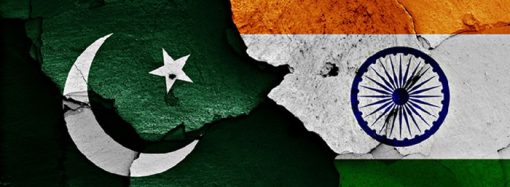
Empires and states throughout history had feuds for centuries yet shared a prosperous future. In Europe, France and Germany have fought many battles over the centuries, including the Franco-Prussian War, World War I, and World War II. Yet, they conciliated and became the key architects of the European Union. Today, they are the closest economic and political collaborators in the EU. A contradictory example resides within the South Asian region; Pakistan and India, with no hopes of reconciliation. Both have fought multiple wars including the 1948 skirmishes in the princely state of Azad Jammu and Kashmir, the 1965 war, the 1971 war, the Kargil war, and the most recent; May 2025 war. As an aftermath of the recent war in 2025, there has been a complete halt in the diplomatic ties, airspace permissions, and cross border trade with no possible room left for reconciliation. This stalemate is result of continuous anti Pakistan ambitions of the far-right government of BJP in India. The Modi administration functions based on the Hindutva ideology which defines the Indian culture under the umbrella of Hinduism. According to this, India perceives Pakistan as its historical adversary. BJP also functions on the right-wing politics and a populist approach, spreading hatred against Muslims since Muslims ruled the Sub-continent, which they claim to be the land of Hindus, for centuries. Post Marka-e-Haq, the future of the relationship between Pakistan and India has multiple dimensions which could potentially affect or completely change the dynamics of the whole South Asian Region.
India has over the years accused Pakistan of hosting terrorists which conduct operations in the Indian occupied Kashmir. Subsequently, after almost every incident, India has blamed Pakistan and used it as excuse to stage false flag operations. The surgical strikes after Uri attack 2016, Balakot strikes after the Pulwama incident in 2019, and the recent 2025 Pahalgam incident which triggered a crisis between India and Pakistan. On 7 May 2025 India conducted operation Sindoor, targeting different areas within Pakistan. Pakistan retaliated with a military operation against India which further escalated the tensions between both. India wanted to engage Pakistan in a limited warfare such as for longer time to which Pakistan responded with its full military might.
It is highly unlikely that both the countries involve in another direct confrontation due to Pakistan’s new policy. Pakistan adopted the full spectrum deterrence doctrine which meant any attack on the sovereignty of Pakistan would be dealt with a full-scale nuclear response. The full spectrum deterrence is neither no-first use nor first-use policy, it is deterrence tactics which Pakistan has used to deter any external aggression specifically from Indian side. This approach by Pakistan raised serious concerns of escalation within the region, which made regional powers and the USA to intervene for mediation between Pakistan and India. This approach has left a significant mark, and a full stop to Indian policy limited warfare, such as surgical strikes against Pakistan.
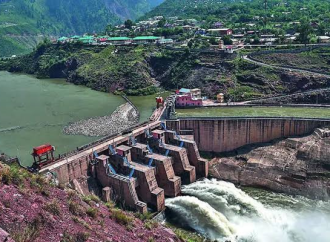
After the 2025 warfare, India has changed its approach towards Pakistan from direct military confrontation to investing in its proxies in the region. India is also investing in Afghanistan’s hydro power projects and construction of dams. Afghanistan, with Indian funding and support has started building a dam over river Kunar. This dam is a serious concern for Pakistan as Kunar River contributes around 70% of the total volume in the river Kabul. Shortfall of water volume in the river Kabul will lead to agricultural threats for Pakistan’s Peshawar and Nowshera region. Warsak Hydroelectric Power Station in the Peshawar district depends heavily on the downstream steady flow of the Kabul River. If the flow gets disrupted, there could also be an energy shortfall. These investments further deepen the environment of mistrust between both adversaries, which could lead to confrontation again.
There could be a possible direct confrontation between Pakistan and India if the Indus Water treaty is not restored. On 23rd April 2025, India unilaterally held Indus Waters Treaty (IWT) in abeyance, which is illegal according to the international law. Indus water treaty is a lifeline for Pakistan’s energy and agriculture sector. Any disruption in the flow of water causes extreme water scarcity in Pakistan. It has been made clear by Pakistan that if done so again by India, it will be considered an act of war, and that Pakistan will attack India’s key infrastructure blocking the downstream flow of the rivers.
The future of Pakistan India relationship resides in the hands of both the countries. Both need to realize the importance of cross border trade and diplomatic connectivity. Trade diplomacy can be used as a tool to revive the lost cause of good bilateral relations between India and Pakistan. By assisting each other, both could progress, contributing to the strengthening of the South Asian region. Regional organizations provide a very effective platform for easing hardened relationships between the states. SAARC should be used as an international forum to discuss issues between India and Pakistan and resolve them with external mediation if required. One of the core reasons behind the failure of SAARC is intense relationship between Pakistan and India. Good bilateral relations would also benefit the functioning of SAARC, bringing stability within the South Asian region.

- INDUS WATER TREATY AND ITS LEGACY - July 17, 2026
- IRAN’S FROZEN ASSETS AND NUCLEAR ISSUE:REFRAMING OF US-IRAN REALTIONS - July 17, 2026
- THE FUTURE OF PAKISTAN INDIA RELATIONSHIP - June 24, 2026