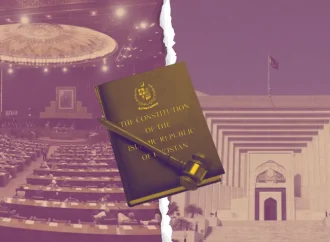
Article 239 of the Constitution of Pakistan forms the constitutional amendment provision, whereby Parliament can make changes to the very constitution that has provided it with its powers. No other constitutional provision has had as much controversy associated with it. This is because it lies at the junction of two conflicting constitutional doctrines: Parliamentary SovereigntyREAD MORE
The Anti-Terrorism (Amendment) Bill, 2026, passed by the Punjab Assembly, raises a well-known doctrinal question in counterterrorism law: the extent of the trade-off between procedures to safeguard justice-delivery staff and the defendant's right to a fair trial. This legislation was adopted through an opposition boycott and a controversial quorum; however, its provisions are more significant.READ MORE
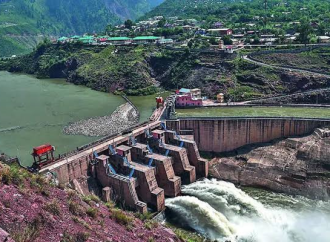
The Permanent Court of Arbitration’s (PCA) decision puts legal rules above politics, making it clear that countries cannot unilaterally suspend an international treaty even during armed conflicts. The award by PCA of rejecting India’s attempt to hold the IWT ‘in abeyance,’ the Court reflected that on India’s move that it is not a valid legalREAD MORE
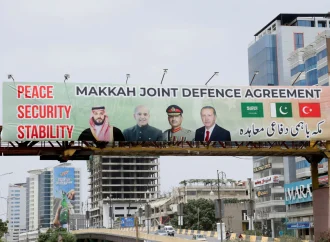
The future of the Makkah Joint Defence Agreement should not be determined by how effectively it can transform a political commitment into a credible regional security architecture. The need for expansion arises from the changing nature of threats confronting the three founding members, Saudi Arabia, Pakistan and Türkiye. The agreement signed in Al Safa Palace,READ MORE
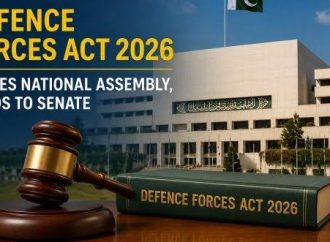
The Defence Forces of Pakistan Act, 2026 (Act No. XLVII of 2026) marks a significant revision of the command structure of Pakistan's armed forces in decades. The piece of legislation was formally passed on August 20. It has retrospective effect from November 13, 2025, meaning the law applies from the date the 27th Constitutional AmendmentREAD MORE
Pakistan expected a lot and probably overestimated its expectation and influence over Taliban after the 2020 Doha Agreement. Pakistan had understandable reasons to expect a better security relationship. It had helped the peace process move forward and maintained longstanding ties with Taliban leaders. The Doha Agreement committed the Taliban to preventing Afghan territory from beingREAD MORE