Author Recent Posts Abubakar Saeed Latest posts by Abubakar Saeed (see all) INDUS WATER TREATY AND ITS LEGACY – July 17, 2026 IRAN’S FROZEN ASSETS AND NUCLEAR ISSUE:REFRAMING OF US-IRAN REALTIONS – July 17, 2026 THE FUTURE OF PAKISTAN INDIA RELATIONSHIP – June 24, 2026
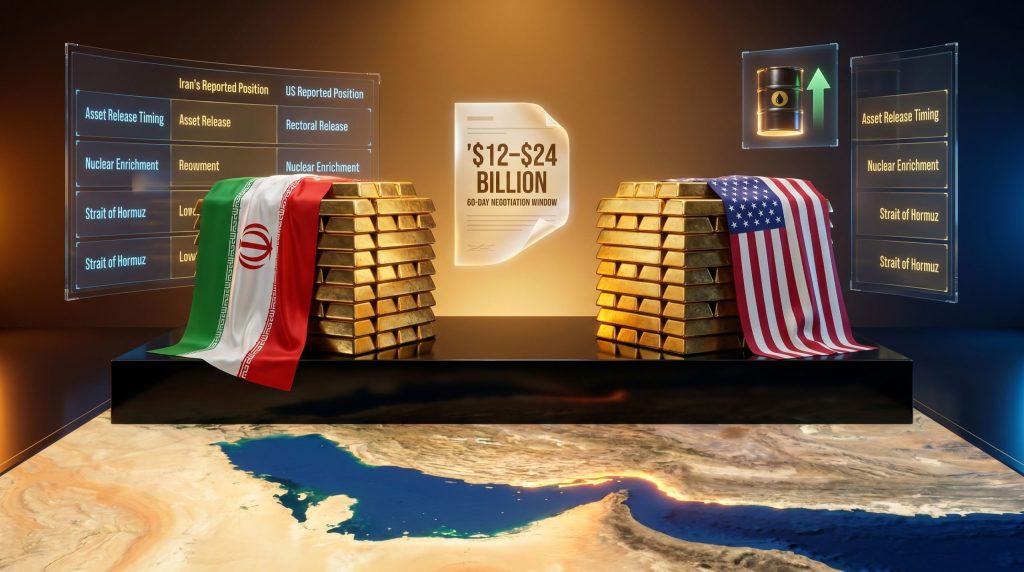
Throughout history, dominant powers have played a significant role in shaping international relations. Superpowers have often influenced the affairs of other states through political pressure, economic sanctions, and diplomatic negotiations. Today, the world has the United States. One of the most recent examples of hegemonic influence in the affairs of another state is US-Iran conflict. The US has constantly tried to curb Iran’s nuclear program through different measures. The relationship between US and Iran has a long history of distrust and insecurity. The United States, over the decades, has imposed sanctions on Iran to halt their nuclear ambitions. These sanctions include a nearly complete ban on the export of goods and oil, as well as the freezing of Iranian assets held abroad. According to Iranian media, an estimated $150 billion are prevented from Iranian access in the foreign reserves. This holds a significant place in the recent US-Iran peace deal, as Iran will now be allowed to access these reserves. In the US-Iran peace plan, Iran has also reaffirmed to not procure or produce any nuclear weapons. These steps, along with several others, will reframe the relationship between the US and Iran.
Iran’s assets were first frozen in 1979 because of hostage crises in 1979. They were further targeted by the European authorities to curb the nuclear ambitions of Iran. In 2015, the assets were temporarily released as President Obama signed JCPOA with Iran, creating better economic conditions for Iran. In 2018, Trump administration withdrew from the JCPOA, claiming that the deal was ineffective in stopping the Iranian nuclear program. He claimed that Iran after JCPOA, got economic stability which led Iran speeding up its nuclear program. This decision from the United States froze Iranian assets, and imposed sanctions once again. As a result, Iran suspended its obligations under the JCPOA, resuming the centrifuge production, and started enriching uranium. This resulted in escalated unrest, and increased insecurity between the United States and Iran. Iran’s inability to access its frozen assets, and imposition of other sanctions damaged Iran’s economy. In the recent 14-point US-Iran peace plan, Iran has demanded the release of her frozen assets to which US has agreed. This decision, if implemented, will reframe US-Iran relationship into a good bilateral relationship based on trust and collaboration.
Even after the signing of the 14-point US-Iran peace plan, the situation remains fragile. Both have accepted terms and conditions of the peace plan but there still exists uncertainty about the implementation. The recent strikes by the United States and the retaliatory response by Iran put the whole peace plan and its effectiveness under question. Furthermore, some domains of misunderstanding between both remain unaddressed even after the deal. Such as, the United States wanted to address more than just the nuclear program in the peace plan. The US also wanted to limit and restrict the Iranian ballistic missile program, which could not be achieved in this round of talks. The missile program includes ICBM’s which can carry a nuclear warhead. Iran is more willing to negotiate on its nuclear program than on the missile technology. Iran considers her missile program essential for her self-defense. This uncertainty is generating more tensions between both. An example of rising tensions between both are ceasefire violations at the end of July. Both the US and Iran accuse each other of the violating first. US claims that Iran violated the ceasefire by attacking a commercial vessel whereas Iran calls her actions as mere retaliatory response to the actions of the US. Iran also threatened to stop the negotiations if the attacks from the US continue. There is still strong hope that the conflict will be resolved, but both sides continue to play brinkmanship.
Reframing the US-Iran relations depends on various factors such as flexibility, understanding the potential global crises, and respect for sovereignty of each other. The United States needs to understand that everything that they demand cannot be accepted as Iran is a sovereign state. Bilateral or even multilateral conflicts cannot be resolved when the stakeholders are rigid and unwilling to accept the contrary opinion. If the US somehow understands this, Iran will become easier to negotiate with. Ultimately, there will be an increased feeling of trust between both states, improving bilateral relations. Furthermore, the United States and her allies need to understand that Iran is a major producer of oil and gas. Instability in Iran leads to unstable middle east, leaving a ripple effect on the global economy. On the contrary, if the United States continues to use her force against Iran, the conflict may escalate, causing global instability and mass destruction. Iran also needs to show flexibility in dealing with its disputes with the United States and the Gulf states. A rigid stance on every issue can make negotiations difficult and delay the resolution of conflicts. Willingness to compromise can help reduce tensions and create opportunities for better relations in the region. Ultimately, resolution of the frozen assets and nuclear issue can help transform a history of mistrust into a more stable US-Iran relationship.

- INDUS WATER TREATY AND ITS LEGACY - July 17, 2026
- IRAN’S FROZEN ASSETS AND NUCLEAR ISSUE:REFRAMING OF US-IRAN REALTIONS - July 17, 2026
- THE FUTURE OF PAKISTAN INDIA RELATIONSHIP - June 24, 2026