Author Recent Posts H.M Umar Farooq Latest posts by H.M Umar Farooq (see all) The Rights of Lower Riparian States under International Law. – August 4, 2026 A broader Regional and Muslim Unity: Lessons from the Gulf Crises – August 4, 2026 The Future of US-Iran Relations – August 4, 2026
The Gulf crises should not be viewed as a series of conflicts, but as an warning and a chance to look at the future of regional cooperation and unity among Muslims. The gulf region remains one of the world most strategically important region as it possesses the major energy resources, important religious sites and critical maritime trade route on which the whole world economy relies on. Yet, the Region repeatedly experienced crisis putting the chaos among Arab countries especially after following the events of February 28, 2026. These crises have revealed both the costs of division and the value of diplomacy. The Gulf states, those depends on the United States for their defence, had witnessed limitations in their security arrangements. These developments had prompted Gulf countries to reassess their reliance on the United States. Gulf crises offer important lessons on collective security, diplomacy, and economic cooperation that could form the foundation of broader Muslim unity.
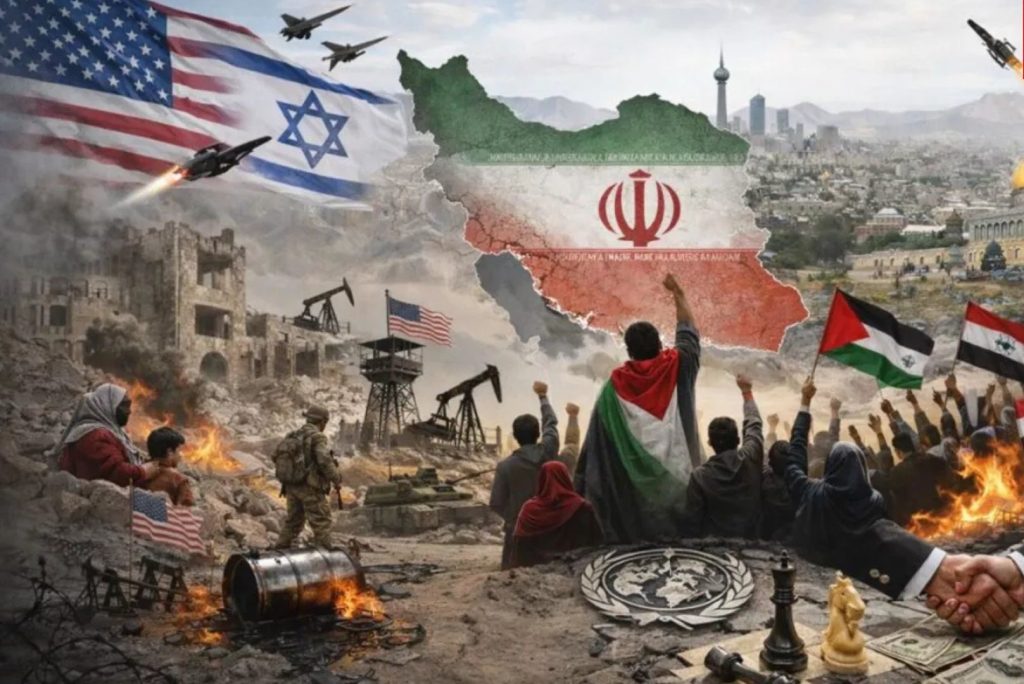
The country is sovereign only when it can protect its national interest and can defend itself against the foreign power. Also, excessive dependence on external security guarantees can reduce its strategic autonomy as because they aim to serves their own national interest. Gulf countries remain heavily dependent on Western military support, intelligence and missile defence such as US, which however failed to protect the region against the Iranian missiles. Although, the attack were initially made by US-Israel jointly through US military bases in gulf countries; Iran in retaliation attacked those military facilities.
Gulf economies are interconnected through energy exports and maritime trade, instability in one state rapidly affects the wider Muslim world. Most of the Arabs nations economic strength depends on their oil reserves markets, and international trade. This however was disrupted recently, the gulf at a time was considered the safest region, however after the Iranians attacks on the US military bases and infrastructure in gulf, the perspective regarding the region is changed. Further, the Strait of Hormuz is among the world’s key shipping lines connecting the world’s most important maritime routes, and it plays a vital part in global energy supplies. Its closure led to affecting the oil markets, international trade, and consumer prices resulting in significant economic loss for Gulf nations. The consequences were so severe that it took all Muslim nations to bleak crisis.
The tensions between the Muslim nations have been use as a tool by external forces for exploiting them, each country competes for its own national interests undermining security and unity among Muslim nation wholly. The recent crises have raised questions for Gulf leaders regarding their reliance on the United States in terms of their defence, that failed in protecting them, and may give rise to nuclear talks and plans among Gulf states that could be done only when they effectively collaborate with other Muslim nation.
The relation between Muslim nations among them is complex, shaped by deep historical divisions, differing national interests, and geopolitical rivalries. While Islamic teachings advocate for brotherhood and peace, the region has been characterized by political instability and shifting alliances. As can be seen from Iran Saudi tension, and the sectorial division among the Muslim nation. The recent crisis signalled Muslim nations to come across and form a unity leaving behind shared interests and sectarian differences. In this context Pakistan has put on its diplomatic efforts to build a regional consensus bringing Muslim nations come across to form a unity. Pakistan successful mediation between US-Iran set an example of constructive Muslim-led diplomacy, while maintaining its principal stance on the Palestinian cause and providing safe maritime routes and protection to vessels of other countries.
The unity among the Muslim nation cannot be formed based on the current trajectory followed by the Muslim nation, instead it requires them to move beyond sectarian identity politics. Establishing the Muslim lead dispute resolution system that effectively facilitate the dialogue and promotes brotherly relation between them. The reliance on the western power needs to be lowered. Also, trade corridors among Muslim nation should be made that will promote digital connectivity, investment and energy integration from one nation to the other. This if done properly will promote economic cooperation and the unity among the Muslim nation. Further, the ability of Muslim nations to coordinate positions on major humanitarian and security issues would strengthen the credibility of regional unity.
The international order is becoming increasingly multipolar, creating opportunities for regional actors to pursue greater strategic autonomy. The Muslim nations should take advantage of the moment by break of their chain and form a unity among themselves by lowering their reliance on the western power, leaving behind the sectorial differences, economic disparities, differing national priorities and historical grievances. The unity among Muslim nations is practical although difficult but can be achieved and has been proven previously, throughout the history.
The Gulf crisis has exposed the devastating effects of the disunity among Muslims nation, requiring them to act collaboratively. Pakistan’s successfull mediation has proved the ability of Muslims nations to resolve their differences without the intervention of external forces with political will and strategic vision. The current crisis signalled Muslim nations that we need to end our dependence on external forces which cannot be trusted. Muslim nations should establish a regional order based on dialogue, strategic cooperation, and shared economic interests. The Muslim world future depends on its leaders who can overcome the divisions and build a shared destiny.

- The Rights of Lower Riparian States under International Law. - August 4, 2026
- A broader Regional and Muslim Unity: Lessons from the Gulf Crises - August 4, 2026
- The Future of US-Iran Relations - August 4, 2026