Author Recent Posts Mahnoor Sohail Latest posts by Mahnoor Sohail (see all) Indian Media as a Hindrance in Pakistan–India Relations – June 24, 2026 How Climate Change Is Threatening Pakistan’s Economy – June 18, 2026 HOW INTERNATIONAL MEDIA IS VIEWING ALL PRAISE FOR ISLAMABAD – June 3, 2026
The problem of climate change is no longer just an environmental problem; it has now become one of the biggest economic problems in the country. While people focus on issues like inflation, unemployment, national debts, and political instability, not enough attention is paid to the impact of climate change. The 2022 floods were a stark reminder of how climatic conditions have the ability to derail whole economies and destroy lives and livelihoods while undoing all the development that had taken place in years before. The pressing question now is whether the country can continue ignoring the issue of climate change when it has become clear that the two are becoming inexorably linked. Without urgent action and investment in climate resilience, the economic costs of future climate- related disasters are likely to become even more severe. Addressing climate change is therefore not only an environmental necessity but also a crucial step toward ensuring long-term economic stability and sustainable development.
It is increasingly clear that the impacts of climate change will lead to instability in the country. The floods that occurred in 2022 destroyed houses, crops, business establishments, educational institutions, health care centres, transport infrastructure, and much more. In other words, the disaster led to severe losses to the national economy. What needs to be highlighted here is that every flood, drought, and even heat wave has serious implications for the economy of the country. The agricultural sector, which serves as the foundation of Pakistan’s economy, remains highly vulnerable to the effects of climate change. A substantial number of people in Pakistan earn their livelihood from agriculture. However, the altered patterns of rainfall, drought conditions, increased temperature, and floods have had a negative impact on the agricultural production process. This decline in agricultural produce not only endangers food security in the nation but may also cause inflation because of increasing food costs. Moreover, the low levels of agricultural production result in poor export performance and low foreign exchange earnings. As a result, climate change directly weakens the economy of Pakistan by reducing the economic growth rate.
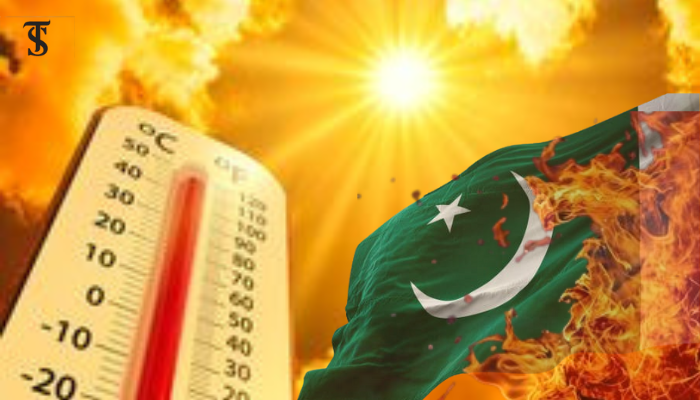
Climate change affects the availability of water resources which creates economic challenge for Pakistan. The economy of the nation relies extensively upon the water provided by the Indus Basin irrigation system to facilitate agriculture, industry, and energy production processes. The increased temperature and altered precipitation patterns have affected the hydrologic cycle. Although accelerated melting of glaciers in the mountains may pose an immediate threat of floods, it would also eventually lead to water shortages. Other critical issues associated with this phenomenon relate to its effects on labour productivity. Millions of Pakistanis earn their livelihood in fields such as agriculture, construction, manufacturing, and transportation where the elements are unavoidable. Heat waves and excessive hotness have the effect of reducing workers’ productivity, posing serious health risks, and ultimately affecting the economy’s overall productivity levels. When the output of labour is decreased , it results in lower economic growth.
Pakistan’s infrastructure is also highly susceptible to any climatic disasters that may arise. The climate disasters may result in economic expenses by damaging the infrastructure. Communication lines and road, rail, and air transport facilities are all severely hampered by disasters such as floods and severe weather. Not only does this result in increased costs of trade for both the country and companies operating within it but also forces the government to spend more money on repairing the damage caused to such projects. Investor confidence will also be influenced by climate change. Investors require predictability in their operations. Natural disasters and other adverse effects of climate change bring about uncertainty. This, therefore, makes the cost of conducting businesses higher and deters investors from operating within the nation. In such a case, investment opportunities will become scarce, limiting growth prospects for the economy, especially considering that modern economies place a lot of emphasis on sustainability and adaptation.
The most disappointing thing about all this is that some of the economic losses could have been avoided if proper precautions had been taken in advance. For example, investments in infrastructure that could withstand the negative impacts of climate change would have helped to a great extent in minimizing economic losses. The problem with climate adaptation is that people tend to give more attention to other issues than to adapting to climate change. Policy makers, in most cases, concentrate more on budgetary constraints than on the dangers of environmental degradation. Additionally, the nation is confronted with a special problem in that it accounts for under one percent of global GHG emissions yet is considered one of the nations most vulnerable to climate change. As such, it can be said that climate finance, as well as international cooperation, are crucial. Countries that account for the majority of global GHG emissions owe it to vulnerable nations to help them adapt to climate-induced changes. Nonetheless, international aid would not be enough. What matters even more is the ability to govern and plan strategically, and to demonstrate national dedication to overcoming the adverse consequences of climate change and for protecting the economic growth of Pakistan.
Climate change is a pressing issue for Pakistan in that what used to be considered an environmental problem is now a serious economic problem. The impacts of climate change are noticeable in agriculture, water, energy production, infrastructure, job creation, and investments. If neglected, the problem will only aggravate the current economic situation, and hinder future development. The solution to the problem will require the introduction of a pro-active strategy involving the implementation of climate change adaptation measures, building resilience, and integrating environmental considerations in economic policy. The prosperity of Pakistan does not need to be able to afford to address climate change, it depends on a question that whether it can afford to do it. Every natural disaster in Pakistan has a significant economic cost. This makes it necessary for the government departments to take actions rapidly for securing Pakistan’s long-term economic future.

- Indian Media as a Hindrance in Pakistan–India Relations - June 24, 2026
- How Climate Change Is Threatening Pakistan’s Economy - June 18, 2026
- HOW INTERNATIONAL MEDIA IS VIEWING ALL PRAISE FOR ISLAMABAD - June 3, 2026