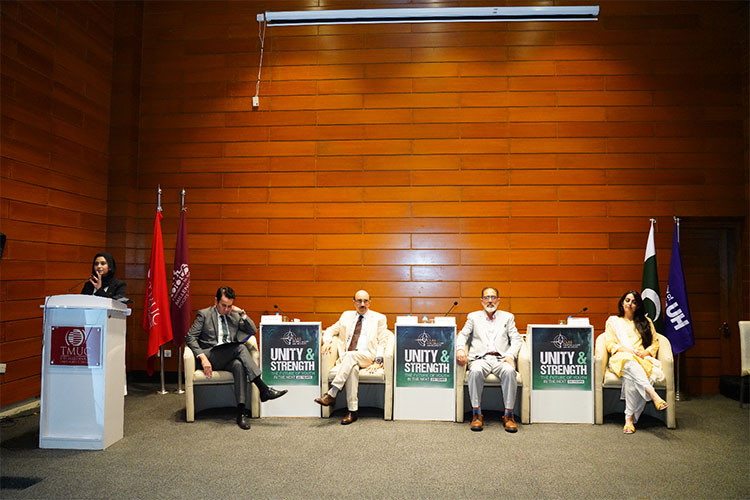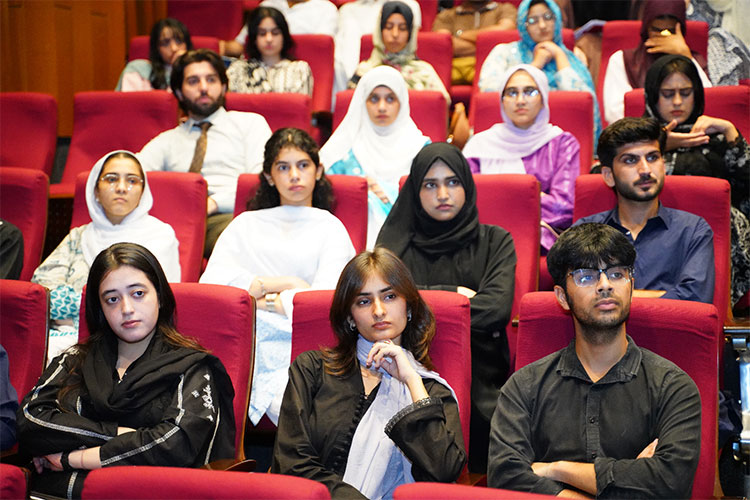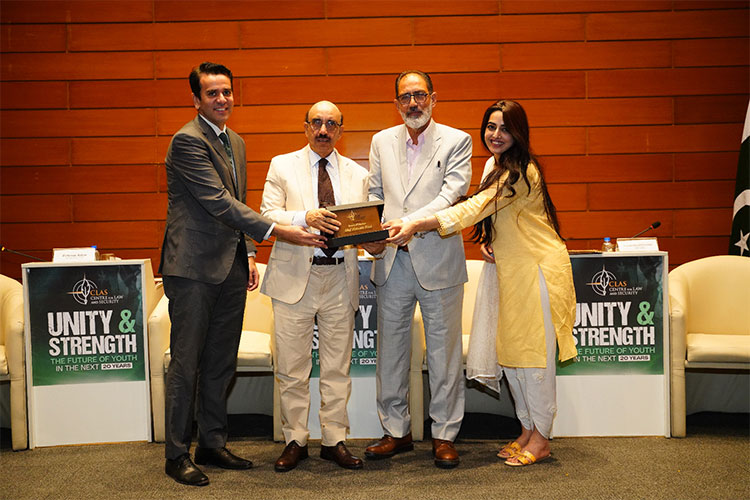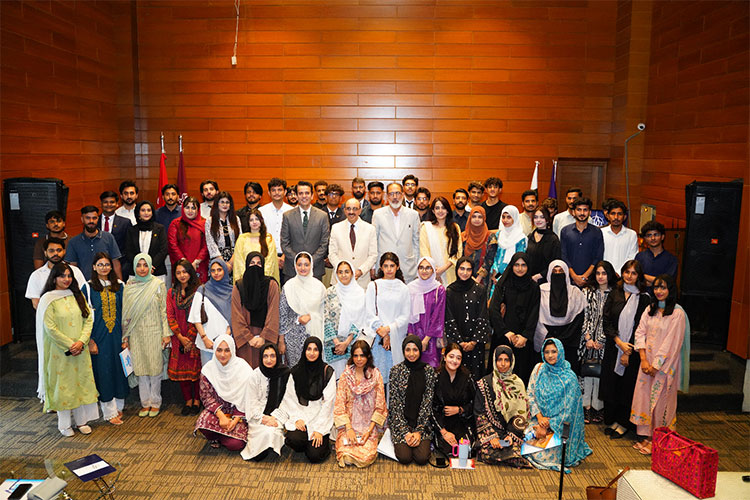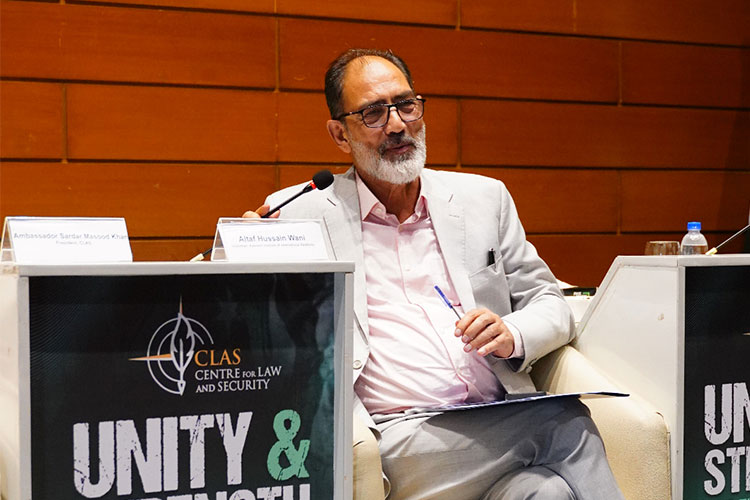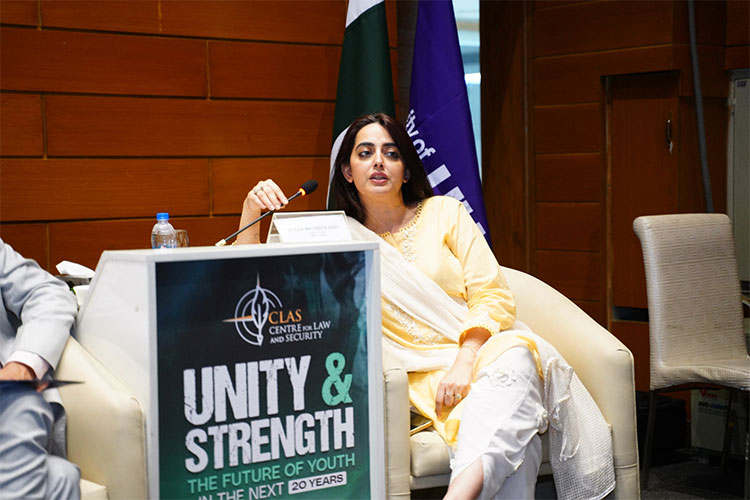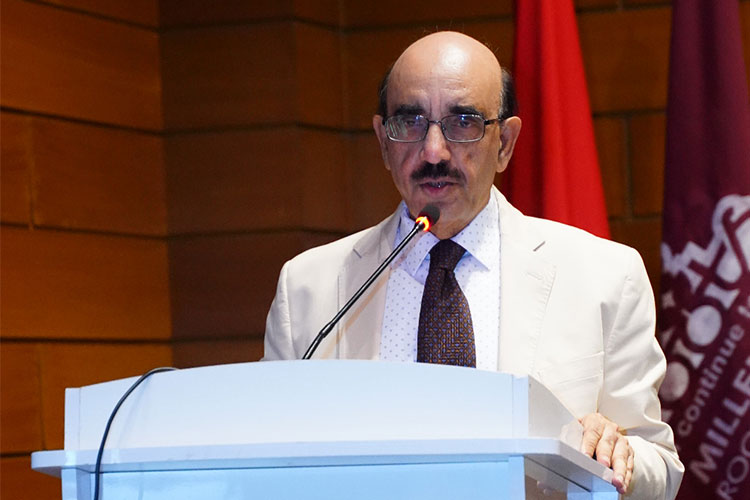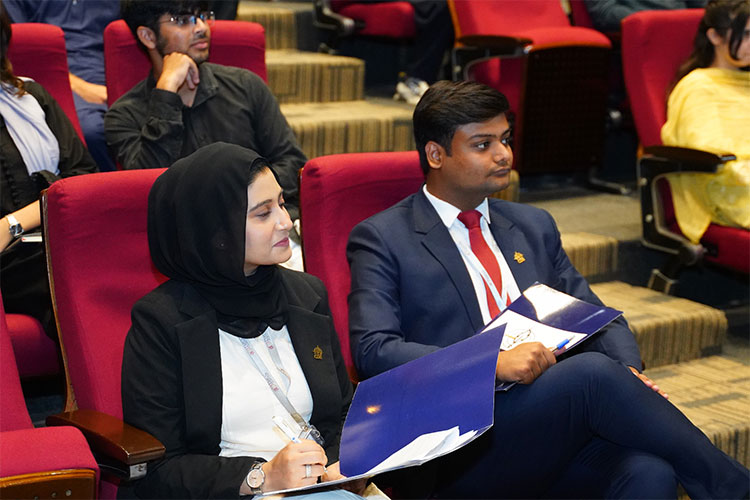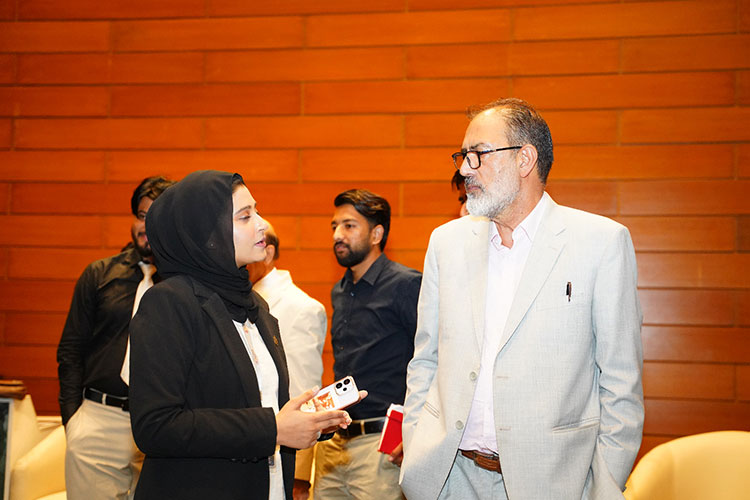
The Centre for Law and Security (CLAS), in collaboration with The Millennium Universal College (TMUC) and the Kashmir Institute of International Relations(KIIR), brought together the voices that matter most – Pakistan’s youth. It was a platform where young minds raised critical questions and offering their suggestions and recommendations on issues surrounding Azad Jammu & Kashmir and Pakistan.
The Open Forum Discussion was jointly addressed by President CLAS, Ambassador Sardar Masood Khan, Chairman KIIR, Altaf Hussain Wani and Head of Department of Laws, TMUC, Ms. Maureen Zaidi.
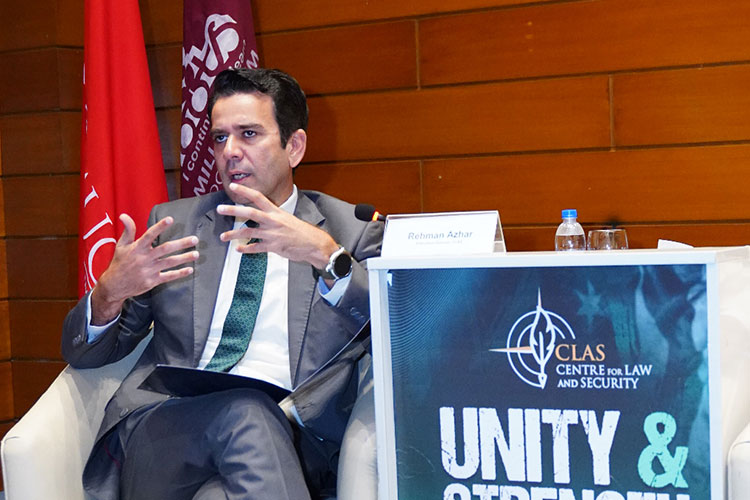
The session was moderated by Executive Director CLAS, Mr. Rehman Azhar.
Pakistan is entering a defining period of national confidence, strategic resilience, and diplomatic engagement. The outcome of Marka-e-Haq has reinforced public confidence in Pakistan’s defence and deterrence capabilities while strengthening the spirit of national unity. On the diplomatic front, Pakistan has emerged as a constructive contributor to regional and international peace efforts, including through the Board of Peace framework in relation to Gaza and its facilitation of ceasefire, dialogue and diplomacy between the United States and Iran. Pakistan’s expanding strategic partnerships, including its strategic mutual defence cooperation with Saudi Arabia and the development of the Mecca Joint Defense Agreement with Saudi Arabia and Türkiye, further reflect its growing strategic relevance. These developments coincide with encouraging signs of macroeconomic stabilization and renewed prospects for sustainable economic growth.
The next two decades, culminating in Pakistan’s centenary in 2047, will be decisive in shaping the country’s long-term trajectory. With a substantial majority of Pakistan’s population below the age of 30, today’s youth will constitute the principal human capital of the country by 2047. They will lead Pakistan’s institutions, businesses, technological sectors, diplomatic services, armed forces, and civil society. The quality of education, skills, leadership, innovation, and civic participation developed during the coming years will therefore have a direct bearing on Pakistan’s future.
A coherent national vision for the next generation should be built around four interconnected priorities: economic strength, national unity, strategic resilience, and sustained diplomatic engagement. Pakistan’s ambition to emerge among the world’s leading economies by 2047 requires sustained investment in education and higher education, technological advancement, skills development, industrial growth, export diversification, entrepreneurship, and institutional strengthening. The youth must be equipped to participate meaningfully in the domestic economy while competing successfully in an increasingly knowledge-driven global environment.
Pakistan’s future prosperity will also depend on deeper regional and international engagement. A confident and outward-looking generation can contribute to strengthening Pakistan’s trade, investment, connectivity, technological, and cultural linkages with neighbouring and partner countries. Young Pakistanis can play an important role in projecting the country as a nation of opportunity, innovation, peace, and constructive regional engagement.
National unity will remain a fundamental pillar of this transformation. Pakistan’s diverse provinces, cultures, languages, traditions, and communities constitute a significant national asset. The opportunity before the next generation is to transform this diversity into greater understanding, cooperation, and collective strength. Education, digital platforms, youth exchanges, cultural interaction, and collaborative initiatives can provide effective avenues for bringing young Pakistanis closer together and fostering a shared sense of national purpose.
The period leading to 2047 therefore provides an opportunity to cultivate a generation of confident, capable, and responsible citizens who can contribute to Pakistan’s economic transformation, national cohesion, strategic strength, and international standing. With the right opportunities, skills, leadership platforms, and institutional support, Pakistan’s youth can become the driving force behind a more prosperous, united, innovative, and globally engaged Pakistan.
In this context, the Centre for Law and Security (CLAS) convened a seminar titled “National Unity and Strength: The Future of Youth in the Next 20 Years” to provide a platform for young Pakistanis from diverse regions and backgrounds to deliberate on the country’s future and develop a shared vision for 2047.
The seminar brought together students of social and political sciences and law, early-career professionals, young researchers, entrepreneurs, and youth-led organizations to exchange ideas and identify practical pathways for strengthening national unity, economic participation, leadership, and civic responsibility.
The seminar will also facilitate the development of youth-led recommendations for policymakers, promote cross-regional engagement, encourage interaction among young leaders from diverse backgrounds, and contribute to building a network of young Pakistanis committed to national development and the country’s long-term progress.