Author Recent Posts H.M Umar Farooq Latest posts by H.M Umar Farooq (see all) The Rights of Lower Riparian States under International Law. – August 4, 2026 A broader Regional and Muslim Unity: Lessons from the Gulf Crises – August 4, 2026 The Future of US-Iran Relations – August 4, 2026
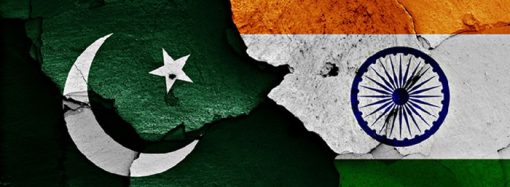
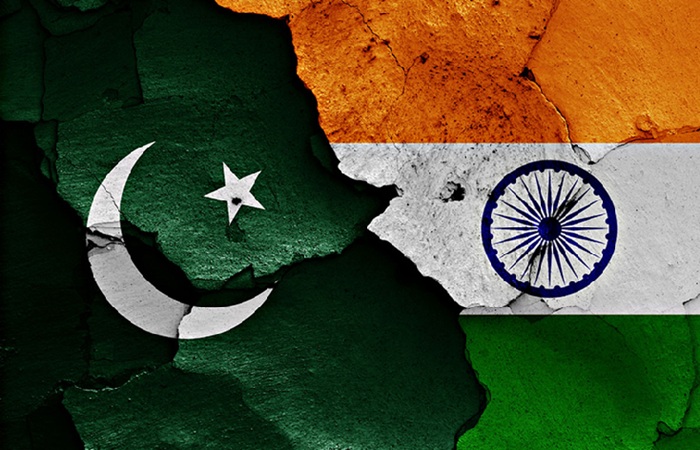
India and Pakistan relation has always been in turmoil, and this during the recent time has affected the sports. The governments, embassies, and international sports federations host sports exchanges to promote values, reduce political tension, and interact with foreign populations; sponsor athletic ambassadors, and organise events, that is often considered as a form of diplomacy that transcends political barriers, mediated by a universal and common activity attracting attention worldwide. Whereas, in the Pakistan and India scenario, it is quite the opposite.
Events, like cricket, Olympic games and state sponsored sports, are used as an instrument to promote foreign policy interests. This serves as a part of public diplomacy that seeks to project soft power, change the national image, and establish cultural ties between countries. Where formal negotiations fail, sports diplomacy uses the common language to open informal dialogue. Sports fields can be used to shape the perceptions of countries through sports related achievements and hospitality.
There are cultural, societal and religious differences between India-Pakistan that influence their relations. However, the principal diplomatic challenge is to resolve the Kashmir issue, something both countries have their claims to, and is being unresolved for 79 years. The main reason given by the Indian side for their refusal to take part in cricket series against Pakistan is politics. Bilateral series between the two countries has been effectively terminated by diplomatic freezes, visa denial and security concerns. The last test match was in 2007 & since 2012, no bilateral ODI series has been played between the two teams.
For many years, South Asian diplomacy has held onto the belief that cricket acts as a release mechanism for political tension. The pitch was used as a ‘no-fire zone’ for the engagement without escalation. The cricket diplomacy is based on the notion that culture helps pave the way for political discussions. Whether it was General Zia-ul-Haq’s visit to Jaipur in 1987 to the mid-2000s, the sport always had an element of public diplomacy.
However, the lack of a bilateral cricket does not spell a lack of a rivalry. India and Pakistan remain at the ICC tournaments and Asia Cup, and play only on a neutral ground. In 2023 Asia Cup was partially shifted from Pakistan to Sri Lanka as a compromise measure. The matches were played & millions watched. Both teams played against each other in different formats & TV ratings were all time highs.
In September 2025, during the Asia Cup in Dubai, following political tensions before the match influenced the sportsmanship of the Indian team. During post & after match ceremonies, Indian team refused to shake hand with Pakistani team. Also, they didn’t accept the Asian Cricket Council (ACC) championship trophy from its president, Mohsin Naqvi. This was the first matter of its instance that broke the traditional conventions followed for over decades; resulting in lessening the effect of soft power in promoting the bilateral ties.
Sports promote soft power however it is affected when Politics intervene as seen in India Pakistan case where neutral areas for games are required like the UAE, England, or Australia. The future of India-Pakistan cricket is dependent on the politics of each country that determines whether they can or cannot play and on how the ICC tackle the negotiation between the two which happens before every match in recent times.
The cricket between India and Pakistan is being highly influenced with politics with every game played, lessening its spirit. Therefore, the only way to lessen the political effect on the sports diplomacy is that teams should not make the issue out of that whom they are playing against, and by whom they are given trophy, but should see that the person standing there represent the sport organisation, nothing less or more.
The question that whether sports can survive politics between India and Pakistan? for now it is surviving, as both team continues to play matches at ICC and ACC tournament at neutral venues but that’s not the long-term solution. Therefore, to protect the current relation and to avoid future complication the board of ICC need to consider the following provided practical recommendations in future.
ICC should codify mandatory sporting gestures of post match handshakes and trophy acceptance mandatory failing to do so resulting in sanctions and penalties. The Board member of the ICC should represent the council, not their home countries, also the person becoming the member of the board should not hold any political office as it creates the conflict of interest & defeat the purpose of the sports diplomacy. Although the full bilateral series between the countries is complicated to discuss, for now ICC and Asia Cup tournaments matches at neutral venues is practical. Without these measures, even the limited survival of cricket will remain under constant threat.

- The Rights of Lower Riparian States under International Law. - August 4, 2026
- A broader Regional and Muslim Unity: Lessons from the Gulf Crises - August 4, 2026
- The Future of US-Iran Relations - August 4, 2026