
Author Recent Posts Eshrat Fatima Latest posts by Eshrat Fatima (see all) Is Pakistan emerging as a new middle power? – June 24, 2026 Can Economics Bridge the Divide? Trade Relations under Modi’s India – June 16, 2026 Transit of Goods Order 2026: The Legal Road to Regional Integration – May 14, 2026
Pakistan is showing all the features of being a middle power. Over the past several decades, Pakistan has frequently been seen as a state faced with challenges in terms of security, politics, and economy. Discussions have constantly depicted the state in the image of someone who was a passive participant to the events taking place around him rather than an active one shaping them. However, recent changes may indicate that the picture of Pakistan might change soon. The question is no longer whether Pakistan matters, but whether it is beginning to matter in new ways.
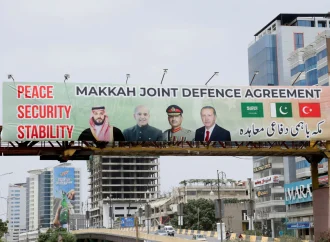
The middle powers are not exclusively classified based on military power and economic strength. Nations like Turkey, Indonesia, South Korea, Austr alia, and Saudi Arabia have gained recognition as middle powers because of their capacity for conflict mediation, agenda setting, and using their strategic assets. Pakistan has a long-term strategic alliance with China, it has security cooperation with the United States, it has strengthened its relations with the countries of the Gulf, and it engages regional powers such as Turkey, Iran, and the Central Asian republics. The diplomatic initiative taken by Pakistan recently reflects a trend in that regard.
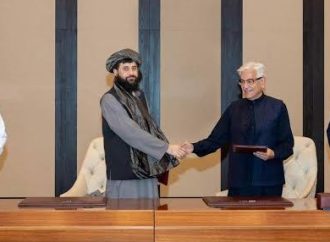
The most visible manifestation of this change can be found in Pakistan’s increasing emergence as a diplomatic mediator. While times may be characterized by disunity and competition, Pakistan has managed to maintain relations with a very wide range of parties. While the relationship between the US and Iran moved between confrontation and dialogue, Pakistan played the role of mediator and not a partisan actor. The ability of Islamabad to maintain good relationships with both nations made it possible for it to push for de-escalation in a time when the entire Middle East region was likely to witness increased instability. It should be noted that while Pakistan did not remain the only player that mediated for dialogue, it certainly exhibited the diplomacy of middle powers.
One significant characteristic of Pakistan’s foreign policy revealed by this episode was its capacity to utilize a balanced approach to deal with different blocs. Many nations have a tendency to align themselves with one side and not the other, but Pakistan has attempted to maintain good relations with Iran despite its close ties with the United States. This has given Pakistan the opportunity to contribute in initiatives that would help lower the tension level through peaceful dialogue. This makes Pakistan more visible on the world stage, and is also seen as a mediator in world affairs.
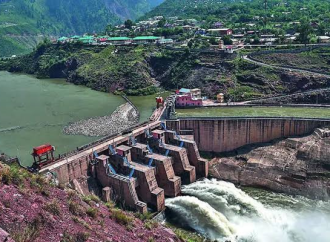
The location of Pakistan is another reason why the country holds such high significance. Being located right at the intersection of South Asia, Central Asia, Middle East, and the Indian Ocean, Pakistan is present at one of the most strategically important places on earth. Routes for trade and energy, along with security concerns, all converge either inside or around the border of Pakistan. The CPEC initiative, although it faces a number of obstacles, is one of the most ambitious initiatives of its kind in the entire region. If effectively implemented, it could transform Pakistan from a transit state into a regional economic hub.
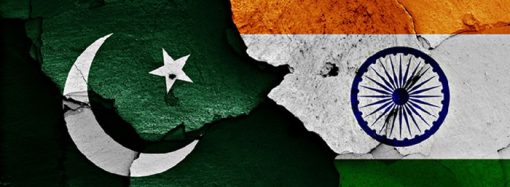
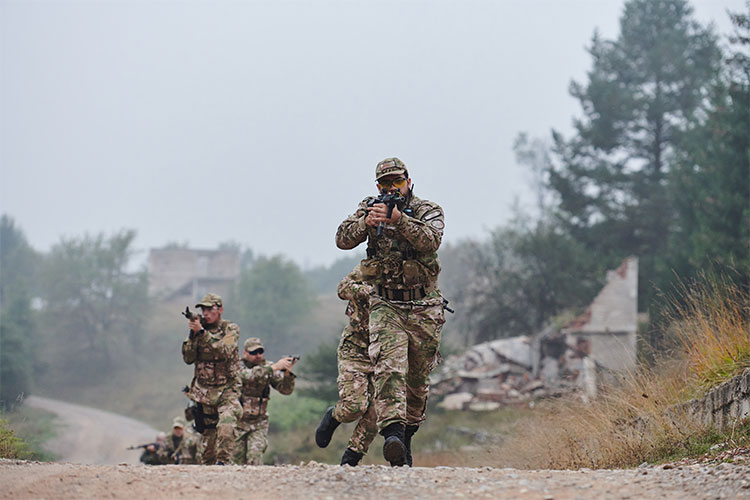
Another factor that contributes to Pakistan’s rising middle power status is its military power. Being a nuclear power and having one of the largest militaries in the world, the country has the potential to act as a deterrent and play a major role in terms of security in South Asia. The geographical position of the country makes its military an even more important factor, especially in terms of anti-terror and maritime security. The importance of Pakistan’s military strength became evident during the India-Pakistan crisis in May 2025, during which increased tensions and military actions on both sides yet again stressed the pivotal importance of Pakistan in keeping the balance of power in South Asia. The international recognition of Pakistan as a contributing force towards peace and stability in the world is also associated with its involvement in UN peacekeeping operations since the beginning of these operations.
It would be too early to talk about the emergence of Pakistan as a middle power. The fact is that despite all its geopolitical advantages, the country still has to deal with serious problems within its domestic sphere that prevent it from becoming influential internationally. One such problem is that of the economy, as economic instability makes Pakistan unable to engage in any sort of serious foreign policy. Problems related to high debts, inflation, energy deficit, and poor governance still hinder development of the country. Another obstacle to the emergence of the middle power status lies in political and institutional instability in Pakistan, which makes it difficult to build consistent policies.
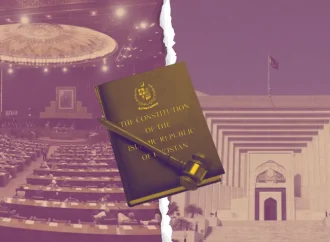
Political stability will continue to be an important prerequisite for the development of Pakistan as a middle power. Middle powers are known to have solid institutions and continuity of policy as well as predictability of governance, which makes them more credible in international politics. On the other hand, the existence of political divisions and unstable periods in Pakistan is bound to have negative effects on international credibility, hence discouraging long-term international involvement. Political crises might also hinder policymakers from pursuing strategic goals beyond domestic politics. In order for Pakistan to develop its increasing international importance, stable domestic politics need to be accompanied by active foreign policy.
Pakistan’s power is highly restricted in terms of security and geopolitics furthermore. The typical middle powers not only possess strategic significance but also economic dynamism, technological advancement, and soft power. Nations like South Korea and Indonesia have increased their global significance through exports and economic integration. Pakistan likewise will need to develop in areas such as education, innovation, information technology, and trade if it wants to continue growing.
The fact that they have traveled on that path is worth noting nonetheless. With the world becoming more multi-polar, the distribution of power is becoming more dispersed. While global politics were the sole preserve of a few big players before, the current scenario is much more complicated where the middle powers assume significant importance as mediators and agenda setters. Such a scenario provides Pakistan the chance to increase its political influence without having the same economic or military heft as the bigger players.
There is an apparent scenario unfolding that depicts a country in transition. Pakistan is far from being a full-fledged middle power but is showing several traits of the same. Its geostrategic location, diplomacy, security and involvement in regional affairs have added more weightage to its profile at the international level. What remains to be seen is whether this trend continues because of how well it addresses its own internal issues. The coming decade may therefore prove decisive. If Pakistan can pair geopolitical relevance with economic reform and institutional stability, it could emerge as one of the most consequential middle powers of the Global South. The foundations are visible. The challenge now is turning potential into power.

- Is Pakistan emerging as a new middle power? - June 24, 2026
- Can Economics Bridge the Divide? Trade Relations under Modi’s India - June 16, 2026
- Transit of Goods Order 2026: The Legal Road to Regional Integration - May 14, 2026