Author Recent Posts Rabia Anwaar Latest posts by Rabia Anwaar (see all) Why Cooperation Between Federal and Provincial Government Is Necessary to tackle Terrorism? – November 12, 2026 Militarization of Strategic Naval gateways and Energy Security – October 12, 2026 The Hague Ruling on the Indus Waters Treaty – September 30, 2026
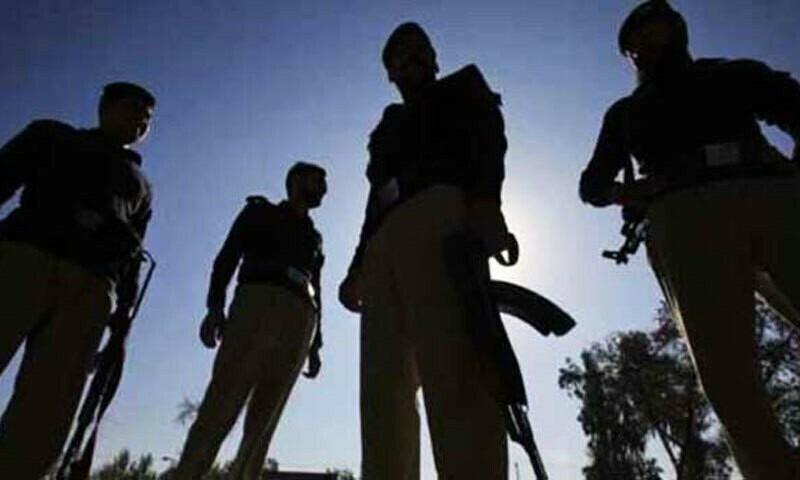
The toll of Pakistan’s fractured security policy isn’t felt in courtrooms or constitutional debates; it is paid daily on the streets of Khyber Pakhtunkhwa. When a police checkpoint in Deraban or Lakki Marwat comes under fire, the officers standing guard aren’t thinking about the division of powers between Islamabad and Peshawar. Yet, their ability to survive that night depends entirely on whether those two capitals are in coordination and fully prepared to tackle this difficult hour. As the Tehreek-e-Taliban Pakistan (TTP) re-establishes its footprint across the province, the state’s response has become paralyzed by political warfare. Counter-terrorism requires a single, focused chain of effort. Instead, KP has become a battleground where national security is routinely held hostage to political score-settling.
One has to look at how daily law enforcement works in order to understand why the state is faltering. Under Pakistan’s federal setup, local policing and immediate law enforcement belong to the province, while border security, foreign policy and primary intelligence agencies report directly to the center. Federal intelligence feeds real-time alerts to provincial police, who then execute targeted raids backed by federal resources. Today, that transmission belt is broken. Suspicion between federal and provincial leadership means intelligence is often delayed, funding for police modernization gets tied up in red tape and basic tactical procurement becomes a political bargaining chip. When the constable lacks to possess night-vision gear or basic armored transport because budget approvals are stalled in partisan gridlock, administrative friction becomes a direct threat to human life.
This rift goes deeper than logistics; it corrupts the overall strategy. Over the past few years, federal and KP have openly pulled in opposite directions. Central authorities frequently lean toward broad military operations and hardline kinetic action, while provincial leaders often push for local political negotiations, civil autonomy, or peace committees. This public tug-of-war sends a confusing message to local communities and law enforcement officers, who are left wondering which policy will hold six months from now. Meanwhile, militant networks operate with clarity of purpose. They exploit these jurisdictional gaps, moving through border districts where federal border guards and provincial police fail to coordinate effectively.
When security deteriorates to a breaking point especially after a sit-in from KP enroute to Islamabad, Islamabad’s go-to reflex is often to float the idea of Governor’s Rule under Article 234 of the Constitution. But treating Governor’s Rule as a magic cure fundamentally misunderstands how counter-insurgency works. Pakistan cannot defeat an insurgency by disenfranchising the people living through it. Kinetic military action only buys time; long-term peace requires local community trust, grassroots intelligence and political buy-in. Removing an elected provincial government alienates the very population whose support is needed to root out local militant networks, turning a security crisis into a wider legitimacy crisis.
Furthermore, temporary federal takeovers do nothing to fix the actual institutional machinery on the ground. Governor’s Rule is, by definition, a short-term emergency measure. It doesn’t build a better-trained local police force, it doesn’t establish permanent local intelligence networks, and it doesn’t fix regional economic grievances. Once the emergency order inevitably expires and political control is handed back, the underlying vulnerabilities remain exactly as they were, only now worsened by deeper political resentment. Reverting to executive shortcuts simply kicks the can down the road while damaging the democratic fabric of the province.
The stability will not come from executive overrides, but from using the practical coordination tools already embedded within Pakistan’s governance structure. The Constitution explicitly obligates the federal government under Article 148 to protect provinces from internal disruption, while Article 149 allows the center to give clear executive directives on national security matters. This allows the federal government to set strict, binding counter-terrorism mandates while keeping the elected provincial administration intact and accountable. If specific border areas require heavier federal security intervention, Article 147 allows the province to voluntarily delegate specific operational tasks to federal forces through mutual agreement, avoiding the political fallout of a total federal takeover.
Defeating militancy in KP requires moving past legal maneuvers and addressing the human reality of governance. Institutional mechanisms like the National Counter Terrorism Authority (NACTA) and Provincial Apex Committees were created precisely to get military commanders, chief ministers, police chiefs, and intelligence agency heads into the same room to make real-time decisions. When these forums are sidelined for press conference internal strife, security disintegrates. Until politicians in both Islamabad and KP realize that political feuds cannot take priority over human lives, the state will continue to fight terrorism with one hand tied behind its back.

- Why Cooperation Between Federal and Provincial Government Is Necessary to tackle Terrorism? - November 12, 2026
- Militarization of Strategic Naval gateways and Energy Security - October 12, 2026
- The Hague Ruling on the Indus Waters Treaty - September 30, 2026