Author Recent Posts H.M Umar Farooq Latest posts by H.M Umar Farooq (see all) The Rights of Lower Riparian States under International Law. – August 4, 2026 A broader Regional and Muslim Unity: Lessons from the Gulf Crises – August 4, 2026 The Future of US-Iran Relations – August 4, 2026
The relationship between the United States and Iran has remained one of the most contentious rivalries in international politics. At the centre of this dispute lies Iran’s nuclear programme. Washington concluded that diplomacy with Tehran was exhausted and wanted to degrade Iran nuclear program as it posed an unacceptable threat to regional and international security. Iran consistently deny the assertions, stating that its nuclear programme intends represents its sovereign right under international law are for peaceful purposes. This conflict led to war resulting in world crisis as seen in the form of closure of the Strait of Hormuz and the unrest caused in the Middle East. The future of US-Iran relations sits on the question whether Tehran will dismantle its nuclear program, or Washington will compromise its foreign policy to prevent further escalation.
The nuclear program remains the primary concern for the development in relations. The U.S. wants Iran assurance that it will dismantle its nuclear program whereas Iran sees external pressure on its nuclear programme as a violation of its national interests and its sovereignty. Despite that Iran compromised its interests and signed the Joint Comprehensive Plan of Action (JCPOA) deal. However, US broke it although Iran complied with it, this shows recent crisis were a direct result of US policy.
The war started wilfully and rapidly on the name of political stability complicating relations between Washington and Tehran. The statements given by the President Trump puts the US standing in war in turmoil, on one day Trump claims to have reached a ceasefire agreement, and the other day he threatens to bomb Iran. The effect of the war is not limited to Iran’s territory but has been spread to entire middle east causing the unrest in the Gulf Region.
The conflict heightened the insecurity in Gulf region, increased concerns regarding regional stability, and intensified fears of a broader confrontation. The Gulf States are dependent on the US not only economically but also politically. This unrest caused in the entire Middle East was due to the US use of its military bases in Arab countries against Iran, in return Iran retaliatory strikes targeted military bases and civilian infrastructure across the region to protect its sovereignty and national interests from foreign interference. The war raises the questions for Gulf leaders regarding their reliance on the United States defence system that failed to neutralise Iranian drones. The post-war environment in the Gulf region may give rise to nuclear talks and plans among Gulf states.
Further, the war has also had a major impact on the economy of the region. The Strait of Hormuz is among the world’s key shipping lines connecting the world’s most important maritime routes, and it is a vital part of the global energy supplies. The Strait was closed by the decision of US-Israel by imposing a war on Iran and violating the UN Charter. The closure of Strait of Hormuz affects the oil markets, international trade, and consumer prices around the world. The rise in energy costs will affect not only Arabs but also countries like Pakistan that depend on imported fuel. The geopolitical tensions between the US and Iran extended far beyond.
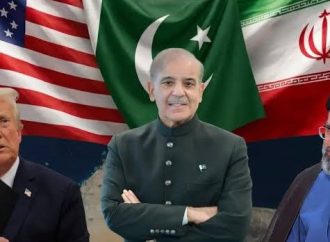
This shows the urgency of resolving the matter between the two through diplomacy. Statements from political leaders from Regional states showed strong interests in preventing further escalation as instability threatens trade, investment, and economic growth. Pakistan facilitated the talks showing how communication facilitates when direct dialogue between countries becomes politically difficult. Pakistan’s foreign policy has always maintained friendly relationships with both Washington and Tehran, combined with its interest in regional stability and has successfully mediated between the two and has been praised around the world for its efforts
However, despite Pakistan’s successful mediation; the US history raises certain questions about whether Washington can be trusted as a reliable partner for peace. The US has a history of slavery, genocide and perpetual war. The situation of US is no new to the world as can be seen from its comparative recent invasions into Iraq and Afghanistan, where military invaded, destroyed people’s homes, making their life miserable overnight on basis of ‘Weapon of Mass Destruction’ which was eventually not found. Further, the capturing of Venezuela democratically elected president is yet another recent example.
The war with Iran costs too much for the US, as it spent ten to twenty time more than that of Iran. The US cannot afford a long-term war with Iran as its people are suffering from poverty within the country, and similar will be the predicted result for US in war like that of Afghanistan. Iran has shown the world its technological advancement results in missile sector as evident from failed US-Israel defence system.The US claims to be the global model, yet China has demonstrated practical results, lifting approximately one billion people out of poverty. The US economic system is capitalist; it focuses on wealth in a small elite, and its policies are not in line to remove poverty. The future of U.S.-Iran relations centres on the question of whether the U.S. era of unipolar dominance is over or not. US claims itself as a saviour, yet it violates international laws and agreements, invades countries, and imposes sanctions. If that’s the case, Iran will have other options to consider against the Western pressure; friends like China and Russia will draw Iran closer to them. China, on the other hand, is rising, promoting inclusiveness, and it is conceivable that Iran will be a strong ally of China, which will shift the world to a bipolar order. Therefore, US-Iran relations don’t depend on Tehran’s nuclear programme but on Washington’s foreign policy to abandon its self-appointed role as saviour and embrace g

- The Rights of Lower Riparian States under International Law. - August 4, 2026
- A broader Regional and Muslim Unity: Lessons from the Gulf Crises - August 4, 2026
- The Future of US-Iran Relations - August 4, 2026