
Author Recent Posts H.M Umar Farooq Latest posts by H.M Umar Farooq (see all) The Rights of Lower Riparian States under International Law. – August 4, 2026 A broader Regional and Muslim Unity: Lessons from the Gulf Crises – August 4, 2026 The Future of US-Iran Relations – August 4, 2026
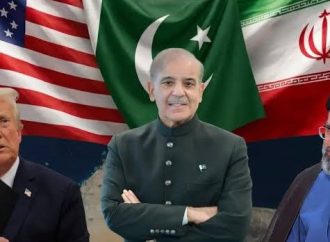
It is quite significant in Pakistan’s history to be recognised as a peacemaker and an emerging middle power through its diplomatic mediatory role. This was done by leveraging its strategic relationships, military credibility, and regional consensus-building to de-escalate one of the most volatile conflicts in the Middle East. Pakistan’s successful mediation between the United States and Iran changed its global perception from conflict participant to peacemaker. While, previously, Pakistan remained a part of the frontline state in conflicts, first during the Soviet-Afghan war, then through the long years of the war on terror.
The conflict between U.S.-Iran aroused back when Israel convinced united states that Iran is going to build nuclear weapons and jointly attack to destroy Iran nuclear capability and do a regime change, for that massive attacks were made on Iran’s top tier military political leadership. The conflict led to world crisis manifested in closure of the Strait of Hormuz affecting the oil markets, international trade, rise in energy and consumer prices around the world, and causing widespread unrest across the Middle East.
Pakistan right after the contacted region countries along with United States and Iran. Pakistan started disperses primarily for its own national interest because the wars adverse impact on its fragile economy demanded immediate action, but also another strong influence was to save the region from war.
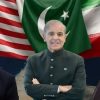
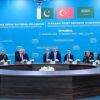
Pakistan diplomatic effort began from scratch; it is not a certified international mediator unlike Qatar and Switzerland. Its established back channels kept working and successfully managed a ceasefire. All diplomatic effort were to build regional consensus behind its diplomatic mediatory role like Egypt, Turkey, Saudi Arabia and to have a ceasefire dialogue, freedom of navigation, & diplomacy within the prerogative of United Nation Charter & International Law. The civil-military coordination between Shahbaz Sharif and Field Marshall Asim Munir played a vital role in mediations talks.
The most crucial part for Pakistan in the whole process was to win the trust of the United States & Iran and do a balance mediation. The position taken by Pakistan did not preclude it from acting as a mediator for ceasefire negotiations. This demonstrated that Pakistan could maintain its core principles while playing a constructive diplomatic role.
An important factor that helped Pakistan in its successful mediation was the institutional harmony between Prime Minister Shehbaz Sharif and Field Marshal Asim Munir. Field Marshal Asim Munir played a critical behind-the-scenes role throughout the process, including conducting strategic visits to Iran during his tenure, working seamlessly alongside the civilian government to facilitate this diplomatic breakthrough. This civil-military coordination on foreign policy represented a mature approach to statecraft.
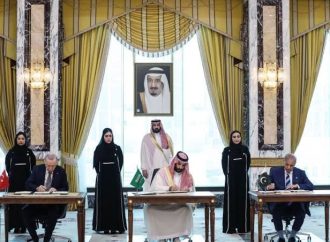
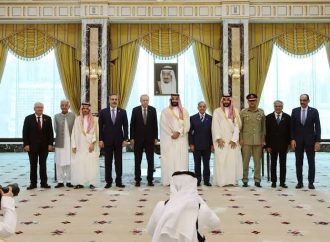
Pakistan had contributed a lot to the mediation table. It formally expanded as the main guarantee of safe passage, protecting international shipping lanes, in maritime security. Besides this, Pakistan is still trading oil and energy products with Iran via the Chaman-Taftan border crossing while fulfilling its national security interests and playing the role of a mediator. Also it has signed a mutual defence pact with Saudi Arabia, affirming its longstanding role as a provider of security in the region.
Establishment of a petrochemical plant in Gwadar will mark the beginning of its next era of participation in the technological and industrial changes of the region with the aim of turning the region into a high value manufacturing and refining powerhouse. Pakistan’s independent vision of Gwadar Port for the countries of the Gulf is an excellent idea for economic benefits as it would provide a strong and high-capacity trade route.
Pakistan first time ever in its history has become a true important middle power with a credible presence with major allies and has change its international community perception. Pakistan gained regional consensus by leveraging its strong bilateral relations with Gulf countries.
Despite this success, significant challenges remain for Pakistan ahead. Although the Pakistan is perceived as a global peace maker, however the confidence that has built should not be short-lived. Pakistan now must concentrate on its forward-looking policy especially on its neighbours’ relations, domestic confidence and self-perception. The diplomatic skills of Pakistan were witnessed in the Gulf countries during the crisis. Pakistan can make this breakthrough event into a long-lasting international influence.
The U.S.-Iran mediation by Pakistan is a watershed moment in its foreign policy and diplomacy. It proved diplomatic and strategic effort of Pakistan as credible facilitator in international platform. For now, Pakistan has secure recognition as middle power and to maintain the title Pakistan needs to focus on its ability to sustain such constructive engagement in the years ahead.

- The Rights of Lower Riparian States under International Law. - August 4, 2026
- A broader Regional and Muslim Unity: Lessons from the Gulf Crises - August 4, 2026
- The Future of US-Iran Relations - August 4, 2026