Author Recent Posts Mahmood ul Hassan Latest posts by Mahmood ul Hassan (see all) Did Pakistan Overestimate Its Influence over the Taliban After the Doha Agreement? – September 4, 2026 Is Pakistan Prepared for the Economic Costs of a ProlongedUS–Iran War? – September 4, 2026 Can the Makkah Joint Defence Agreement Deter Conflict Without Increasing
The Mecca Joint Defense Agreement matters for the Middle East because it could make an attack on Saudi Arabia, Turkiye or Pakistan more costly and give each country greater confidence that it would not face a crisis alone. The three have agreed that an armed attack on one will be treated as an attack on all. If potential adversaries believe the other two would provide support, that promise could strengthen deterrence. The pact also gives the three countries another way to work together on security without giving up their existing partnerships.
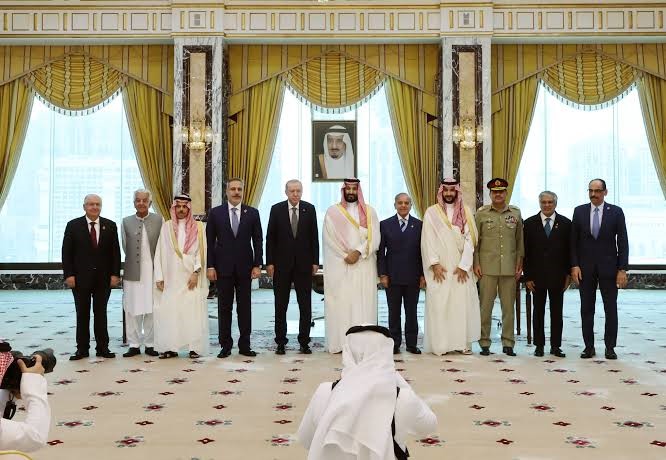
Signed in Mecca on 7 August 2026, the agreement came after months of war, missile and drone attacks in the Gulf, renewed Houthi attacks and pressure on major shipping routes. It also grew out of relationships that were already in place. Saudi Arabia and Pakistan signed a bilateral Strategic Mutual Defense Agreement in September 2025, while Turkiye had been deepening defense cooperation with both countries. The Gulf Cooperation Council has its own collective-defense arrangements. What is new is the ttrilateral commitment and the effort to turn separate ties into organised cooperation.
This does not mean that the pact is replacing older alliances. Turkiye remains a NATO member, Saudi-US security ties continue although this pact is the direct consequence of low confidence in US as a security guarantor. Saudi Arabia gains another security option, Turkiye takes on a larger role in Gulf security, and Pakistan becomes more closely connected to the Middle East. The wider significance is that the three are trying to take more responsibility for their own security rather than relying only on outside powers.
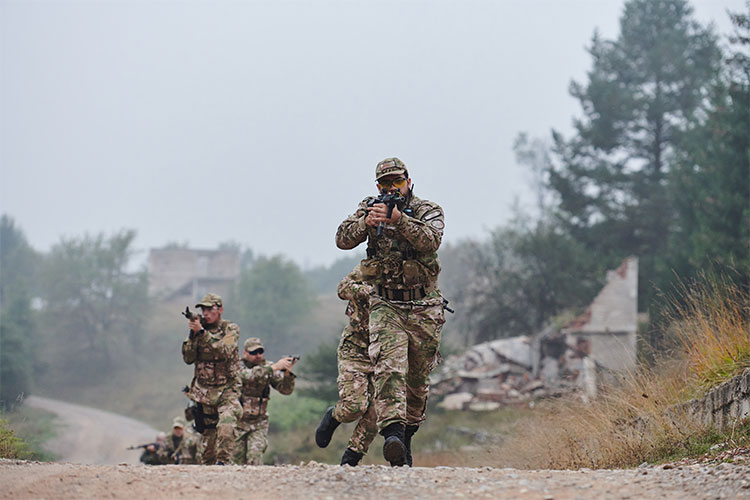
The promise will matter only if the governments can make it work. Turkiye says the ttrilateral coordination among foreign ministers, defense ministers and senior military commanders, with a secretariat to be based in Saudi Arabia. Joint land, naval and air exercises are planned, along with cooperation on air defense, unmanned systems and defense production. These steps may matter more at first than promises about fighting a war together. They will show whether the three militaries can share information, plan together and help one another when time is short.
The real difficulty comes after an attack. The full text has not been publicly released, so it is still unclear exactly what each country would be expected to do. Turkish Foreign Minister Hakan Fidan has said the three would consult on the level and form of support requested by the country under attack. NATO offers a useful comparison, but only to a point. Article 5 requires allies to help, while allowing each government to decide what action it considers necessary. NATO also has decades of joint planning, exercises and command arrangements behind that promise. The Mecca pact does not yet have that experience. Its credibility will depend on whether the three can quickly agree on what happened, decide what support is needed and provide it.
The importance of reliable information and quick consultation became clear within days. Two days after the signing, the Houthis said they had attacked Saudi Aramco’s Jazan refinery with a drone. Saudi authorities confirmed a fire but did not publicly say what caused it. Saudi Arabia did not publicly ask Turkiye or Pakistan to intervene, so the incident was not a test of whether the pact worked. The partners also do not see every threat in the same way. Saudi Arabia faces security problems linked to Iran and the Houthis. Turkiye must weigh risks in Syria and tensions with Israel while meeting its NATO commitments. Pakistan cannot ignore India or security along its own borders. A promise meant to deter an attacker could therefore also pull the other two into a conflict they would prefer to avoid.
For the pact to strengthen regional stability, it will need to remain defensive and focus on threats the three countries actually share. Pakistan and Turkiye have said it is not aimed at Iran or any other country. Even so, both Iran and Israel will watch closely to see how the agreement develops. Pakistan’s nuclear weapons may also shape how the pact is viewed, but nothing published so far says that Saudi Arabia or Turkiye receives a Pakistani nuclear guarantee. For now, the safest course is to build cooperation in areas where all three countries have clear common interests.
The pact does not need a major war to prove its value. The three countries can begin by sharing information, holding joint exercises and working together to protect shipping, ports and energy facilities. These are practical areas where cooperation can be tested before a crisis. Turkiye has also said the agreement is open to other countries and has mentioned Egypt as a possible future member. But expansion should come later. The first priority should be making the partnership among the founding three work.
The Mecca agreement matters for the Middle East because it could strengthen deterrence and give Saudi Arabia, Turkiye and Pakistan a greater role in regional security. But its importance will depend less on the promise made in Mecca agreement than on what the three countries do when one of them actually needs help. If they can respond quickly and provide useful support, the pact could become an important part of regional security. If they cannot, it will remain stronger on paper than in practice.

- Did Pakistan Overestimate Its Influence over the Taliban After the Doha Agreement? - September 4, 2026
- Is Pakistan Prepared for the Economic Costs of a ProlongedUS–Iran War? - September 4, 2026
- Can the Makkah Joint Defence Agreement Deter Conflict Without Increasing Regional Tensions? - September 4, 2026