Author Recent Posts Eshrat Fatima Latest posts by Eshrat Fatima (see all) Is Pakistan emerging as a new middle power? – June 24, 2026 Can Economics Bridge the Divide? Trade Relations under Modi’s India – June 16, 2026 Transit of Goods Order 2026: The Legal Road to Regional Integration – May 14, 2026
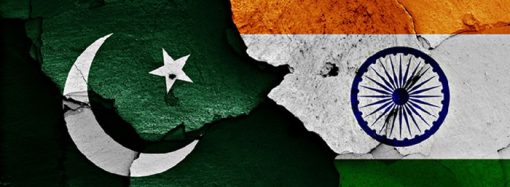
Economic interaction can create shared incentives for cooperation, buttress mutual economic interests, and provide a foundation for India and Pakistan to move toward more stable and constructive relations. In spite of the close location of these two nations and their shared history and economic complementarities, the level of trade and economic interaction between the two is rather insignificant. The reason for this situation lies in the existence of a myriad of political controversies and security issues which did not allow building proper economic ties between the countries. Under the leadership of PM Modi, the economy of Pakistan has become largely dependent on security and strategic goals. One ponders: can economics still serve as a bridge across one of South Asia’s deepest divides?
For many years, there has been an opinion that trade is one of the most sensible ways of improving relations between India and Pakistan. Both nations made modest moves towards economic normalization during the early 2000s. Trade between India and Pakistan grew consistently; moreover, political figures realized the economic benefits of closer relations. Geographic proximity offered lower transportation costs, shorter delivery times, and easier access to neighboring markets. Economists in both countries broadly agreed that normalized trade relations could generate substantial economic benefits. Perhaps even more important is that normalized trade relationships could increase the cost of conflict, making it less likely.
The arrival of the Modi government in 2014 was a turning point in the development of bilateral relations. Initially, there were hopes that economic cooperation and diplomatic engagement might continue despite longstanding political disagreements. However, a series of developments quickly undermined those expectations. The Pathankot incident in 2016, the Uri incident in the same year, and the Pulwama attack in 2019 hardened attitudes in New Delhi. Trade and economic cooperation increasingly became linked to political and security concerns as a consequence.
The major turning point arose in the year 2019. After the Pulwama incident, India suspended Pakistan’s status as the Most Favoured Nation (MFN) and increased tariffs for Pakistani imports. Later that year, India revoked Article 370, ending the special constitutional status of Jammu and Kashmir. Pakistan reacted strongly against the decision and decided to suspend all forms of bilateral trade. This led to the complete deterioration of a relationship that had been built over many years. Formal trade between the two countries has remained largely frozen since then, with little indication of a comprehensive revival.
Advocates of the Modi government’s strategy maintain that the economic agenda cannot be disassociated from security considerations. In this regard, it becomes extremely difficult to justify the existence of normal trade ties amid conditions of constant security problems and ongoing political differences. They contend that meaningful economic cooperation should follow, rather than precede, progress on issues related to terrorism, militancy, and bilateral security. According to this view, economic steps taken before the solution of political problems may harm national interests in the long term.
The economic consequences of disengagement have become increasingly difficult to ignore however. In the case of Pakistan, the suspension of trade activities has led to an increase in the price at which the country can acquire goods such as medicines, chemicals, raw materials, and agricultural produce since they would otherwise have been acquired at lower prices from India. While Indians have missed out to a lesser extent than the Pakistanis, owing to limited exposure to the Pakistani market, the decline in trade activity between the two nations has adversely impacted the prospects of economic integration in the region.
Paradoxically, the cessation of trade on official channels does not entirely stop trade between the two nations. The trade has been redirected via other nations rather, including the United Arab Emirates and Singapore. While goods that would otherwise be transported directly via the border now have to go through much longer and costlier routes to reach their intended destinations. This roundabout method is bound to increase both transaction costs and inefficiency. It can thus be seen that economic activities continue, although in a less efficient way.
The existence of a significant trust deficit continues to be one of the biggest challenges towards rebuilding sustainable trade relations. Political issues and unexpected events can easily lead to disruptions within trade flows and affect business confidence. Such situations deter the formation of stable business ties that will be crucial for increasing bilateral trade. Mistrust is exacerbated by the influence of media, politics, and pressure groups that feel that they are affected negatively by increased trade activity. Thus, businesses refrain from investing in such ventures due to potential political problems that might arise beyond their control.
The history of other regions shows that political disputes are not always synonymous with total economic seclusion nonetheless. Indeed, many states engage in selective economic dealings despite existing strategic conflicts due to their economic needs. Trade cannot solve any long-standing political disputes, neither should it be seen as a substitute for politics. It is not the solution to all disputes but it can serve as a means to open communication lines, make both sides economically gain and reduce motivations to escalate the situation.
Reopening trade ties between India and Pakistan does not mean that either party has to neglect valid security concerns. It will involve realizing the fact that even some form of economic cooperation will be helpful to both nations without necessarily altering their stances on other political issues on the contrary. The two countries can trade in basic needs and goods, industrial supplies, health related items, and farm produce, thus getting practical advantages without treading on politically charged areas. Steps like engaging in economic cooperation in particular sectors and opening up the trade route can be considered as confidence building measures.
Other than direct economic benefits that normalized trading relationships might bring, it can also bring about technology transfers, lower domestic prices, create markets, achieve economies of scale and foster cooperation in industries such as medicine, information technology, agriculture, chemicals and energy. Though these options are far from being attainable at present, they do show what kind of economic opportunities still remain untapped due to the lack of bilateral interaction.
Geography ensures that India and Pakistan will continue to be neighbors, no matter how the politics turn out. The real issue, therefore, is not about being able to stay away from each other but to find a way to accommodate each other’s interests while making use of the potential for economic advantage. Indeed, under the current Modi administration, trade issues have come to be approached in light of security concerns, in line with the overall geopolitics where economic ties serve as tools for power rivalry.
Trade will not be able to fix decades of mistrust or become a substitute for diplomatic efforts. A prolonged lack of economic engagement hardly holds much promise for improving ties between the two countries and is unnecessarily costly for business and consumers alike nonetheless. A well balanced approach to renewed trade does not mean the end of political disputes but provides an opportunity to communicate, stabilize, and prosper. The issue ultimately isn’t whether India and Pakistan can afford to trade with each other; it’s whether they can afford not to.

- Is Pakistan emerging as a new middle power? - June 24, 2026
- Can Economics Bridge the Divide? Trade Relations under Modi’s India - June 16, 2026
- Transit of Goods Order 2026: The Legal Road to Regional Integration - May 14, 2026