Author Recent Posts Wajeeha Ashfaq Latest posts by Wajeeha Ashfaq (see all) How has the Middle Eastern War Transformed the Iran-Gulf Relations? – July 15, 2026 Will Water Emerge as the Next Battlefield between India and Pakistan? – July 15, 2026 The U.S.-Iran Peace Process and the Lebanon Question – July 15, 2026
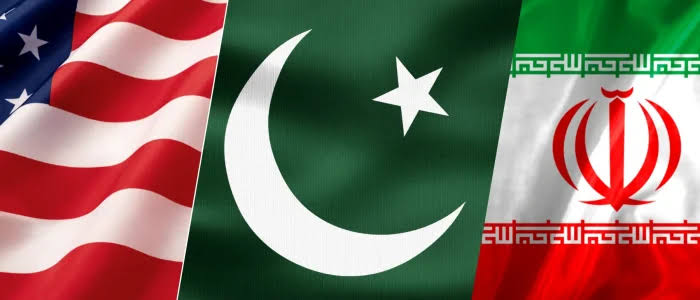
The emergence of Pakistan as a mediator in the U.S.-Iran negotiations is a significant development in Middle Eastern Politics. Pakistan’s role as a mediator is a geopolitical and structural opportunity as well as a strategic rebranding, as it became a facilitator in one of the most complex conflicts between Washington and Tehran. One important step in this process is the signing of a U.S.-Iran Memorandum of Understanding (MOU) through Pakistan’s mediation over the last few months. Pakistan led the Islamabad talks in April, and it has also been an official participant in conveying messages between the United States and Iran. Meanwhile, Pakistan’s role is mostly facilitative rather than being decisional, as it is limited by strategic constraints. In this backdrop, a key question arises: Will Pakistan be able to transform its temporary diplomatic visibility into permanent influence as a middle power mediator?
Pakistan’s role in the U.S.-Iran ‘diplomatic space’ can be better understood as a result of the regional crises and opportunity structures, rather than as a spontaneous diplomatic process. The urgent demand for mediation was created due to the escalating tensions between the United States and Iran, especially concerns about maritime insecurity in the Strait of Hormuz and a threat to global energy supply chains. These crises made a third-party facilitation not only possible but necessary for de-escalation. In this context, Pakistan’s geopolitical position gave it certain advantages. The geographical proximity to Iran allowed for quick diplomatic communications and coordination. Additionally, Pakistan’s long history of involvement in the United States’ security and counterterrorism cooperation provided it the leverage in Washington. Moreover, Pakistan is considered in Tehran as a less sanctions-aligned and more regionally involved player than Western mediators, thus making it more acceptable as a communication facilitator. These structural factors put Pakistan in a role to fill a mediation vacuum hitherto occupied by European diplomatic players.
The negotiation process is better understood as a diplomatic facilitation process rather than an authoritative mediation process. Pakistan did not play a decisive role in determining the substantive terms of the agreements. It played a key role in providing a safe environment for U.S.-Iran engagements, especially through the facilitation of formal dialogue in Islamabad. These talks did not immediately lead to a complete ceasefire, but they provided the diplomatic space for communication in the highly fragmented geopolitical environment. Besides the provision of venues, Pakistan also served as a communication facilitator, vital to the exchange of messages between Washington and Tehran, which helped in averting direct diplomatic deadlocks. Such roles are especially vital in situations where formal diplomatic relations are limited or suspended. Additionally, Pakistan has been supported by other actors who engaged in parallel diplomacy, including Qatar, Egypt and Turkey. This helped build a wider multilateral backchannel mechanism that helped to ensure continuity within the dialogue.
Pakistan’s active involvement in U.S.-Iran mediation has been motivated by security concerns, economic vulnerabilities, and the ambitions for strategic repositioning. As far as security is concerned, Islamabad aimed to avoid any Iranian side spillover from the confrontation with the US into its western borders, especially Balochistan, where any instability can worsen the current insurgency and militant challenges in the province. A stable Iran–U.S. relationship is, thus, an important factor in Pakistan’s internal security. Moreover, Pakistan’s vulnerability to global energy market volatility and the Gulf supply chains was high. Mediation thus turned into a practice of ‘economic diplomacy’ to curb the impacts of systemic vulnerability. In addition to material aspects, Pakistan also looked for a strategic rebranding. Islamabad’s strategy of rising as a “middle-power mediator” is an attempt to widen its scope of diplomatic engagements beyond the South Asian region and to prove its significance in global conflict management mechanisms.
The mediation by Pakistan holds significance as it exemplifies the return of “bridge-state diplomacy,” which involves the role of middle powers in communication in a divided international environment. Historically, it has been the function of some selective neutral states, but Pakistan’s role indicates the extension of this function in South Asia. The development also represents a subtle shift in the hierarchy of diplomacy, with non-traditional mediators from the Global South now supplementing the role that has traditionally been played by Western Europe or other major powers. Furthermore, Pakistan’s presence has led to a resurgence of its diplomatic presence in the U.S., further setting the ground for economic cooperation, energy investment, and cooperative relations.
Pakistan’s engagement in the U.S.-Iran peace process provided Pakistan with opportunities as well as challenges. The balancing of relations between two staunch opposites was a big challenge for Pakistan. Additionally, Pakistan also confronted the challenge of maintaining its relations with Iran and other Gulf countries. It, however, successfully managed to balance its relations through strategic diplomacy. The future of Pakistan’s position will be greatly affected by the longevity of the peace deal, as well as Pakistan’s internal political and economic stability and coherence. In this context, Pakistan can continue to play a permanent role in international diplomacy. For that, Pakistan needs to institutionalise its mediating role through the rigorous diplomacy that it demonstrated in this conflict.

- How has the Middle Eastern War Transformed the Iran-Gulf Relations? - July 15, 2026
- Will Water Emerge as the Next Battlefield between India and Pakistan? - July 15, 2026
- The U.S.-Iran Peace Process and the Lebanon Question - July 15, 2026