Author Recent Posts Rabia Anwaar Latest posts by Rabia Anwaar (see all) Militarization of Strategic Naval gateways and Energy Security – October 12, 2026 The Hague Ruling on the Indus Waters Treaty – September 30, 2026 Expansion of Makkah Joint Defence Agreement – September 30, 2026
Militarization of vital Strategic naval gateways by state and non-state actors has become a new normal in maneuvering international politics. Chokepoints are better understood as sites where geography, security politics and market expectations converge, and where risk is distributed as much by perception as by physical disruption. These narrow passageways, having immense significance, are instrumentalized to disrupt global trade and commerce, putting economic and energy security of states to a halt.
Militarization of international waters rarely begins with a blockade. It begins with a drone, a mine, a seized tanker and a naval base built for stability. The logic is asymmetric. A drone costing a few thousand dollars can force a shipping line to reroute vessels worth hundreds of millions, carrying cargo worth even more. Disrupting a vital narrow passageway in international waters does not require winning a naval battle. It requires only that insurers become uneasy. When the perceived risk of losing a vessel rises, even slightly, the insurers raise war-risk premiums, charterers choose longer routes and some carriers suspend transits altogether. Control over a modern chokepoint is therefore shaped less by warships than by the insurance and financial institutions that determine how costly, or how feasible, passage becomes.
The closure of highly significant, trade-related narrow maritime corridors like the Strait of Hormuz and the Bab-el-Mandeb reveals the vulnerabilities of global trade routes and sea-lines. When nearly twenty percent of the world’s petroleum passes through a waterway only twenty-one miles wide at Hormuz, or when Houthi disruptions in the Bab-el-Mandeb force cargo ships into a costly 10-14-day detour around the Cape of Good Hope to Asia-Europe voyages. Suez Canal revenues, a pillar of Egypt’s fragile foreign-exchange position, fell sharply. Freight rates jumped, schedules broke and ports in the Mediterranean found themselves congested for one month and empty the next. International naval missions responded, yet the lesson was uncomfortable that a non-state actor with modest means can tax global commerce without owning a single port. Beyond energy, these passages carry everything from liquefied natural gas to vital agricultural goods. A prolonged conflict in these critical maritime waterways does not merely cause temporary inconvenience, it degrades national purchasing power, jeopardizes industrial productivity and leaves import-dependent economies exposed to geopolitical blackmailing.
Hormuz represents a categorically different case. Iran has long held the threat of closure as a strategic card and every regional crisis revives the question of whether it would play it. It was thought to believe that full closure is unlikely, since Iran also ships its own oil and relies on the same waters and since a closure would invite overwhelming retaliation and anger its largest customer, China. But the realistic danger is it was completely shut down by a super-power to contain Iran while Iran plays its part as a countermeasure. The real danger is not closure but the risk of tanker seizures, GPS jamming, mine incidents and ambiguity about who did what.
What does this do to trade routes? First, it accelerates the search for bypasses, though they are partial. Saudi Arabia’s East-West pipeline to the Red Sea and the UAE’s Habshan-Fujairah line can move several million barrels daily outside Hormuz, but Fujairah sits close to the same tensions, and Yanbu sits on the Red Sea, which brings us back to Bab al-Mandeb. Qatar’s LNG, meanwhile, has almost no alternative exit. Second, revival of grand corridors is also an idea, from the India-Middle East-Europe Economic Corridor to Iraq’s Development Road and the Arctic sea route, to diversify away from single points of failure. Most of these will take years and depend on political settlements that do not yet exist.
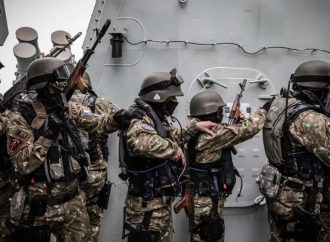
The implications of keeping trade routes as hostages are sobering. These strategic naval gateways have become a battlefield for a full-scale war. A Yemeni civil war, an US-Iran standoff, or a Gulf rivalry can now drag in navies from Pakistan, Turkiye and KSA. Djibouti, a country smaller than many cities, hosts bases from the United States, China, France, Japan, and others, all jostling around one narrow gate. Naval presence reassures, but it also multiplies the chances of miscalculation. The more flags in a crowded strait, the thinner the margin for error. The burden falls unevenly for the economic security of states. Wealthy importers can build strategic reserves and diversify suppliers. A country like Pakistan, dependent on Gulf crude and LNG and already stretched by debt, feels an oil spike as a currency crisis, a fuel queue and a dimmed factory floor, all at once.
States or non-state actors instrumentalize strategic waterways when they decide to go hard way to make their demands fulfilled from the rival party. The solution is not simply more warships, but rather a thicker web of shared interests which include regional maritime-security arrangements and most importantly diplomatic channels remain open even when everything else is halted. Importers should invest in reserves, renewables and regional grids, not as ideology but as insurance against geography. Ultimately, global energy and trade security should no longer depend on preserving open seas as an absolute norm, but on how effectively nations can build alternative pathways around geography they can no longer fully control as international relations always depend on the interests of states.

- Militarization of Strategic Naval gateways and Energy Security - October 12, 2026
- The Hague Ruling on the Indus Waters Treaty - September 30, 2026
- Expansion of Makkah Joint Defence Agreement - September 30, 2026