Author Recent Posts Mahmood ul Hassan Latest posts by Mahmood ul Hassan (see all) Did Pakistan Overestimate Its Influence over the Taliban After the Doha Agreement? – September 4, 2026 Is Pakistan Prepared for the Economic Costs of a ProlongedUS–Iran War? – September 4, 2026 Can the Makkah Joint Defence Agreement Deter Conflict Without Increasing
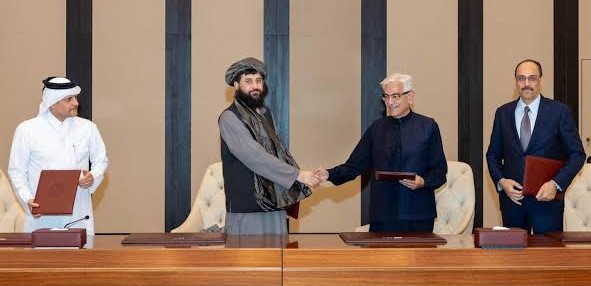
Pakistan expected a lot and probably overestimated its expectation and influence over Taliban after the 2020 Doha Agreement. Pakistan had understandable reasons to expect a better security relationship. It had helped the peace process move forward and maintained longstanding ties with Taliban leaders. The Doha Agreement committed the Taliban to preventing Afghan territory from being used by groups threatening Pakistan and other countries and after taking power, Taliban assured Pakistan that the TTP would not be allowed to use Afghan territory against Pakistan. The fall of Ashraf Ghani’s government also ended the rule of an administration that had close ties with India and an often-difficult relationship with Pakistan. Pakistan’s miscalculation was not that it believed it could control the Taliban, but that it overestimated how far this political change would translate into cooperation on the security issues that mattered most to it.
Disputes over the Durand Line have historically troubled relations from Pakistan’s earliest years, while Afghanistan’s ties with India at different periods have long concerned Pakistan. Afghanistan has therefore long mattered to Pakistan as more than an ordinary neighbour. Pakistani security planners have sought to avoid serious pressure on both the eastern and western fronts at the same time. The change of government in 2021 removed one political order, but it did not remove the nationalism, mistrust and competing interests that had shaped relations for decades.
The Doha Agreement nevertheless gave Pakistan reasons to expect a better outcome. Pakistan was not a party to the agreement, but it helped the negotiations move forward and had long established channels with Taliban leaders. After the Taliban returned to power, Pakistani officials said they had received assurances that the TTP would not be allowed to use Afghan territory against Pakistan. Expecting greater cooperation was therefore understandable.
Once in power, Taliban leaders faced a different set of calculations. They had to preserve internal unity and show Afghans that Afghanistan was making its own decisions. Taliban rule did not erase Afghan nationalism or old sensitivities over the border and sovereignty. Any Afghan government seen as simply following Pakistani instructions would risk appearing weak at home. That political reality does not change Pakistan’s security concern. It does help explain why long-standing ties with Taliban leaders could coexist with resistance when Pakistani demands conflicted with what the Taliban authorities saw as their own political interests.
TTP is the clearest test. The Afghan Taliban and the TTP are separate organisations, but their relationship is deep: they developed ideological, personal and battlefield ties, and TTP pledged allegiance to Taliban leadership. United Nations monitoring has repeatedly reported a major TTP presence in Afghanistan, and the latest report records continued Taliban support for the group alongside limited steps to restrain it. Those steps matter, but they have not met Pakistan’s basic demand that Afghan territory should not be used for attacks against Pakistan.
India adds another layer. Its position in Afghanistan fell sharply after 2021, but it has since rebuilt engagement with the Taliban authorities, including high-level diplomatic contact. For Pakistan, India is not an ordinary third country in Afghan affairs. Pakistan’s concern is not limited to diplomacy. It has repeatedly accused India of backing anti-Pakistan militants operating from Afghan territory and using them as proxies, this shapes Pakistan’s assessment of threats on its western border. For Pakistan, the fall of the previous Afghan order initially appeared to reduce one long-standing concern that was Indian influence over the previous Ghani government in Afghanistan. Yet India has rebuilt its engagement with the Taliban authorities while the TTP threat has worsened.
Afghanistan’s wider regional options do not change a basic fact: Pakistan remains a neighbour it cannot afford to ignore. The two countries share a long border, Pakistan remains a major route for Afghan trade and transit, and insecurity on either side quickly affects the other. Iran and Central Asia have given Afghanistan alternative trade routes, and its wider regional relationships have reduced some of its dependence on Pakistan. But these alternatives do not replace Pakistan. Even when political relations are poor, Pakistan remains important to Afghanistan’s trade, transit and security. The difficulty for Pakistan is that this importance has not consistently produced cooperation on its most pressing security concerns. That gap has become one of the defining problems in the relationship.
By 2026, those gaps were impossible to miss. Pakistan carried out strikes inside Afghanistan against targets it said were linked to militants attacking Pakistan. Which was followed by border clashes, The contrast with 2020 is striking: Pakistan had helped move forward the negotiations that led to the Doha Agreement; six years later, Pakistani and Taliban forces were exchanging fire over the cross-border security threat Pakistan had hoped Taliban rule would make easier to contain.
None of this means engagement with the Taliban was a mistake. Pakistan cannot choose who governs Afghanistan, and geography makes a working relationship unavoidable. The deeper miscalculation was overestimating how far a change of rulers would ease old problems that had survived very different Afghan governments. Pakistan’s Afghanistan policy should be built around a durable state-to-state relationship, rather than assumptions about whether particular rulers are friendly or familiar. The aim should be a relationship in which cross-border militancy is contained, the border can be managed without repeated crises, and both countries have enough economic and political interest in cooperation to prevent every dispute from becoming a confrontation. Pakistan needs influence in Afghanistan, but it needs something more sustainable, a relationship in which its core security interests do not depend on who governs Afghanistan.

- Did Pakistan Overestimate Its Influence over the Taliban After the Doha Agreement? - September 4, 2026
- Is Pakistan Prepared for the Economic Costs of a ProlongedUS–Iran War? - September 4, 2026
- Can the Makkah Joint Defence Agreement Deter Conflict Without Increasing Regional Tensions? - September 4, 2026