Author Recent Posts Rabia Anwaar Latest posts by Rabia Anwaar (see all) Militarization of Strategic Naval gateways and Energy Security – October 12, 2026 The Hague Ruling on the Indus Waters Treaty – September 30, 2026 Expansion of Makkah Joint Defence Agreement – September 30, 2026
The Permanent Court of Arbitration’s (PCA) decision puts legal rules above politics, making it clear that countries cannot unilaterally suspend an international treaty even during armed conflicts. The award by PCA of rejecting India’s attempt to hold the IWT ‘in abeyance,’ the Court reflected that on India’s move that it is not a valid legal option. The tribunal also ruled that issues like cross-border terrorism are completely separate from a water-sharing agreement. This means national security arguments cannot be used as an excuse to divert or stop the flow of waters or the rules enabling this flow.
As far as suspending a treaty under changed circumstances, it is important to understand that under international law, suspending an old treaty by claiming a ‘changed circumstance’ is nearly impossible because the legal threshold is deliberately set extraordinarily high to prevent countries from walking away from their commitments whenever conditions become inconvenient. To successfully invoke this defense, a state must prove that the original conditions were the fundamental basis of its consent, the change was completely unforeseen and not self-inflicted, and the shift radically transforms the burden of its remaining obligations. In the case of the Indus Waters Treaty, the PCA ruled that issues related to climate change, population growth, and technological advancements are gradual shifts rather than sudden, unforeseen disruptions, and because the 1960 agreement already contains built-in mechanisms to adapt to technical and environmental changes, these factors fail to meet the strict legal standard required to suspend or terminate the treaty.
The Court’s conclusion on Treaty status is particularly significant because the IWT contains no mechanism through which either party can simply suspend the treaty through unilateral political declaration. India announced in April 2025 that the Treaty would be held in abeyance following the Pahalgam attack, but the Court found that this action did not suspend the Treaty’s legal operation. Consequently, India remains bound by the Treaty’s substantive obligations, including the provisions governing its use of the Western Rivers the Indus, Jhelum and Chenab and the design and operation of hydroelectric projects on those run-of-rivers. The ruling therefore reinforces the international law principle that treaty cannot be dismissed merely by unilateral political declaration.
The geopolitical importance of this finding is far greater than the immediate legal dispute. The IWT has historically functioned as the only institutional arrangements that survived repeated India-Pakistan wars, crises and prolonged diplomatic hostility. Its importance derives not simply from water allocation but from the predictability it creates for two nuclear-armed states sharing a highly interconnected river system. The Hague ruling prevents the bilateral water relationship from becoming entirely subject to political coercion. It also demonstrates that the Treaty’s dispute-settlement mechanism retains relevance even during periods of severe political confrontation.
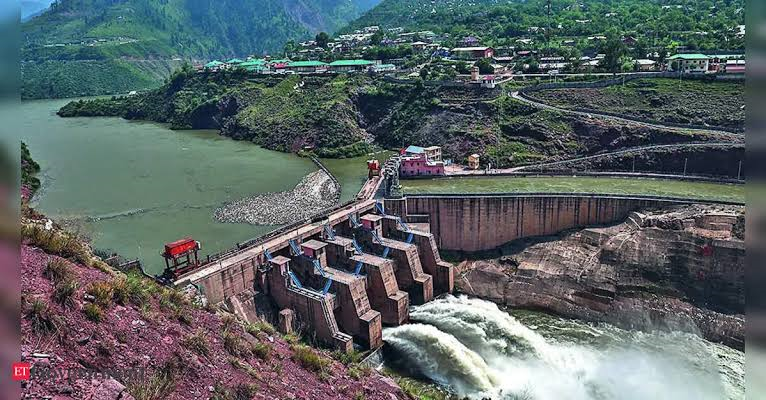
Ratle, however, remains the most immediate practical issue. The Ratle Hydroelectric Plant is an approximately 850-MW run-of-river project being constructed on the Chenab River in Indian-administered Jammu and Kashmir. India is permitted in the IWT to develop hydroelectric power on the Western Rivers, but that right is not unlimited. The Treaty permits such development subject to specific engineering and operational restrictions designed to prevent upstream infrastructure from giving India excessive control over flows reaching Pakistan. The dispute over Ratle therefore is not fundamentally about whether India may produce hydropower; it is about whether the project’s particular design falls within the limits established by the Treaty.
The immediate future will probably involve parallel legal and diplomatic tracks. Legally, the Neutral Expert’s determination on Ratle and Kishenganga-related technical questions will remain critical, particularly because the present interim restrictions are linked to the eventual technical measures. Diplomatically, Pakistan should push for the restoration of the Permanent Indus Commission as the principal channel for routine communication, data exchange and notification of projects. India, for its part, has a clear pathway back to treaty compliance: resume participation in the Treaty’s institutional mechanisms, restore regular communication with Pakistan, provide the information required under the IWT, and allow technical questions to proceed through the Neutral Expert and other agreed mechanisms. The Treaty does not require the two countries to resolve their political disputes before cooperating on water.

- Militarization of Strategic Naval gateways and Energy Security - October 12, 2026
- The Hague Ruling on the Indus Waters Treaty - September 30, 2026
- Expansion of Makkah Joint Defence Agreement - September 30, 2026