Author Recent Posts Mahmood ul Hassan Latest posts by Mahmood ul Hassan (see all) Did Pakistan Overestimate Its Influence over the Taliban After the Doha Agreement? – September 4, 2026 Is Pakistan Prepared for the Economic Costs of a ProlongedUS–Iran War? – September 4, 2026 Can the Makkah Joint Defence Agreement Deter Conflict Without Increasing
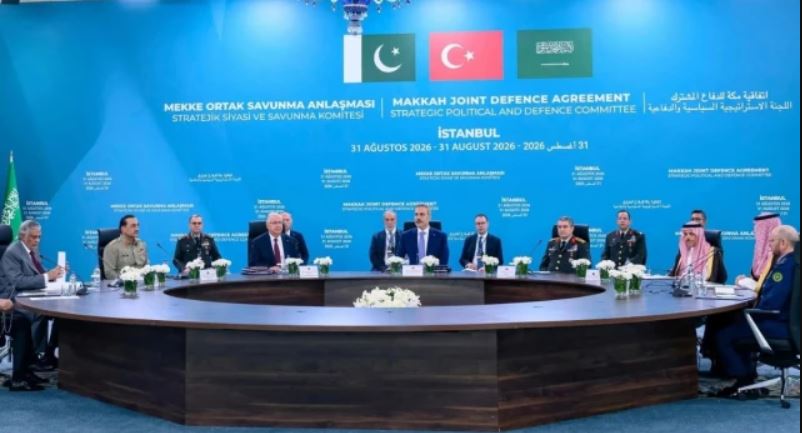
The Makkah Joint Defence Agreement can deter conflict in the region, only if Saudi Arabia, Pakistan and Turkiye draw a clear line between defending one another and automatically joining one another’s wars. Its strength lies in making an attacker think twice: pressure on one member could now bring political, intelligence and military support from the other two. That can make a serious attack harder to carry out and less likely to succeed. The danger appears when the promise is stretched too far. A drone strike, a border incident or a confrontation involving forces abroad should not automatically pull all three countries into a wider war. The agreement will make the region safer only if serious attacks carry clear consequences while uncertain cases still leave room for political judgment.
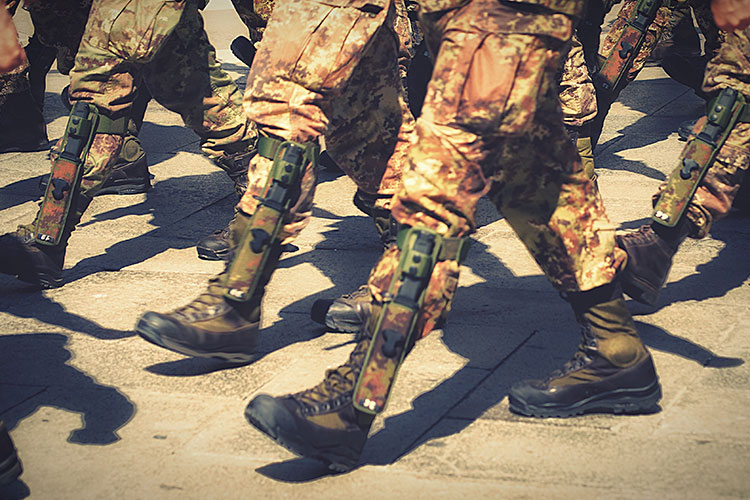
That does not require the three countries to build a NATO-style military structure. Better warning, shared intelligence, stronger air and drone defences, joint exercises and practical help during a crisis can already change an attacker’s calculation. If an adversary believes an attack will be detected sooner, intercepted more effectively and met with wider backing, the chances of success fall. The pact is still new, so its credibility will not be decided by the wording of a summit statement or by how often officials speak of solidarity. It will be decided in moments of pressure, when the members have to show that they can assist one another quickly enough to make aggression look like a bad gamble.
The problem is that making the three members safer could also make other countries feel less safe. Iran may wonder whether closer Saudi, Turkish and Pakistani military cooperation could eventually be directed against it. India will watch for signs that Pakistan has gained stronger support from its new partners, and Israel will pay close attention to Turkiye’s role and to any suggestion that the pact is becoming a bloc aimed at particular states. Calling the agreement defensive will not settle those concerns. Governments outside it will look at what the members actually do: protecting airspace, energy facilities and other essential sites sends a very different message from placing offensive forces close to rivals, talking loosely about nuclear protection or conducting exercises that appear designed around a named enemy. Intentions matter, but so does how those intentions are read by others.
Recent Houthi claims of attacks on Saudi targets show how quickly the agreement could face a crisis in which responsibility is disputed. Saudi Arabia may reasonably expect Pakistani and Turkish help in intercepting drones, protecting energy facilities or tracing the source of an attack, but that still leaves the more dangerous question of who should be struck in response. An armed group may receive weapons, money or political support from another state without every operation being directly ordered by that government. If every attack by an armed group is treated as proof that another state ordered it, a limited incident could quickly turn into a conflict between countries. The safer course is to help the country under attack first, gather evidence and then decide, at the political level, whether retaliation against a suspected sponsor is justified.
Pakistan has already faced a version of this dilemma. In 2015, Pakistan’s parliament supported defending Saudi territory but declined to join the Saudi-led military campaign in Yemen. That decision drew a useful line between defending a partner and taking part in every war that partner chooses to fight. The same principle should work in all directions under the Makkah agreement. Pakistan should not automatically inherit every Saudi confrontation or every Turkish dispute in Syria, just as Saudi Arabia and Turkiye should not be assumed to enter every India-Pakistan crisis. A second danger is that a government expecting automatic backing may take risks it would otherwise avoid. A defence commitment becomes more credible when the members understand which situations it covers and which decisions remain their own.
None of this requires Islamabad to take a passive role. Pakistan can help Saudi Arabia through training, intelligence sharing, air and drone defence and military planning while keeping its channels with Iran open. That diplomatic room is part of Pakistan’s usefulness, especially in a region where a crisis can widen faster than governments expect. Nuclear weapons require similar caution. Nothing made public so far establishes a Pakistani nuclear defence guarantee for Gulf partners, and hints suggesting otherwise would create anxiety in Iran, Israel and India without necessarily making the agreement stronger. Stronger non-nuclear defences, clear rules for consultation and careful investigation of disputed attacks would make the pact more believable while keeping decisions about a wider war in political hands.
The Makkah agreement does not need a single common enemy to work. The different interests of Saudi Arabia, Pakistan and Turkiye may actually help prevent a crisis from spreading, because each has reasons to stop the others from turning a separate dispute into a shared war. What they need is a common understanding that a serious attack on one member will bring meaningful support from the others, while smaller or disputed incidents will be judged on their facts. If that balance holds, the agreement can strengthen deterrence without pushing the region into new rival camps. Its success will be measured in crises that stop short of war because an attacker decides that the likely gains are too small and the likely costs too high.

- Did Pakistan Overestimate Its Influence over the Taliban After the Doha Agreement? - September 4, 2026
- Is Pakistan Prepared for the Economic Costs of a ProlongedUS–Iran War? - September 4, 2026
- Can the Makkah Joint Defence Agreement Deter Conflict Without Increasing Regional Tensions? - September 4, 2026