Author Recent Posts Rabia Anwaar Latest posts by Rabia Anwaar (see all) Significance of Multilateral Maritime Military Coalition – August 28, 2026 How Pakistan’s Mediating Role in the U.S.-Iran Conflict Differs from Its Previous Mediation Efforts – June 24, 2026 Trump in Beijing and its significance for the Future of U.S.-China Relations – June 3,
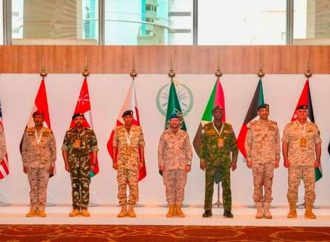
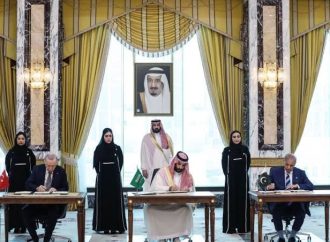
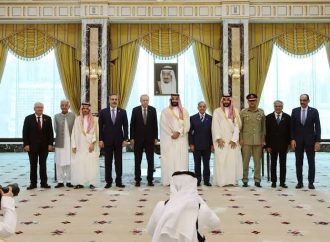
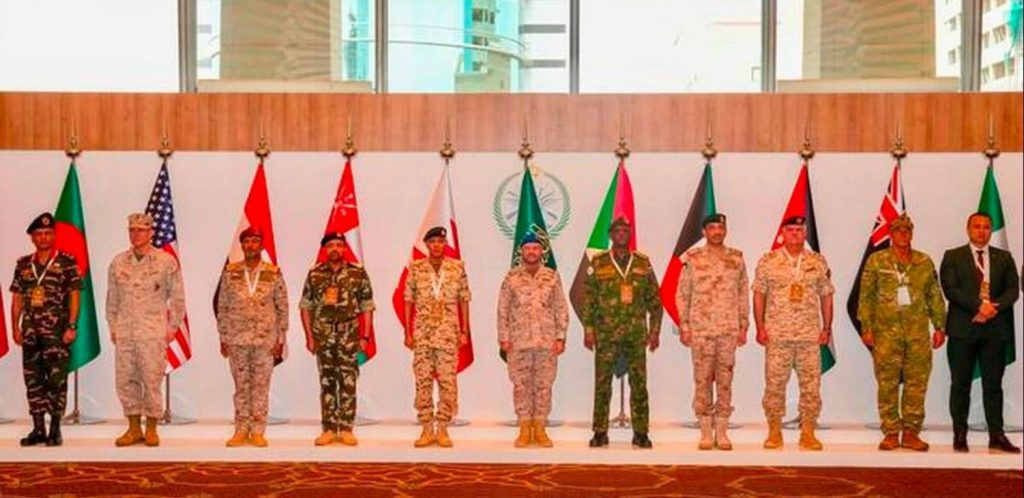
The formation of a long-awaited maritime coalition in Middle East is here to protect the freedom of navigation along the trade route of Bab-al-Mandeb to the Mediterranean Sea via Rea Sea and Suez Canal. All eyes are on Saudi led maritime military coalition, an amalgam of 14 nations and EU. It is a maritime defense alliance that has happened in response to the naval blockades imposed by Tehran backed Houthi Milita group.
The Saudi-led maritime coalition is a bold declaration that Gulf nations are finally ready to captain their own security, moving beyond the era of relying on distant superpowers to guard their waters. The global order in the Middle East has operated on a simple but fragile premise that the United States and its Western allies would ensure the safe passage of oil through the region’s vital waterways i.e., the Strait of Hormuz, the Bab al-Mandab, the Red Sea; these were American zones of responsibility and the Gulf monarchies paid their security dues through military basing rights and petrodollar investments. But that era seems quietly coming to an end. The recent formation of a Saudi-led maritime military coalition brings together fourteen nations from across the Muslim world and beyond signals something far more significant than a simple reshuffling of naval assets. This is a region finally deciding to take responsibility for its own front yard.
What makes this coalition genuinely groundbreaking is not its size or its masculine military strength, but its political architecture. Saudi Arabia has performed a remarkable diplomatic dexterity by carefully framing the initiative as a purely defensive alliance that names no specific enemy. It has managed to bring together nations that are often at loggerheads such as Turkey and Egypt, Pakistan and Qatar, countries that have vastly different relationships with Iran, however, under a single banner of shared interest. This is no small feat in a neighborhood where trust is scarce, suspicion runs deep and anarchy sits on top. The genius lies in the ambiguity where each member state can interpret the coalition’s purpose through its own national lens, whether that means countering Houthi attacks, deterring Iranian aggression, or simply protecting its own commercial shipping. This broad tent approach gives the coalition political staying power that a more explicitly anti-Iran alliance could never achieve.
Yet the true test of this initiative will not be found in the press releases or the inaugural naval exercises. It will be measured in moments of genuine crisis. The coalition was born out of necessity, following a series of disruptive attacks on commercial vessels that exposed just how vulnerable global shipping had become. But military coordination alone cannot solve the deeper political fractures that make these waters dangerous in the first place. The Houthi campaign in Yemen, the broader Saudi-Iranian rivalry, the unresolved conflicts simmering across the region these are not problems that can be bombed into submission or patrolled into irrelevance. A coalition that focuses exclusively on naval interdiction without investing in diplomatic channels risks becoming a highly expensive band-aid on a deep wound. The members must recognize that maritime security is ultimately a reflection of political stability on land, and act accordingly.
Perhaps the most undervalued dimension of this coalition is what it says about shifting global power dynamics. For years, the United States has been signaling its gradual disengagement from the Middle East, pivoting its strategic attention toward Asia and the Pacific. This is not an abandonment, but it is a recalibration. The Gulf states have watched this shift with growing unease, realizing that the security blanket they had taken for granted might not always be there. Rather than panicking or desperately clinging to American guarantees, Saudi Arabia has chosen to lead. This coalition is a message to Washington: we are ready to carry more of the weight, but we also expect to be treated as partners rather than clients. It is a maturing of the relationship, one where the Gulf states finally step into the driver’s seat of their own destiny.
However, the coalition’s long-term viability will depend on its ability to balance two competing pressures such as the need for decisive action and the imperative of maintaining internal cohesion. When a Houthi missile strikes a tanker or an Iranian fast boat harasses a commercial ship, the pressure to respond forcefully will be immense. But any overt military escalation risks fracturing the coalition, exposing the deep divides that the ambiguous charter was designed to paper over. The members must develop a shared protocol for de-escalation and crisis management that respects each nation’s red lines while preserving collective unity. This is the hard, unglamorous work of alliance-building. It’s the kind that happens in meeting rooms and over secure communication lines, not on the decks of warships. it is precisely this work that will determine whether this coalition becomes a lasting institution or a short-lived experiment.
The Saudi-led maritime coalition represents something deeply human: the desire to take control of one’s own fate. For too long, the Gulf states have been talked about as objects of great power competition rather than as subjects capable of shaping their own environment. This initiative changes that narrative. It acknowledges that security is not a commodity to be imported but a muscle to be built through cooperation, trust, and shared sacrifice. The waters of the Red Sea and the Arabian Gulf have witnessed centuries of history empires rising and falling, merchants trading, navies clashing. Now, they are witnessing something new: a regional order being written by regional hands. Whether that story ends in stability or strife will depend less on the warships involved and more on the wisdom of the leaders who command them.