Author Recent Posts Wajeeha Ashfaq Latest posts by Wajeeha Ashfaq (see all) How has the Middle Eastern War Transformed the Iran-Gulf Relations? – July 15, 2026 Will Water Emerge as the Next Battlefield between India and Pakistan? – July 15, 2026 The U.S.-Iran Peace Process and the Lebanon Question – July 15, 2026
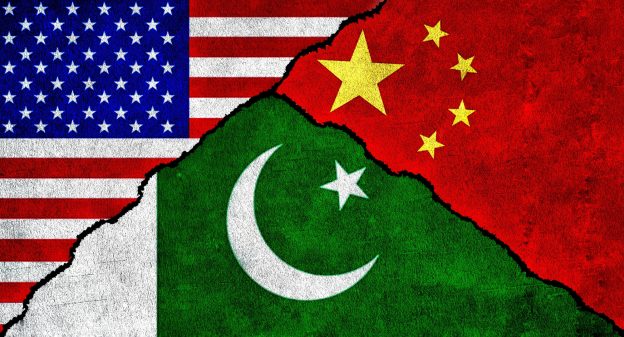
Cooperation between the United States and China could likely result in greater opportunities for Pakistan. The reduced hostility between both countries may have stabilizing consequences for the region. The intensification of rivalry, however, could lead to challenges for Pakistan, including its policy of balancing and the overall stability of the region. While Pakistan still has to work on reducing its domestic barriers to development but a less confrontational stance between Beijing and Washington can provide Islamabad with an impetus for developing. A question, therefore, arises: How could the U.S.-China rivarly or cooperation particularly create challenges or opportunities for Pakistan?
The cooperation between China and the United States could possibly reduce the pressure on Pakistan regarding strategic hedging. As the United States hopes of India being a rival to China have faded. Additionally, India’s position and its relation with the U.S. after May 2025 Marka e Haq have also weakened, creating a ground for U.S.-China cooperation. Pakistan could get a greater space for pursuing its policy of diversification of foreign relations, which is already underway. As Pakistan seeks to position itself as a manufacturing and logisitics’ hub, the reduced rivalry between the two global powers would ease the pressure on Pakistan to choose sides and engage politically with both sides simultaneously. Pakistan is one of those countries that maintains an economic relationship with China, while also regularly engaging with Washington. Thus, the decreased competition in the region can provide Pakistan with a diplomatic leverage between both states.
In economic and security matters, Pakistan can achieve a lot from a détente period between China and the United States. There is a greater possibility that the China-Pakistan Economic Corridor may prosper greatly due to the reduced geopolitical obstacles. The stability of the region can contribute to the opportunities for greater investment, without bigger firms worrying about geopolitical competition. Additionally, if tensions reduce between the United States and China, the complete polarization of Western and Eastern financial institutions may ease. This may lead to greater integration and a possible contribution from Western institutions to regional connectivity. Moreover, the regional security concerns due to the return of Taliban 2.0 may be better handled if both the great powers align on agendas of cooperation in maintaining the security of the region. This will benefit Pakistan in every aspect as Pakistan’s biggest contemporary security challenge is the Afghanistan issue.
If the relations between China and the United States, however, do not ease, the rivalry may prove to be a setback for Pakistan diplomatically. In case of intensification of rivalry between the two global powers, with one right in the neighbourhood of Pakistan, Pakistan may face challenges in balancing its relationship with both. It could increase the pressure on Pakistan to choose a side, whereas Pakistan’s foreign policy is driven by the goal of ‘diversification’. Pakistan has largely been benefiting from its economic ties with China through the China-Pakistan Economic Corridor. At the same time, particularly in the latter half of 2025, Pakistan progressed its trade and investment-based relations with the United States. Renewed tensions would, thus, complicate Pakistan’s foreign policy decision-making.
South Asia could become a center stage for another round of intensified geopolitical rivarly if both sides fail to cooperate. The U.S. has already been working on a containment policy in the Indo-Pacific region. This may embroil Pakistan in a strategic rivarly, given the important geostrategic location of Pakistan. Moreover, Pakistan’s security is closely linked to Afghanistan. The competing interests in the region may hinder the efforts on counter terrorism and long-term regional stability due to the spillover impacts of Afghanistan’s instability in the region, including Pakistan.
The future trajectory of U.S.-China relations will have profound consequences on Pakistan’s security, political, and economic aspects. While Pakistan cannot determine the course of action between the two major powers; however, it will be greatly affected by it. Islamabad should learn from history and try not to repeat the old mistakes of relying on a single power completely. Pakistan must focus on continuing its strategy of diversifying its relations with both without leaning on any one side. Its long-term success will be determined by its ability to utilize the geopolitical opportunities to its interest through a balanced and coherent foreign policy. In the contemporary era marked by great power competition, Pakistan’s strength lies in acting as a bridge rather than a battleground between both powers.

- How has the Middle Eastern War Transformed the Iran-Gulf Relations? - July 15, 2026
- Will Water Emerge as the Next Battlefield between India and Pakistan? - July 15, 2026
- The U.S.-Iran Peace Process and the Lebanon Question - July 15, 2026