Author Recent Posts Rabia Anwaar Latest posts by Rabia Anwaar (see all) The Hague Ruling on the Indus Waters Treaty – September 30, 2026 Expansion of Makkah Joint Defence Agreement – September 30, 2026 Significance of Multilateral Maritime Military Coalition – August 28, 2026
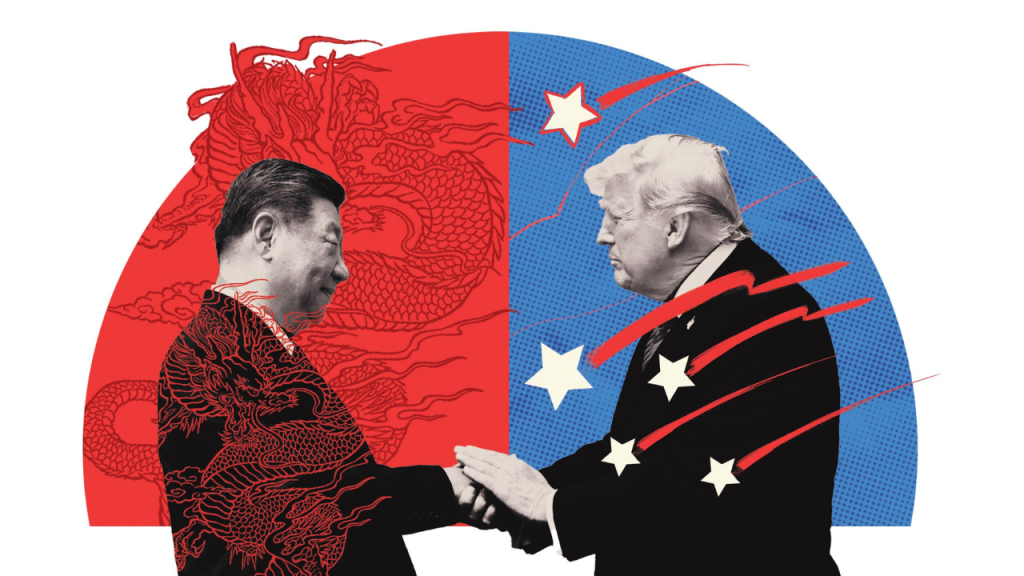
The recent visit of U.S. President Donald Trump to China was far more than a ceremonial diplomatic engagement between two world leaders. It unfolded at a time when relations between Washington and Beijing remain deeply shaped by strategic competition, technological rivalry, and trade disputes. Despite these tensions, the visit demonstrated that both powers continue to recognize the importance of dialogue in preventing further deterioration of bilateral ties. More importantly, the summit highlighted how diplomacy between major powers increasingly relies not only on policy negotiations but also on symbolism, optics and carefully managed political messaging. The meetings between Trump and Chinese President Xi Jinping therefore carried significance beyond immediate policy outcomes, offering insight into how both states view the future of U.S.-China relations.
From the moment Trump arrived in Beijing orchestrated an elaborate reception that reflected the strategic importance attached to the visit. He was personally received by Chinese Vice Premier Han Zheng along with senior officials, military honor guards, and ceremonial displays involving children waving American and Chinese flags together. In diplomatic practice, the rank of the official welcoming a foreign leader often carries symbolic significance and here comes the twist. The absence of President Xi Jinping at the airport indicated a calibrated diplomatic approach. China sought to honor Trump as a major global leader without elevating the reception to the highest possible level reserved for exceptionally significant state occasions. The gesture therefore reflected both warmth and strategic caution, higlighting Beijing’s intention to maintain stable engagement with Washington while carefully managing the optics of equality, prestige, and political hierarchy.
The gesture signified China’s desire to project stability in bilateral relations while portraying itself as a confident global power willing to engage the United States from a position of parity. In Chinese diplomatic culture, symbolism and protocol often carry deep political meaning and Beijing used the occasion to reinforce President Xi Jinping’s image as a statesman capable of managing relations with Washington amid intensifying global competition. Such arrival gestures were designed to communicate respect, stability and diplomatic maturity while portraying China as a confident global power capable of engaging the United States on equal footing. Domestically, the reception also strengthened Xi Jinping’s image as a global statesman who could host the American president with authority and confidence at a time when China seeks greater influence in international affairs.
The visit itself revolved around several pressing issues that continue to define contemporary U.S.-China relations. Trade remained central to discussions, particularly regarding tariffs, supply chains, agricultural exports and restrictions on advanced technologies and artificial intelligence. Regional security issues such as Taiwan and Iran tensions were also discussed, though both sides avoided highly confrontational public statements on these matters. Another major objective of the summit was to prevent relations from entering a phase of uncontrolled hostility that could damage global economic and political stability. Rather than seeking dramatic breakthroughs, the meetings appeared focused on maintaining communication channels, managing disagreements and reducing the risks associated with strategic rivalry between the world’s two largest economies.
One of the most notable aspects of the visit was the way Trump conducted himself throughout the engagements in Beijing. Internationally known for his direct and often confrontational rhetoric, Trump adopted a comparatively measured and disciplined tone during meetings with Xi Jinping and senior Chinese officials. He repeatedly emphasized personal rapport with Xi, praised Chinese hospitality, and avoided aggressive public criticism on highly sensitive issues. This restrained approach suggested a pragmatic recognition that continued escalation with China carries significant economic and geopolitical costs for both sides. Trump’s diplomatic conduct also reflected an understanding that stability in U.S.-China relations remains essential for global markets, regional security, and America’s broader strategic interests, particularly amid ongoing crises in other parts of the world.
At the same time, the visit revealed both the possibilities and limitations of contemporary U.S.-China engagement. Although discussions produced positive rhetoric regarding cooperation and economic stability, no major breakthroughs emerged on the structural issues dividing the two powers. Fundamental disagreements over Taiwan, technological competition, military influence in Asia and economic policies continue to shape mutual distrust between Washington and Beijing. However, both powers discussed and agreed over the reopening of the Strait of Hormuz, the nuclear non-enrichment of Iran and the denuclearization of North Korea. Nevertheless, the summit demonstrated that both countries remain unwilling to allow tensions to escalate into outright confrontation or long-term diplomatic paralysis. Economic interdependence continues to bind the two states together, making complete disengagement unrealistic despite growing geopolitical competition. In this sense, the visit reflected a broader pattern in which cooperation and rivalry increasingly coexist within the same bilateral relationship.
Ultimately, Trump’s recent trip to China signifies a complex but important phase in the evolving relationship between the two great powers. The summit did not represent reconciliation, nor did it signal the end of strategic competition between Washington and Beijing. Instead, it illustrated how both governments are attempting to manage rivalry through engagement, controlled diplomacy and carefully maintained communication channels. The visit also underscored the growing importance of optics and symbolic diplomacy in shaping international perceptions and strategic narratives. The visit reflected the ability of both sides to sustain dialogue in an increasingly polarized global environment that remains diplomatically significant and essential for international stability.

- The Hague Ruling on the Indus Waters Treaty - September 30, 2026
- Expansion of Makkah Joint Defence Agreement - September 30, 2026
- Significance of Multilateral Maritime Military Coalition - August 28, 2026