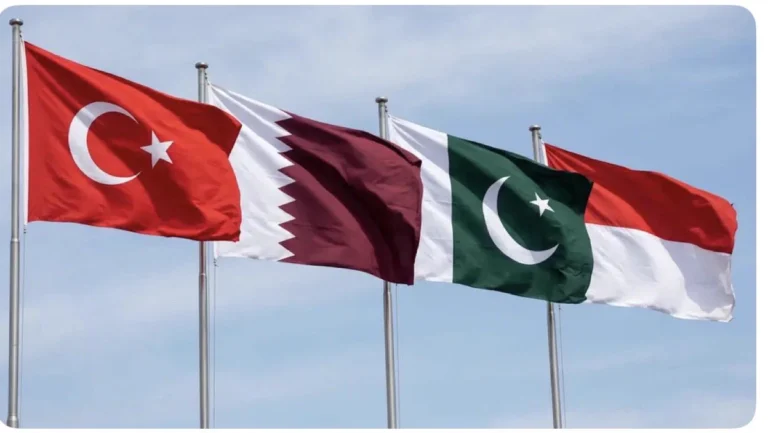
Pakistan can expect the Badr Memorandum to give it another way to work with Turkiye, Qatar and Indonesia. It should not expect a major change in its security position simply because an agreement has been signed. Pakistan already works with each of these countries on defense matters. Bringing them together could make some work easier
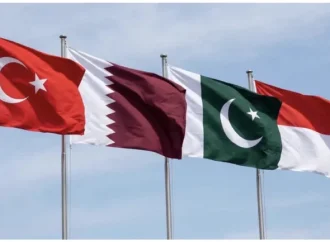
Pakistan can expect the Badr Memorandum to give it another way to work with Turkiye, Qatar and Indonesia. It should not expect a major change in its security position simply because an agreement has been signed. Pakistan already works with each of these countries on defense matters. Bringing them together could make some work easier and give Pakistan useful contacts across different regions. The gain would be real if the four find work they can do better together than separately. They also have different interests. Pakistan should use the Badr Memorandum to widen its options without assuming that its partners will share its position on every dispute.
The Badr Memorandum was signed in Doha on 21 October 2026. It concerns defense manufacturing, research and training. Indonesia’s Ministry of Defense says regular meetings are planned. Pakistan’s Foreign Office calls it a framework and says specific work will require further agreements. The initial public announcements do not identify a funded four-country project or a date for completing one. The Badr Memorandum should also not be confused with the separate Makkah Joint Defense Agreement between Pakistan, Saudi Arabia and Turkiye. Makkah includes a promise of mutual defense. No similar four-country commitment appears in the public statements about the Badr Memorandum.
These are not new partnerships. Pakistan and Turkiye have worked together on the MILGEM shipbuilding programme, including construction in Karachi. Pakistan and Indonesia signed a defense cooperation agreement in 2010. Pakistan and Qatar have long cooperated in military training, while Turkiye and Indonesia have worked together in defense production. Islamabad could already approach each partner separately. The Badr Memorandum now gives all four governments a place to consider common proposals. They can compare needs and ideas in the same discussion instead of approaching one another only through separate channels.
They can also consider a possible shared training programme. Instead of arranging separate courses with three partners on a similar subject, Pakistan could join one programme with instructors and participants from all four countries. They might share costs, avoid repeating the same work and learn from one another. Pakistan could also host part of the programme. This is an example, not a project announced under the Badr Memorandum. Coordinating four governments could be more difficult than working with one, so savings cannot be assumed. If it worked well, the partners would gain shared experience they could not obtain as easily through separate courses.
Any joint proposal would still have to suit four different governments. Turkiye has a sizeable defense industry, but remains part of NATO, the Western military alliance. Qatar has close security ties with the United States and reaffirmed cooperation with France in the week Badr was signed. Indonesia wants to strengthen its own industry, and its defense ministry says the Badr Memorandum must respect each country’s priorities. Jakarta also has defense ties with India. Pakistan has its own concerns in South Asia and the Gulf. None of this rules out useful cooperation. It does mean the countries could work on a shared programme and still disagree on important political questions.
Pakistan’s ties with China are a useful reminder of the difference between more partners and more freedom of choice. According to the Stockholm International Peace Research Institute, China supplied 80 per cent of Pakistan’s major arms imports in 2021–25. China will remain an important partner, yet Pakistan might benefit from working with others to ensure self-reliance and diversity in its defense relationships. The better outcome would be a useful role for Pakistani institutions and knowledge they can continue to use after a joint programme ends.
This matters beyond defense industry. Pakistan needs stable relations with Gulf countries and with neighbouring Iran, while India remains a major security concern. The other Badr Memorandum partners do not have identical interests in these disputes. Indonesia’s cooperation with India shows why a partner in one field should not be expected to support Pakistan on every question. None of the official Badr Memorandum announcements names Iran, India or another country as an opponent. Presenting Badr Memorandum as a new bloc against one of them would create expectations the four governments have not accepted. Its limited purpose may help cooperation continue even when the partners disagree elsewhere.
Before Pakistan commits public money to a Badr Memorandum project, the government should be able to answer basic questions. What work would Pakistani institutions carry out? What would Pakistan pay? Would the programme bring skills or useful work that lasts beyond the agreement? Could an existing partnership provide the same benefit at lower cost? These are practical questions, not demands for all four countries to adopt the same foreign policy. A clear purpose, fair costs and a meaningful Pakistani role would make a stronger case for cooperation than another public announcement. The details of an actual project, if one is agreed, would show what the Badr Memorandum can deliver.
Pakistan should welcome the Badr Memorandum as a chance to work with three established partners in a different way. The four do not have to agree on every political issue to cooperate in one area. A worthwhile joint programme could bring lasting work and skills to Pakistan without limiting its freedom to deal with other countries. If four-country cooperation adds no real advantage over existing agreements, Badr will have provided another forum for discussion, not a stronger position for Pakistan.

- What should Pakistan Expect from the Badr Memorandum? - November 11, 2026
- Did Pakistan Overestimate Its Influence over the Taliban After the Doha Agreement? - September 4, 2026
- Is Pakistan Prepared for the Economic Costs of a ProlongedUS–Iran War? - September 4, 2026