Author Recent Posts Rabia Anwaar Latest posts by Rabia Anwaar (see all) The Hague Ruling on the Indus Waters Treaty – September 30, 2026 Expansion of Makkah Joint Defence Agreement – September 30, 2026 Significance of Multilateral Maritime Military Coalition – August 28, 2026
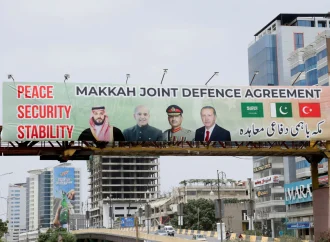
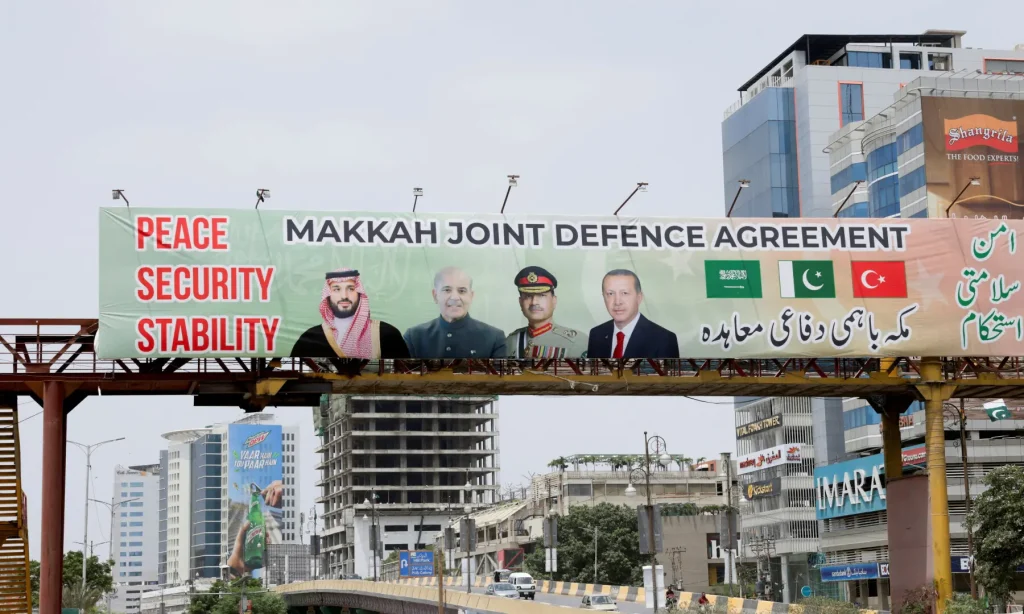
The future of the Makkah Joint Defence Agreement should not be determined by how effectively it can transform a political commitment into a credible regional security architecture. The need for expansion arises from the changing nature of threats confronting the three founding members, Saudi Arabia, Pakistan and Türkiye. The agreement signed in Al Safa Palace, Makkah on 7 August 2026, stipulates that an armed attack against any one of the three states will be regarded as an attack against all, with the stated objective of strengthening collective deterrence. Yet, its significance lies beyond a conventional military alliance. It emerges at a time when missile warfare, drones, cyberattacks, attacks on critical infrastructure and economic coercion are eroding the distinction between domestic, regional and external security. The question, therefore, is not whether the Mecca framework should become larger for the sake of numbers, but whether it can become deeper, more institutionalized and strategically relevant enough to address the security realities of the twenty-first century.
A larger membership without interoperable institutions could turn the agreement into another diplomatic declaration rather than a functioning security mechanism. The immediate priority should therefore be to develop permanent intelligence-sharing arrangements, joint early-warning systems, counter-drone capabilities, cyber-defence cooperation, maritime surveillance and coordinated responses to attacks on energy infrastructure. This is particularly important for Saudi Arabia, whose security is closely connected to the protection of oil facilities, ports and maritime routes, and for Pakistan, whose strategic environment connects the Gulf with South Asia and the Arabian Sea. The agreement has already moved beyond symbolism through the creation of a Strategic Political and Defence Committee, whose inaugural meeting brought together foreign and defence ministers and military chiefs of the three countries. The next logical step is to convert such meetings into permanent mechanisms for consultation, crisis communication and joint contingency planning.
Türkiye possesses an increasingly sophisticated indigenous defence industry, particularly in unmanned systems and emerging technologies; Pakistan contributes decades of military experience, a substantial defence-industrial base and operational expertise; while Saudi Arabia offers financial capacity, strategic geography and an ambitious drive towards greater defence self-reliance. Bringing these comparative advantages together could make the agreement economically as well as militarily meaningful. Reports surrounding the pact indicate an emphasis on strategic political and military mechanisms, joint production and development, including unmanned and autonomous systems, electronic warfare and artificial intelligence. In this way, expansion should mean not merely adding flags around a table, but building capabilities that make collective defence sustainable.
The Makkah pact as Muslim NATO is considered as a misnormer. The current pact does not establish a NATO-style integrated command structure, and important questions concerning activation procedures and specific military obligations remain unclear because the full agreement has not been publicly released. States with established defence relationships with the founding members could initially participate as observers, strategic partners or sectoral members in areas such as maritime security, counterterrorism, cyber-security and disaster response. Gulf states could be engaged particularly in maritime and energy security, while other Muslim-majority states could participate in technological or humanitarian-security initiatives. Such flexibility would prevent the alliance from becoming an exclusive bloc and allow states to cooperate without being forced into automatic military commitments.
This presents an opportunity for Pakistan, to redefine its role from being simply a security provider to Saudi Arabia into a strategic bridge between South Asia, the Gulf and wider Eurasia. Pakistan’s geographical position gives the agreement a distinctive strategic depth: it connects the Arabian Sea to the Gulf while maintaining relationships with China, Central Asia and the wider Muslim world. However, Islamabad must avoid allowing the agreement to become interpreted as an instrument directed against Iran, India or any other particular state. Pakistan’s recent clarification that no military response had been discussed under the pact following Houthi attacks on Saudi Arabia and that there were currently no plans to expand the alliance demonstrates the sensitivity surrounding its implementation. A sustainable Pakistani strategy should therefore emphasise deterrence without escalation, collective security without sectarian alignment, and strategic autonomy without abandoning established partnerships. This would strengthen Pakistan’s diplomatic credibility while allowing it to use the agreement as a platform for mediation as well as defence.
The future expansion of the Mecca Joint Defence Agreement should be understood as an experiment in regional strategic autonomy, not as an attempt to reproduce NATO in the Islamic world. Its future may lie in creating a network capable of preventing crises rather than simply responding to them. Over time, selected partners could join particular pillars without necessarily becoming full treaty members. Such a model would give the agreement elasticity while preserving its core commitment to collective defence. The geopolitical environment is already pushing Middle Eastern and South Asian states to reconsider their dependence on external security guarantees; the pact itself has been interpreted as part of a movement towards greater regional security autonomy. The real test, therefore, is not how rapidly Mecca expands, but whether it can evolve from a three-country promise into a resilient, rules-based security network.

- The Hague Ruling on the Indus Waters Treaty - September 30, 2026
- Expansion of Makkah Joint Defence Agreement - September 30, 2026
- Significance of Multilateral Maritime Military Coalition - August 28, 2026