Author Recent Posts Muammad Abubakar Nazar Latest posts by Muammad Abubakar Nazar (see all) May 2025 conflict: The role of AI in Military Warfare – March 2, 2026 Cross-Border Millitancy and Border Management – September 9, 2025 U.S tariff relief and underlying complexities – August 28, 2025
The borders of Pakistan are more a strategic leverage for the country than being an asset and hence demand for more effective efforts to be managed. Pakistan borders Afghanistan on the West where groups like TTP have long posed a grave challenge and continue to do so till this day. The groups like Jaish al-Adl and Baloch insurgents rise from the Southwest border with Iran further jeopardizing peace in the country. The militants from these borders have surged now more than ever, specifically since 2024 which proved to be one of the most damaging year. The damage included not only civilians but also the armed forces which were, and are, doing there utmost efforts to stop the terrorist activities.
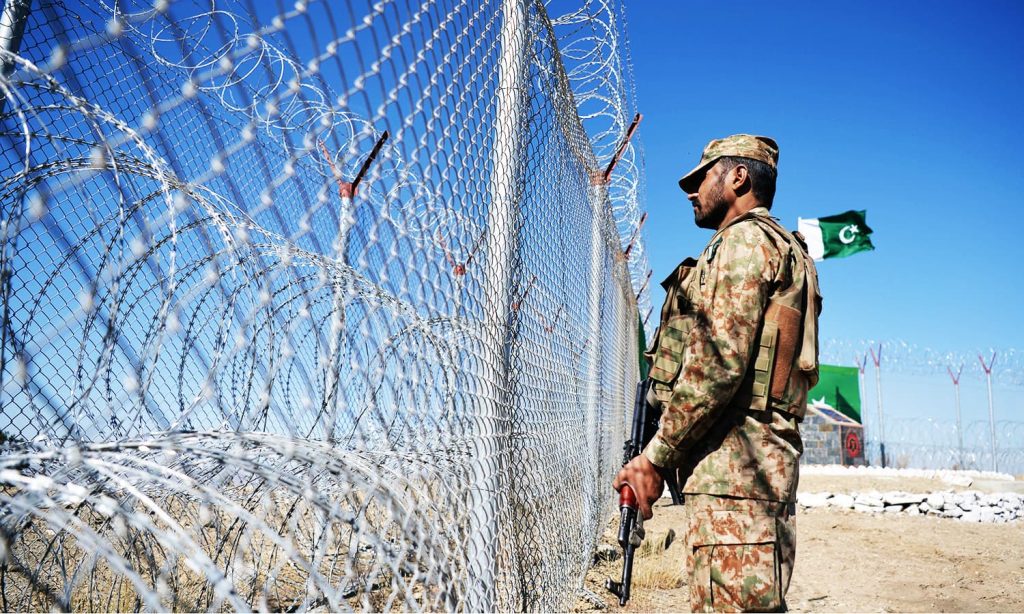
The issue of Durand line which had gone in dormancy gets renewed when Taliban came back in power to fill the vacuum created by exit of the United States. An example of the issues created by this is the most recent militant attack on a security camp in Hangu that killed three officers and wounded seventeen others. Pakistan has invested billions building fences and placed biometric gates at entering passes such as Torkham and Chaman in order to security proof the entry. All these efforts have resulted in less desired outcomes because of highly uneven and complex terrain stretching across the border. The locals including the linkages between tribes from both countries are also more adaptive to these changes imposed as evident from the vast smuggling culture. The lack of any formal recognition by the Afghan government of the Durand line further complicates the situation. This leaves little room for dialogues which serve the national interest and security of not only Pakistan but also Afghanistan, a country finding it hard to get its new government recognized and hence trade. The Operation ‘’Zarb-e-Istehkam’’ launched as a part of National Action Plan in 2024 is an appropriate effort but remains less effective because of lack of cooperation by Taliban government and local population’s discontent.
The border with Iran carries two challenges with it, one being the rising militants and insurgents such as from Sistan-Baluchistan province of Iran and the other linked with this is the risk of escalation between two States. Recent tensions of January 2024, which resulted due to a strike by Iran inside Pakistani territory, claiming to have targeted the Jaish al-Adl militant site. Pakistan denied the presence of any such site, taking it as an attack on its sovereignty and responded with strikes on Iran’s territory targeting the insurgents. This situation, although, did not prolong but it showed how fragile can relations between these two can be. There is another problem connected with this, similar to that of Afghanistan, and that is lack of cooperation on matters which require serious attention. The relation between these two neighbors has got better but an air of accusations still continues and this only provides militant groups room to get emboldened.
Pakistan has been home to millions of Afghan refugees many of whom came here after the onset of War on Terror as well as during the Soviet-Afghan war during the Cold War. The influx of these refugees on a humanitarian basis resulted in the arousal of new issue of terrorism in the country. These refugees stayed for decades in the country, but in 2023 Pakistan started a wave to deport all the undocumented, or illegal, people who have been living in different parts of the country. This deportation drive, linked with rising militant attacks, has caused the country to face criticism from human rights groups and according to some might not result in long term benefits. Whatever the opinions, this was the problem that the country had faced since long and needed to be properly dealt with specially when the US had left and a government has come to power in Afghanistan. The border management question here is that how is Pakistan going to properly deport those who are illegal while simultaneously trying to avoid any discrimination to these people. This issue is grim as failing to do so will effect country’s outlook which matters a lot in contemporary times when the concept of soft power has prevailed significantly.
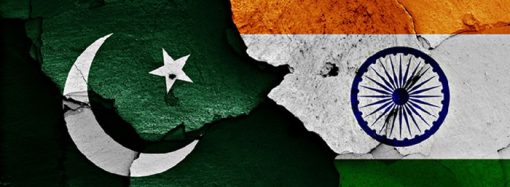
All these matters require policies to be devised and implemented in both timely and effectively right way. In this regard, it has to be understood that security-only policies which completely ignore the locals will never become any more effective. The reason for this is that most of the terror activities by these insurgent groups come from these local areas, and in order to curb them it is necessary to take the indigenous people of these areas in complete trust. All these borders need more attention than that with India, which has been Pakistan’s traditional adversary, reason being the extremely high militarization of that border. The issues like militant attacks and insurgents do not come from there and is already too tight to be given any further attention. There is need for further broad and durable actions while also leaving enough space to evolve and adopt before those militants do.

- May 2025 conflict: The role of AI in Military Warfare - March 2, 2026
- Cross-Border Millitancy and Border Management - September 9, 2025
- U.S tariff relief and underlying complexities - August 28, 2025