The recent decision of the Court of Arbitration at The Hague concerning the Indus Waters Treaty (IWT) is legally significant because it addresses whether a state can unilaterally suspend a binding treaty because of terrorism, national security concerns or changing circumstances. On 31 August 2026, the Court held that the 1960 Treaty remains fully inREAD MORE
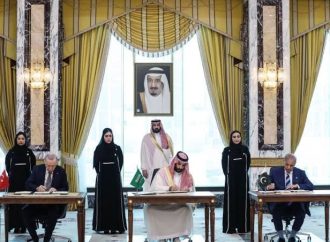
The Mecca Joint Defence Agreement between Pakistan, Saudi Arabia and Türkiye is the result of several converging strategic, economic and security factors rather than a response to a single regional threat. Growing instability in the Middle East, uncertainty surrounding existing security arrangements, Saudi Arabia's search for greater strategic autonomy, and the expanding defence cooperation betweenREAD MORE
Under international law, national security alone cannot justify the unilateral suspension of an international water treaty unless the treaty itself or the applicable rules of international law provide a legal basis for such action. The Indus Waters Treaty (IWT) is considered as one of the most enduring international water sharing agreements which was signed inREAD MORE
The 2026 Islamabad Memorandum of Understanding (MOU) presents an important opportunity for regional de-escalation, but its legal legitimacy ultimately depends on whether its key provisions comply with established principles of international law. Signed after a period of intense military tensions and regional instability between the United States and Iran, the MOU seeks to establish a frameworkREAD MORE