Author Recent Posts Wajeeha Ashfaq Latest posts by Wajeeha Ashfaq (see all) How has the Middle Eastern War Transformed the Iran-Gulf Relations? – July 15, 2026 Will Water Emerge as the Next Battlefield between India and Pakistan? – July 15, 2026 The U.S.-Iran Peace Process and the Lebanon Question – July 15, 2026
The U.S.-Iran conflict has shifted the nature of Iran-Gulf relations from ideological rigidity to pragmatism, compelling both sides to pursue caution in engagement. The ideological antagonism, sectarian differences and geopolitical rivalry between Iran and the Arab Gulf monarchies have been the hallmark of their relations for decades. The Gulf Cooperation Council (GCC) has always seen Iran as the main instigator of regional turmoil following the Iranian Revolution in 1979 through to the proxy wars in Iraq, Syria and Yemen. But the current U.S.-Iran conflict has changed the scenario. Rather than increased tensions between Iran and its Arab neighbours, it has resulted in a paradox: Despite increased military escalation, the shared sense of insecurity has led to more pragmatic and interest-driven relations. The mistrust is still there, but the nature of the relationship is not as hostile as in the previous years.
The first major shift is the departure from ideology to diplomacy. Before the war, the Gulf countries had started cautious re-engagement with Iran through diplomatic channels, particularly after Saudi-Iran rapporachment, mediated by China in 2023. But the onset of the military escalation between Washington and Tehran sped up this process. The interest of the Gulf lies in looking for ways of de-escalation instead of confrontation. A prolonged war could inevitably spread to all the Gulf states. States like Saudi Arabia, Qatar, Oman and the United Arab Emirates utilized their diplomatic relationship with Tehran, as well as with Washington. They did not take sides, as the aim was only to prevent the embroilment of the whole region in war. The mediation efforts of Oman, Qatar and Pakistan in recent years reflect the trend of regional diplomacy toward conflict management, rather than zero-sum competition.
Another change is the shifting of perceptions of security in the Gulf. For decades, the GCC security was mainly based on the protection of the United States. The U.S.-Iran war has proven otherwise. Iranian missiles and drones hit U.S. facilities and strategic infrastructure throughout the Gulf, demonstrating that even the most fortified states in the region could be the target in such wars. Even with advanced missile defense systems and widespread U.S. military presence in the region, Gulf powers were directly targeted by a conflict they did not initiate nor want. Thus, the war has led to a decline in confidence of the Gulf states to rely exclusively on the U.S.-based security system. The development may prompt the Gulf states to invest in diverse security arrangements through indigenous defence systems and regional dialogue mechanisms.
The war has also changed the nature of Iran’s economic ties with the Gulf, as it has demonstrated the high price of instability. The Strait of Hormuz continues to be the world’s most vital shipping route for energy supply, accounting for about 20% of the world’s oil trade. The closure of Hormuz and competing interests over maritime access have been a constant reminder to the Gulf economies that a prolonged conflict can directly impact their national prosperity. No matter how economically strong a state is, these shocks to the economy, caused by disruptions in shipping and insurance costs and fluctuating energy markets, cannot be sustained. As a result, economic stability is now a common foreign policy agenda for Iran and the Gulf monarchies. In fact, there is a growing subtle agreement that regional prosperity is better achieved through cooperation than conflict.
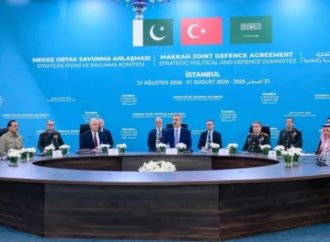
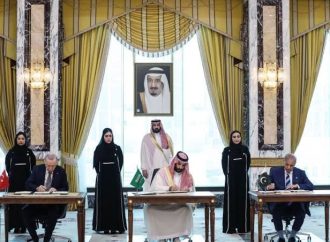
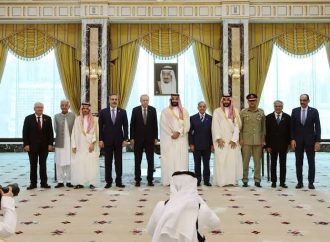
Another notable aspect of strategic independence among the Gulf countries. The war can speed up a foreign policy pattern that has already been apparent in the last few years: a pivot away from Washington towards strategic diversification. Gulf countries have already been pursuing a policy of enhanced economic and diplomatic relations with China, greater dialogue with Russia, and closer defence ties with the United States. Instead of Cold War binaries, the leaders in the Gulf are looking for what many analysts refer to as “multi-alignment. A manifestation of such diversification is the Defence Pact signed between Pakistan and Saudi Arabia in 2025. It establishes a security net outside the traditional Western framework. This gives them a way to maintain relations with rival great powers and also minimise reliance on any outside security guarantor. The war has thus strengthened the Gulf’s growing reliance of independence and its foreign policy, in which the interests of the region take priority over bloc politics.
It is too early to declare that the war has changed relations among Middle Eastern nations and Iran for good. The war, besides acting as a precursor of increased regional cooperation, has also exacerbated strategic mistrust. Iranian attacks against the Gulf states with U.S. military bases have further fueled concerns in the Gulf about Tehran’s regionalization of conflict. In the meantime, Iran sees the presence of the U.S. military in the Gulf as an existential threat. There has been a growth in diplomatic communication, but both sides are involved in a classic security dilemma: if one side takes steps to improve its security, the other side sees it as a threat. So the rapprochement, if occures, will be purely tactical, not transformative, as it is more likely based on mutual need rather than ‘mutual trust’.
One of the most lasting impacts of the conflict is the realization that regional security can’t be sustained externally. The fighting has demonstrated the need for more than just outside powers to ensure stability in one of the world’s key geopolitical areas. Increasingly, policymakers across the Gulf agree that there is a need for an institutionalised Gulf security dialogue with Iran, the GCC, Iraq and other key players for future regional stability. Perpetual deterrence is not the only way for peace-building; confidence-building measures, maritime security arrangements, military communication channels, and economic interdependence are more stable ways of maintaining mutual interdependence. Political differences are stark, but the price of continuous confrontation is, economically and strategically, too high.
Iran–Gulf relations may have therefore changed, not because the competition is over, but because it has been redefined in the context of the U.S.-Iran war. Now, it has the potential to transform from a mostly ideologically motivated relationship to one increasingly motivated by shared vulnerabilities, economic interdependence, and pragmatic diplomacy. Gulf governments should institutionalize regular region-wide security dialogues, extend confidence-building measures with Tehran and enhance multilateral arrangements to safeguard maritime energy and trade. Iran needs to assure confidence to the neighbouring countries by being more transparent about its policies in the region, and refraining from actions that directly affect the sovereignty of the Gulf countries. There is a need for regional diplomacy and for Middle Eastern states to have more control over their own collective security architecture. These lessons, if learned, could ultimately lead towards a more balanced and resilient Gulf. Otherwise, the region could find itself trapped in a vicious cycle of conflicts and ceasefires.

- How has the Middle Eastern War Transformed the Iran-Gulf Relations? - July 15, 2026
- Will Water Emerge as the Next Battlefield between India and Pakistan? - July 15, 2026
- The U.S.-Iran Peace Process and the Lebanon Question - July 15, 2026