Author Recent Posts Wajeeha Ashfaq Latest posts by Wajeeha Ashfaq (see all) How has the Middle Eastern War Transformed the Iran-Gulf Relations? – July 15, 2026 Will Water Emerge as the Next Battlefield between India and Pakistan? – July 15, 2026 The U.S.-Iran Peace Process and the Lebanon Question – July 15, 2026
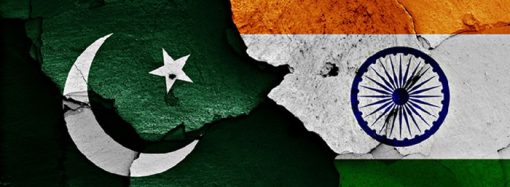
Water is being used as a weapon by India against Pakistan, and if India continues along this path, the Indus might become the next flash point in South Asia’s most volatile rivalry. The Indus Waters Treaty (IWT) was a cornerstone of peace between the two hostile nuclear powers for 65 years, until it was unilaterally suspended by India after the May 2025 confrontation. The Indus Waters Treaty (IWT) was the only treaty that remained unaffected for 65 years despite three wars and lingering mutual mistrust since 1960. The immunity that the treaty enjoyed no longer sustains. Water has become a core issue in the India-Pakistan competition. All the signs of water as a war cause are there: suspended treaty mechanisms, competing arbitration rulings, high officials on both sides threatening war, and a shared river system already under strain due to climate change. So the question arises: how potent is the war threat to materialize due to the water sharing issues between Pakistan and India?
In 1960, the Indus Waters Treaty (IWT) was signed through World Bank mediation, which was meant to shield water from the geopolitical confrontation between the two states. It divided the six Rivers of the Indus, with the eastern rivers (Ravi, Beas, Sutlej) assigned to India, and the western rivers (Indus, Jhelam, Chenab) to Pakistan. The treaty withstood the conflict of 1965, 1971, and 1999, as well as decades of terror, insurgency, and diplomatic freezes. Thus, the unilateral suspension is significant because it is the first time in the treaty’s history that hostilities have actually affected the treaty. India’s decision to put the treaty in abeyance, citing blame at Pakistan for the Pahalgam attack, represents a rupture in a once considered ‘ untouchable area’. It means that both countries are ready to fight over water, as both have completely opposing stances.
A unilateral suspension has escalated into a full-blown legal and diplomatic stand-off. The Permanent Court of Arbitration has made a number of rulings against India’s position. The first ruling was in 2025 that the Treaty did not allow for unilateral abeyance, and the second in May 2026 when it issued an award on the maximum pondage (limits of reservoir storage) that favoured Pakistan’s interpretation of the Treaty. India has called all these rulings “null and void” and said that the court itself was “illegally constituted. Meanwhile, Pakistan remains adamant that the treaty is “fully operational and effective”, despite India’s stance. While India has flatly refused to reconsider the treaty, the two nations now not only have a dispute over water flows but also the very legal framework designed to resolve such issues, with no mechanism in place to defuse future disagreements.
The most worrisome aspect of it is how fast water has become part of military conflict discourse. Pakistan’s former foreign minister, Bilawal Bhutto, threatened in June 2025 to take all six of the rivers if the issue of water sharing was not resolved fairly. Pakistan has also repeatedly asserted that it would go to war if it felt that its water security was being threatened. On the Indian side, the ministers have repeatedly echoed similar sentiments, declaring that no drop of Indus water would be given to Pakistan in the coming years. The vocabulary of war is being used over river flows, with officials from both sides willing to resort to such language.
The stakes are not symbolic for Pakistan; they are existential. The Indus basin, which supplies water to over 90% of the country’s crops, is home to the country’s hydroelectric plants. It is not necessary for India to stop flows altogether to cause significant harm; it can simply change the timing of flows to cause damage to Pakistan’s agricultural sector. This is not a hypothetical situation anymore, as Pakistan already made formal complaints regarding the unusual and abrupt fluctuations in flow on the Chenab during 2025 and again in May 2026. For a nation already grappling with long-term economic fragility, this vulnerability morphs water into a national security issue.
The Indus basin was already in crisis, even before any political tensions. It has seen the loss of almost a quarter of its perennial snow and ice. Additionally, the change in the monsoon pattern has been making water availablity as less predictable since the last two decades. The 1960 treaty was negotiated under the assumptions of hydrology that existed at that time, and it has no real mechanism to adjust to glacial retreat. Additionally, it fails to take into account the groundwater depletion, which is a serious stress point on both sides of the border. This diminishing and less reliable resource is becoming a source of political conflict, as both countries’ populations and water consumption continue to rise. Thus, in addition to the political tensions, the Indus is also undergoing significant climate-related changes.
Water has all the potential to cause a war between India and Pakistan in the coming years if the issues between both sides are not resolved. The source of South Asian diplomacy is now being used as a pressure tool. The way forward is clear: both sides need to engage in a renewed discussion of treaty modernization, notably addressing climate change, groundwater, and changing hydrology. To do so, both countries need to initiate diplomatic negotiations, leaving behind the hostility, as a war over water would benefit none. More than 300 million people rely on the Indus for their food, power, and livelihoods. This fact, thus, makes war a dangerous option for both sides.

- How has the Middle Eastern War Transformed the Iran-Gulf Relations? - July 15, 2026
- Will Water Emerge as the Next Battlefield between India and Pakistan? - July 15, 2026
- The U.S.-Iran Peace Process and the Lebanon Question - July 15, 2026