Author Recent Posts Abubakar Saeed Latest posts by Abubakar Saeed (see all) INDUS WATER TREATY AND ITS LEGACY – July 17, 2026 IRAN’S FROZEN ASSETS AND NUCLEAR ISSUE:REFRAMING OF US-IRAN REALTIONS – July 17, 2026 THE FUTURE OF PAKISTAN INDIA RELATIONSHIP – June 24, 2026
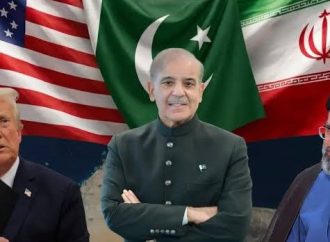
Humans have a long history of fighting wars and engaging in prolonged conflicts with enemies, so have empires and countries. Similarly, the conflict between United States and Iran is not a recent phenomenon; it dates backs to the Islamic Revolution in 1979, which overthrew the US backed Shah of Iran. Wars and armed conflicts have impacts outside the battleground as well, often producing serious economic problems for states that are not even directly involved in the fighting. In this world of globalized and interconnected economy, regional conflicts can disturb trade routes, increase prices, create instability in global markets, and pose a threat to the energy security of the countries which depend on imported oil and energy sources. These effects are even complicated for developing economies that are more vulnerable to external instability and route disruptions. Pakistan, whose economy depends highly on imported oil and LNG, remains extremely vulnerable to instability in the Middle East. Consequently, the conflict between the United States and Iran has emerged as more than a bilateral dispute, effecting Pakistan’s economic security.
Middle East is central to functioning of global markets, having Iran as a major contributor of energy resources. While Iran possesses world’s largest natural gas reservoirs, it is also among top 5 oil producer countries. The US-Iran conflict resulted in the closure of the Strait of Hormuz by Iran, which halted almost 20% of the global energy supplies. This conflict and the closure of the Straight is a major blow to Pakistan’s domestic economic stability and energy production. By March 2026, the price of petrol had hiked to roughly 20%. Later, the prices of diesel and petrol saw an increase of 54 and 52 percent respectively. Pakistan’s energy generation depends highly on the furnace oil, which due to this war and oil disruptions, the electricity shortfall has hit a surprising 1/6th of the total demand; making it a very complicated wound to cure. Pakistan also depends heavily on the LNG for electricity production. With hopes of a ‘Peace pipeline’, Pakistan initiated a deal with Iran, which it could not complete due to the pressure of sanctions from the US. This results in much deepened energy crises. Discussed energy shortfall has its impacts on the industrial production and economic stability of Pakistan.
Due to the worsening electricity shortfall and oil crises, Pakistan has implemented severe austerity and energy conservation policies, effecting the economic growth. A core policy implemented is closing restaurants and markets early. Similarly, export-oriented industries such as textile industries are facing 20-30 percent drop in their production resulting in massive financial losses. Similarly, fertilizer companies, cement industries, and engineering and manufacturing industries, which require constantly consuming high amounts of electricity have also been heavily affected by the war. Discos also play a major role in the circular debt of Pakistan, which remains an important concern by the IMF. Pakistan is constantly asked by the IMF to bring reforms into the DISCO infrastructure. DISCOs in return impose high tariffs making the affordability of electricity an issue for most of the industries. Industrial production thus gets disrupted, wounding the economy of the country. As a result, PKR has faced significant devaluation. Repayment of IMF loan or installment requires more dollars, which as a cycle, further depreciates the PKR. This never-ending loop negatively affects the economic security of Pakistan. Furthermore, agriculture is also being indirectly affected by the higher prices of diesel and petrol. As a result, Pakistan in the FY26, faced a sky rocketing trade deficit of $25 billion. Exports dropped by 7.3 percent, while imports showed a hike of 8.1%. This depicts how vulnerable Pakistan really is to instability in the region and how necessary it is to maintain peace in her neighborhood.
This war has caused a serious blow to Pakistan’s economic growth and stability. Consequently, the most affected area of the state infrastructure is its economic security. Pakistan needs to maintain a balance between its imports and exports to ensure economic stability. Exports must be encouraged while the imports must be heavily taxed. Industries and agriculture must be subsidized to bring internal stability. Furthermore, Pakistan needs to rethink about its over dependence on Iranian oil and energy resources. Lastly, Pakistan’s role as a mediator during this period demonstrates its awareness of the regional growing regional unrest and its potential implications for national interests. Islamabad is aware that any further escalation between US and Iran will cause significant damage to its economy. Hence it has shown interest in playing the role of a mediator during this war

- INDUS WATER TREATY AND ITS LEGACY - July 17, 2026
- IRAN’S FROZEN ASSETS AND NUCLEAR ISSUE:REFRAMING OF US-IRAN REALTIONS - July 17, 2026
- THE FUTURE OF PAKISTAN INDIA RELATIONSHIP - June 24, 2026