• LATEST
    • Outcomes of US–Iran Negotiations
    • The Islamabad Accord: How Pakistan’s Ceasefire Mediation Reshapes Its Global Standing
    • Success of Pakistan’s Diplomacy
  • 2026-04-28T07:48:32+00002026-04-28T07:43:27+00002026-04-16T04:40:40+0000
  •  
  •  
  •  
  •  
  •  
  •  

logo

Centre for Law & Security

  • Home
  • About CLAS
  • Our Team
  • Publications
    • Blogs
    • Backgrounders
    • Commentary
    • Featured Articles
    • Newsletter
      • Newsletter 17th dec, 2024
      • Newsletter 09th Dec, 2024
      • Newsletter 22nd Nov, 2024
      • Newsletter 11th Nov, 2024
      • Newsletter November 01st, 2024
      • Newsletter October 11th, 2024
      • Newsletter August 9th, 2024
      • Newsletter July 29th, 2024
      • Newsletter 10th July ,2024
      • Newsletter 30th June 2024
      • Newsletter 31st May 2024
      • Newsletter 10th May 2024
      • Newsletter 16th April 2024
      • Newsletter 25 March 2024
      • Newsletter 15 March 2024
      • Newsletter January 2024
      • Newsletter December
      • Newsletter October
  • Reports
    • Maritime Affairs and Blue Economy
    • Lawfare & Pakistan’s Response
    • NCFSP
    • CLAS ICT Police Report
    • Lawfare & Kashmir
    • Lawfare and Pakistan
    • Pakistan & Cryptocurrency Report
    • Regulating Disinformation Campaigns Under Pakistan
  • Events
    • Panel Discussion: Pakistan’s evolving military doctrine and Geostrategic relaignments
    • Book launch event of Ambassador Aizaz Ahmed Chaudhry’ s Pakistan – India Relations: Fractured Past, Uncertain Future
    • Book Launch Event – Saud Sultan’s The Forgotten Narrative: From Distorted Origins to Denied Freedom
    • CLAS Holds Roundtable on “Understanding AI and Misinformation Through the Lens of the Indo-Pak Conflict 2025”
    • Guest Lecture- JCSC Gen. Zubair Mehmood Hayat
    • MOU Signing with ISSI
    • MOU signing with NIMA
    • Regulating Digital Space of Pakistan
    • Regulating AI in Pakistan & National Security
    • Pak-U.S. Relations
    • Report on Pakistan’s Security and Foreign Policy Launched
    • National Conference on Security and Foreign Policy (NCSFP) – 17/Jan/2024
    • Legal Challenges in Deporting Illegal Immigrants
    • Post Budget Challenges: Macroeconomic Indicators and Way Forward for Pakistan
    • Lawfare and Kashmir
    • Maritime Affairs & Blue Economy
    • Lawfare and Pakistan’s Response
    • Lawfare & Pakistan
    • ICT Consultative Session
    • Illegal Transfer of population to IOJK & Int Law
  • Press Release
    • Pakistan’s evolving military doctrine and Geostrategic relaignments
    • Saud Sultan’s The Forgotten Narrative: From Distorted Origins to Denied Freedom
    • Ambassador Aizaz Ahmed Chaudhry’ s Pakistan – India Relations: Fractured Past, Uncertain Future
    • The Question of Palestine and its Implications on Global Security
    • NCSFP
    • A Dialogue on Pak-US Relations
    • CLAS, ISSI Formalize Partnership
    • Clas launches Pakistan India Relations Book
  • Contact us
  • Webinars
    • Gaza Ceasefire Agreement: Will it Last?
    • Trump 2.0 and Global Security
    • Brain drain in Pakistan: Economic Security challenges and the Way Forward
    • Future of Pak-Afghan Relations
    • Three Years On: Impact of Ukraine Conflict on Global Politics
    • Rising Terrorism in Baluchistan: Implications and State’s Choices
    • Evaluating Illegal and Undocumented Afghan Refugee Repatriation from Pakistan
    • Inheritance Rights of Women in Pakistan
    • After the Brink: Assessing the outcomes of India-Pakistan 2025 Crisis
    • How the Nature of Warfare has changed between India and Pakistan?
    • Judiciary vs Legislature; Is there a way out?
    • Diplomacy on War Front
    • Media at War
    • Iran-Israel Confrontation, Regional Stability and the Future of the Nuclear Deal
    • Role of Diplomacy in Iran-Israel war of 2025
    • Is the US and Israel Serious about Achieving Sustainable Peace in Palestine?
    • New Phase of Pak-U.S. Bilateral Relations
    • Geopolitics in Transition: How a U.S.–Pakistan Thaw Impacts South Asia’s Balance of Power
    • Terrorism Upsurge in Pakistan: Strategies and Way Forward
    • Climate Emergency in Pakistan: Cloudburst and Flash Floods in Northern Areas
    • IWT in Abeyance –Impact on Pakistan’s Flood Crisis
    • SCO Summit and Tiananmen March: Unveiling a New World Order?
    • Strategic Ties in a Shifting World: Understanding the Saudi-Pakistan Defence Pact
    • Conversation with Ambassador Sardar Masood Khan: DELIBERATIONS ON TRUMP LED GAZA PEACE PLAN
    • Pak-Afghan Relations: Navigating Border Tensions and Regional Stability
    • Understanding 27th Constitutional Amendment of Pakistan
    • Global Security in Transition: Understanding the Impact of U.S. Foreign Policy Changes
    • U.S. Foreign Policy Through the Lens of the Board of Peace
    • Bangladesh Beyond Elections: Domestic Priorities and Their Impact on Regional Diplomacy
    • The Trump Factor and Changing Dynamics of Global Order
    • US-Israel-Iran War: Regional Fallout and Gulf in the Crossfire
    • Middle East at a Crossroads Security Challenges After the U S –Iran Escalation
    • 10 Years of CPEC: Hopes and Challenges
    • Two Years of Taliban: Recognition and Cooperation Barriers
    • Legal Developments on Article 370 and Status of Kashmir
    • Failure of Diplomacy – Implications of Escalation for Pakistan
    • Future Trajectory of Pakistan India Relations
    • Pakistan and its Western Frontiers
    • Can India and Pakistan resume talks?
    • Article 51: Case for Special Seats
    • Modernizing Pakistan’s Economy
    • Operation Azm e Istehkam: Challenges and Implications
    • The Bangladesh Political Crisis: Set Back for India, and Pakistan’s Policy Options
    • Elections (2nd Amendment) Act 2024 V Supreme Court Judgement
    • Rising Militancy in Pakistan
    • In Conversation with Amb. Ashraf Qazi on SCO Summit and India Pakistan Bilateral Relationship
    • Tackling Pakistan’s Smog Problem
    • Trump’s Second Presidency and Future of Pakistan-U.S. Relations
    • Ceasefire in Lebanon
    • Gaza Ceasefire Agreement: Will it Last?
    • Trump 2.0 and Global Security
    • Brain drain in Pakistan: Economic Security challenges and the Way Forward
    • Future of Pak-Afghan Relations
    • Three Years On: Impact of Ukraine Conflict on Global Politics
    • Rising Terrorism in Baluchistan: Implications and State’s Choices
    • Evaluating Illegal and Undocumented Afghan Refugee Repatriation from Pakistan
    • Inheritance Rights of Women in Pakistan
    • After the Brink: Assessing the outcomes of India-Pakistan 2025 Crisis
    • How the Nature of Warfare has changed between India and Pakistan?
    • Diplomacy on War Front
    • TTA – TTP Alliance and Pakistan’s Security Problems
    • Social Media Regulations in Pakistan’s Political Landscape
    • UN COP 28 Achievable Goals
    • Rebooting Pakistan’s Energy Sector
    • SC’s Verdict on Trials of Civilians in Military Courts

Blog 3 Columns

  • Home
  •  
  • Blog 3 Columns


  • Outcomes of US–Iran Negotiations

    Outcomes of US–Iran Negotiations0

    • Blog, Economic Security, Energy Security, Food Security, Human Security
    • April 28, 2026
    The first round of Islamabad talks between the United States and Iran marked a constructive and encouraging step towards regional peace. These talks demonstrated the growing importance of diplomacy and highlighted Pakistan’s effective role as a trusted mediator, even though the negotiations did not produce a final agreement. The process itself created momentum for futureREAD MORE
  • The Islamabad Accord: How Pakistan’s Ceasefire Mediation Reshapes Its Global Standing

    The Islamabad Accord: How Pakistan’s Ceasefire Mediation Reshapes Its Global Standing0

    • Blog, Economic Security, Food Security, Human Security
    • April 28, 2026
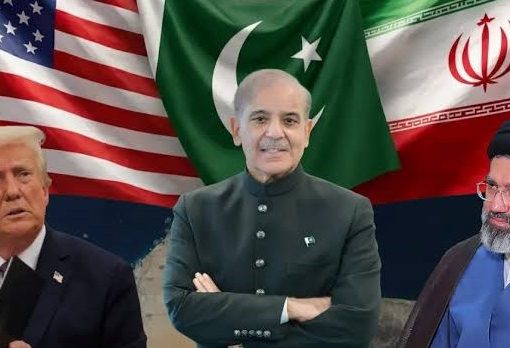
    Pakistan’s international narrative has been defined by internal instability, militant violence and geopolitical hedging a reputation as a problem state rather than a solution provider. In a stunning reversal, Pakistan has emerged as the indispensable mediator between the United States and Iran, successfully brokering a two-week ceasefire that averted a catastrophic regional war. The firstREAD MORE
  • Success of Pakistan’s Diplomacy

    Success of Pakistan’s Diplomacy0

    • Blog, Featured Articles
    • April 16, 2026
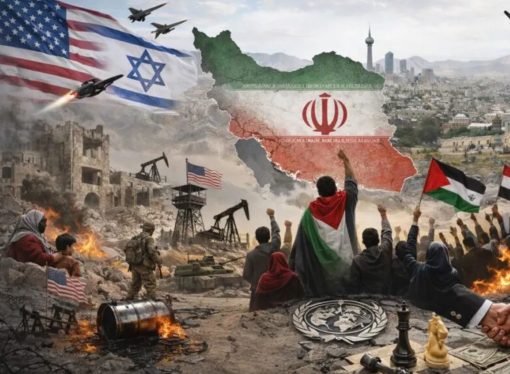
    Pakistan’s diplomacy has emerged as a significant force in the evolving geopolitical crisis involving Iran, the United States, and Israel. Pakistan has actively positioned itself as a mediator, a stabilizing actor, and a voice for de-escalation in a highly volatile region as this war intensifies. Pakistan has demonstrated the effectiveness of its diplomatic approach underREAD MORE
  • Strategic Motives Behind Operation Ghazab lil Haq

    Strategic Motives Behind Operation Ghazab lil Haq0

    • Blog, National Security
    • March 31, 2026
    Operation Ghazab lil Haq represents a significant development in the evolving security dynamics between Pakistan and Afghanistan. Pakistani authorities launched the campaign as a defensive and retaliatory response to persistent cross-border attacks and the increasing presence of militant groups operating from Afghan territory. To understand the strategic motives behind the operation, one must examine theREAD MORE
  • Oil as a weapon of war during the recent U.S.-Israel-Iran War 2026

    Oil as a weapon of war during the recent U.S.-Israel-Iran War 20260

    • Blog, Economic Security, Energy Security
    • March 31, 2026
    Oil has been utilized as the most dangerous weapon of war, used in the recent US. -  Iran- Israel conflict. It has been used to interrupt global trade, transforming energy infrastructure into primary military targets, turning the global economy into a hostage where disrupting supply chains inflicts economic devastation that no missile alone can achieve.READ MORE
  • HOW DOES NUCLEAR ISSUE BECOME A FLASHPOINT BETWEEN THE U.S AND IRAN CONFLICT

    HOW DOES NUCLEAR ISSUE BECOME A FLASHPOINT BETWEEN THE U.S AND IRAN CONFLICT0

    • Blog, Economic Security, National Security
    • March 31, 2026
    The United States and Iran have a long history of conflict but with time the nuclear issue has become the main point of conflict. The causes of the hostility date back to the Iranian Revolution when Iran became an Islamic Republic under Ayatollah Ruhollah Khomeini, leaving behind a monarchy under Shah Mohammad Reza Pahlavi, whoREAD MORE
  • SIGNIFICANCE OF STRAIT OF HORMUZ AND OIL TRADE

    SIGNIFICANCE OF STRAIT OF HORMUZ AND OIL TRADE0

    • Blog, Economic Security, Energy Security, Human Security
    • March 31, 2026
    Geography has a massive power at the Strait of Hormuz, and such power is silent. It can seem that it is nothing but a small strip of water not much more than 33 kilometres across, but behind this humble facade runs a river of oil truly enormous. It is close to being one-fifth of theREAD MORE
  • Why NATO is not willing to join the U.S.- Israel-Iran war?

    Why NATO is not willing to join the U.S.- Israel-Iran war?0

    • Blog, Economic Security, Human Security
    • March 31, 2026
    The ongoing war between the United States, Israel, and Iran has created significant geopolitical shift of the decade. The world expected the North Atlantic Treaty Organization (NATO) to stand firmly behind Washington like it had since the end of the Cold War. However, the world has witnessed an unusual development where most NATO allies haveREAD MORE
  • Strategic Motives behind US-Israel joint Pre-emptive Strikes against Iran

    Strategic Motives behind US-Israel joint Pre-emptive Strikes against Iran0

    • Blog, Economic Security, Human Security
    • March 27, 2026
    The ongoing military conflict with Iran, launched jointly by the United States and Israel, has been presented to the world as a necessary intervention to prevent nuclear proliferation and stabilize the Middle East but beneath this layer of security rhetoric lies a far more calculated and ambitious agenda. This war represents the final phase ofREAD MORE
  • 1
  • 2
  • 3
  • ›
  • »

About CLAS

The Centre for Law and Security (CLAS) is a non-partisan policy research institution that aims to define the future of national security in Pakistan

CLAS Office

No 68, Behind Nescom, H-11/4,
Islamabad
Pakistan

Phone

Phone: +92 51 4866181-7

Get In Touch With Us

Our Blogs

  • Blog 3 Columns
    Outcomes of US–Iran Negotiations
    • Blog, Economic Security, Energy Security, Food Security, Human Security
    • April 28, 2026
  • Blog 3 Columns
    The Islamabad Accord: How Pakistan’s Ceasefire Mediation Reshapes Its Global Standing
    • Blog, Economic Security, Food Security, Human Security
    • April 28, 2026
  • Blog 3 Columns
    Success of Pakistan’s Diplomacy
    • Blog, Featured Articles
    • April 16, 2026
  • Blog 3 Columns
    Strategic Motives Behind Operation Ghazab lil Haq
    • Blog, National Security
    • March 31, 2026
  • Blog 3 Columns
    Oil as a weapon of war during the recent U.S.-Israel-Iran War 2026
    • Blog, Economic Security, Energy Security
    • March 31, 2026

Backgrounder

  • Blog 3 Columns
    Civilian trial by the Military Courts of Pakistan
    • Backgrounder
    • February 11, 2025
  • Blog 3 Columns
    US Presidential Elections
    • Backgrounder
    • August 27, 2024
  • Blog 3 Columns
    Why does the Government want to amend the Elections Act 2017?
    • Backgrounder
    • August 27, 2024
  • Blog 3 Columns
    Operation Azm e Isthekham: Explainer
    • Backgrounder, Human Security
    • July 10, 2024
  • Blog 3 Columns
    Wheat Crisis and Food Security: Consequences for Farmers and Citizens of Pakistan
    • Backgrounder
    • May 31, 2024
Top
© Copyright Centre for Law & Security - CLAS
  • About
  • Contact us