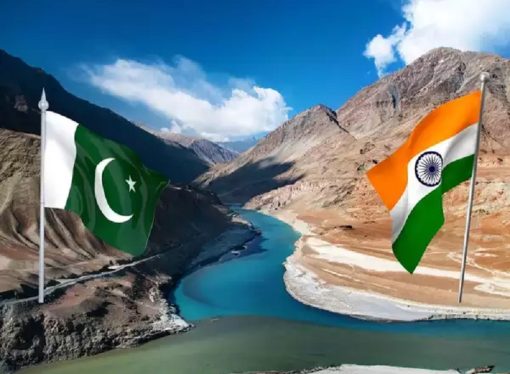
Indus water treaty is a highly significant agreement in the history Pakistan, regulating the shared water resources between India and Pakistan i.e, Indus River system. The Indus river originates in the southwestern Tibet Autonomous Region of China. It flows through the Jammu Kashmir and then throughout the Pakistan. Indus water treaty was signed between IndiaREAD MORE
The Indus water treaty was signed between India and Pakistan in 1960 brokered by World Bank in order to resolve the water crisis among both states. Through this treaty, the Indus water river is distributed between Eastern and Western rivers. The Eastern Rivers Ravi, Beas and Sutlej were allocated to India and the Western riversREAD MORE
The 18th amendment to the constitution of Pakistan, 1973 has significantly impacted the mining governance in Pakistan. It is one of the most important amendments to the constitution of Pakistan as it altered about one-third of the constitution. One of the key provisions of the amendment was devolution of power from the Federation to theREAD MORE
In the present day war scenarios, diplomacy serves as the key method in peacefully resolving the conflicts . In case of recent conflict between India and Pakistan, track I and Track II diplomacies employed together can be effective in achieving sustainable peace and stability in the region. In the 21st century, the military weaponry andREAD MORE
The five-day conflict between Pakistan and India highlights the urgent need for crisis management mechanisms to prevent rapid escalation between nuclear-armed neighbors and arch-rivals of South Asia. The confrontation which started off as a result of a terrorist attack in Pahalgam town of Indian illegally occupied Jammu and Kashmir, escalated into a brief yet intenseREAD MORE
The longevity of the recent ceasefire between India and Pakistan hinges on sustained diplomatic engagement, mutual trust-building, and addressing the underlying issues that have historically fueled tensions. After months of rising conflict between the two nuclear-armed states, a ceasefire was arranged with U.S. help. After 26 people were killed in an attack in Indian-administered KashmirREAD MORE
The domestic politics of India and the war hysteria surrounding Pakistan are inextricably linked with each other. The escalation of tensions between India and Pakistan is not merely a reflection of territorial disputes or ideological differences but is also a product of the political mechanisms within India that exploit nationalism for electoral gain. The politicalREAD MORE
India’s rhetoric about weaponizing the Indus Waters Treaty cannot hold ground in reality, as the practical consequences would ultimately prove disastrous for both its own people and its reputation, internationally. This treaty stood firm in the dark hours of three wars but became victim of Hindutva inspired leadership. Despite several bilateral crises, the treaty hasREAD MORE
The media, instead of calming tensions, has become the loudest drumbeat for conflict in the immediate aftermath of the Pahalgam attack. Within minutes of the terror attack in Kashmir’s Pahalgam area that claimed the lives of 26 tourists, Indian television screens were flooded with bold headlines, fiery debates, and accusatory rhetoric—almost all pointing fingers squarelyREAD MORE