
Author Recent Posts Rabia Anwaar Latest posts by Rabia Anwaar (see all) The Hague Ruling on the Indus Waters Treaty – September 30, 2026 Expansion of Makkah Joint Defence Agreement – September 30, 2026 Significance of Multilateral Maritime Military Coalition – August 28, 2026
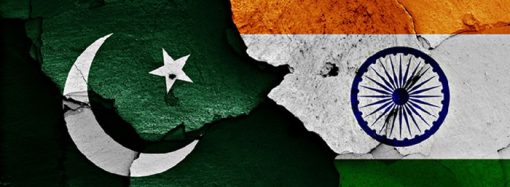
The May 2025 conflict between the two arch-rivals of South Asia was brief in time but broad in scope and nature. Squealer Media has always been used as a propaganda tool but the complementing effect that AI generated content has created is unprecedented and historic in modern international conflicts. This time AI is effectively utilized to manipulate masses and did an exceptional job during the recent May 2025 conflict. This military standoff between India and Pakistan will be studied, not merely for the kinetic exchanges that occurred along the Line of Control, above in the skies and across the cyberspace, but for the revolutionary information war that unfolded on parallel grounds. As missiles streaked across the skies, a more deceptive bombardment of deep-fakes, voice clones and algorithmically amplified disinformation flooded the digital platforms. This was not simply propaganda as we knew it; it was the first large-scale South Asian conflict where generative artificial intelligence (AI) played a central role in shaping public perception, blurring the line between truth and fabrication to an unprecedented degree.
The most destabilizing tactic was the use of AI to create synthetic identities of key political and military figures. These deepfakes were designed not just to mislead, but to erode public trust in leadership itself. A strikingly convincing video cloned Pakistan’s Prime Minister Shehbaz Sharif, digitally altering his words to make it appear as though he was conceding defeat and lamenting a lack of support from allies. However, the reality appeared otherwise. The original footage showed him commending the Pakistan Air Force’s response to India’s operations. Similarly, Indian fact-checking units like Press Information Bureau (PIB) had to debunk an AI-generated video of former Army Chief General V.P. Malik. When the identity of a leader can be synthesized and weaponized within hours of a conflict breaking out, the very concept of authoritative communication is undermined.
AI enabled a new form of propaganda, i.e., the simulation of military victories that never happened. In the absence of real footage, social media users of both sides generated convincing visuals of battlefield success. One of the most viral fakes claimed to show the Rawalpindi Cricket Stadium reduced to rubble by an Indian strike, a fabricated image that gathered millions of views and was likely intended to demoralize the Pakistani public. Another one where right after the launch of Operation Sindoor; some social media handlers and supporters of Modi administration made baseless claims that India carried out missile strikes on Pakistan’s nuclear facilities. On the other side, old footage from video games was resurfaced as real combat footage however, with the advent of generative AI tools such as Google’s Veo 3, the digital war showed that entirely false scenes of missile strikes could be created from scratch. This allowed both sides to craft a narrative of invincibility, signaling victory of their respective states while feeding hyper-nationalist sentiment with fictional visual evidence. The result was a form of synthetic fog of war, where truth and fiction blended and made it difficult for both citizens and policymakers to interpret events accurately.
Not only social media but the mainstream media also stepped in to spread misinformation during the conflict. Indian media claimed to destroy Pakistan’s Karachi and Bahawalpur (one that does not even exist owing to its no direct connection with sea) ports. Other than that, it had spread terrible misinformation about taking over Rawalpindi, Lahore, Islamabad, etc. and that military coup has taken over. This has been done for mainly two reasons: to boost nation’s morale, domestic support and influence international public.
War time propaganda usually aims to shape domestic morale and international legitimacy. However, AI has introduced new characteristics into narrative construction. First, the scale of content production has expanded dramatically. AI systems can generate thousands of posts, images, or videos within minutes, enabling coordinated campaigns that appear organic. Second, the realism of deepfakes and synthetic media challenges the credibility of visual evidence, which traditionally played a crucial role in wartime reporting. The creation of deepfakes represents a powerful new form of disinformation capable of influencing perceptions more effectively than earlier propaganda methods. Lastly, AI tools are increasingly accessible to everyone, meaning that not only states but also non-state actors, activists and online communities have participated in shaping narratives during the conflict.
One of the most glaring aspects of this conflict was the speed at which misinformation was disseminated and could influence crisis dynamics. The AI-generated disinformation during the 2025 crisis posed risks of strategic miscalculation between India and Pakistan. Synthetic videos or false claims about military escalation could potentially lead decision-makers to misread the intentions of the other side. In a region where nuclear deterrence already creates high-stakes tensions, such informational distortions can have serious consequences. This highlights how narrative warfare is no longer just about public opinion; it can directly affect crisis stability and diplomatic outcomes.
The May 2025 conflict revealed that it was not merely a combat fought by military but a war of narratives. It also revealed how the media ecosystem itself is changing. Journalists now operate in an environment where AI-generated content competes with verified reporting. This creates a dilemma that the demand for rapid reporting during crises often clashes with the need for verification in an era of synthetic media. In the May crisis, the pressure to publish quickly sometimes allowed misleading narratives to gain traction before corrections were issued. At a broader level, the May 2025 episode highlights the emergence of what one may call ‘information-centric warfare.’ Conflicts are no longer defined solely by military engagements but also by struggles over perception, legitimacy and narrative dominance. AI acts as a force multiplier in this domain, accelerating both the creation and dissemination of strategic messaging. However, the South Asian crisis demonstrated how quickly these technologies can influence a nuclear rivalry, raising the stakes even further.
The implications of AI-driven narrative warfare are significant. Governments, media organizations, and international institutions must adapt to a reality in which information integrity becomes a security issue. Therefore, strengthening fact-checking mechanisms, improving media literacy and developing national and international norms on AI-generated propaganda are essential steps without which risk of escalating tensions into war will be a dominant, real-time threat.

- The Hague Ruling on the Indus Waters Treaty - September 30, 2026
- Expansion of Makkah Joint Defence Agreement - September 30, 2026
- Significance of Multilateral Maritime Military Coalition - August 28, 2026