Legal Commentary on the Recent Decision on the Indus Waters Treaty
- Blog, Human Security, National Security
- October 14, 2026

National security refers to the government’s capacity to use different avenues to safeguard and defend a sovereign state, including its inhabitants, economy, and institutions, as a duty of government. Originally envisaged as a defence against military assault, national security is now commonly recognised to encompass non-military components such as terrorism prevention, crime reduction, border security, economic security, energy security, environmental security, food security, and cyber-security. Similarly, in addition to the acts of other nation states, national security concerns include the actions of violent non-state actors, drug cartels, and multinational businesses, as well as the consequences of natural disasters.
Although nations’ approaches vary, with some beginning to prioritise non-military action to address structural sources of insecurity, different types of coercive force, notably Military Capabilities, predominate. The extent of these skills has grown. Military capabilities have always been mostly land- or sea-based, and in smaller nations, they remain so. Other possible warfare domains today include the law, air, space, the internet, and psychological operations. Military capabilities built for these areas can be utilised for defensive and offensive goals, such as conquering and annexing land and resources.
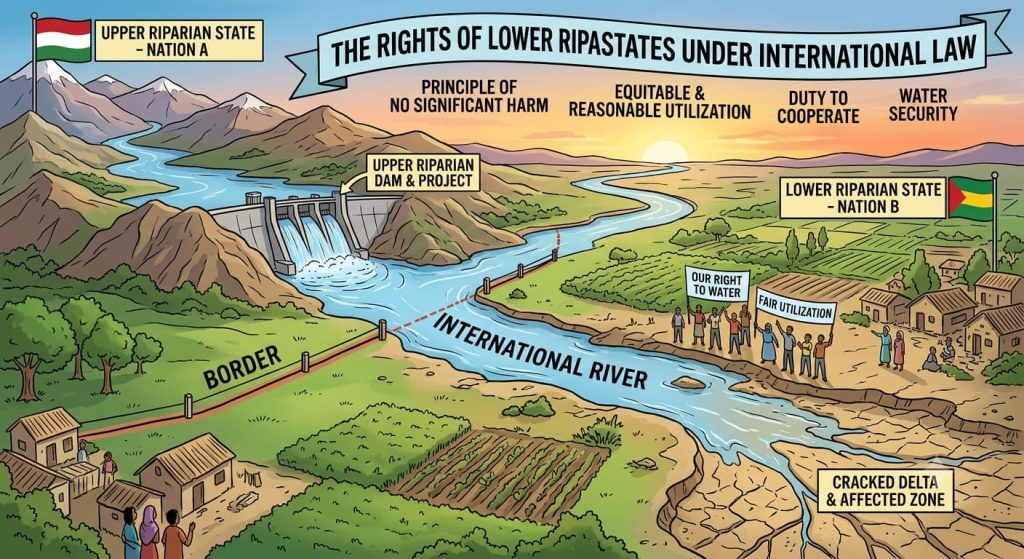
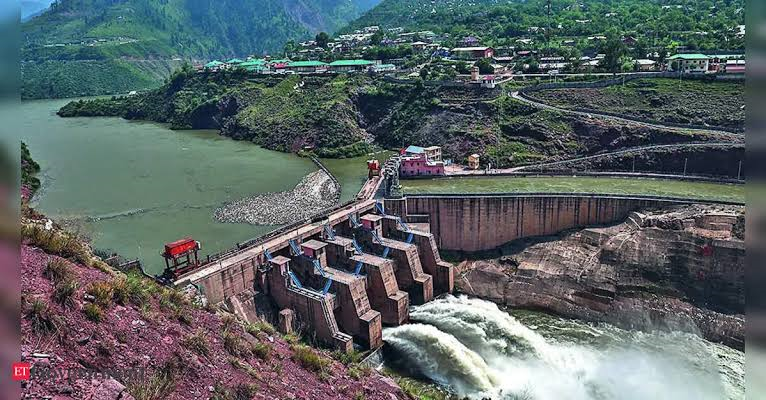
The recent decision of the Court of Arbitration at The Hague concerning the Indus Waters Treaty (IWT) is legally significant because it addresses whether a state can unilaterally suspend a binding treaty because of terrorism, national security concerns or changing circumstances. On 31 August 2026, the Court held that the 1960 Treaty remains fully in
Militarization of vital Strategic naval gateways by state and non-state actors has become a new normal in maneuvering international politics. Chokepoints are better understood as sites where geography, security politics and market expectations converge, and where risk is distributed as much by perception as by physical disruption. These narrow passageways, having immense significance, are instrumentalized
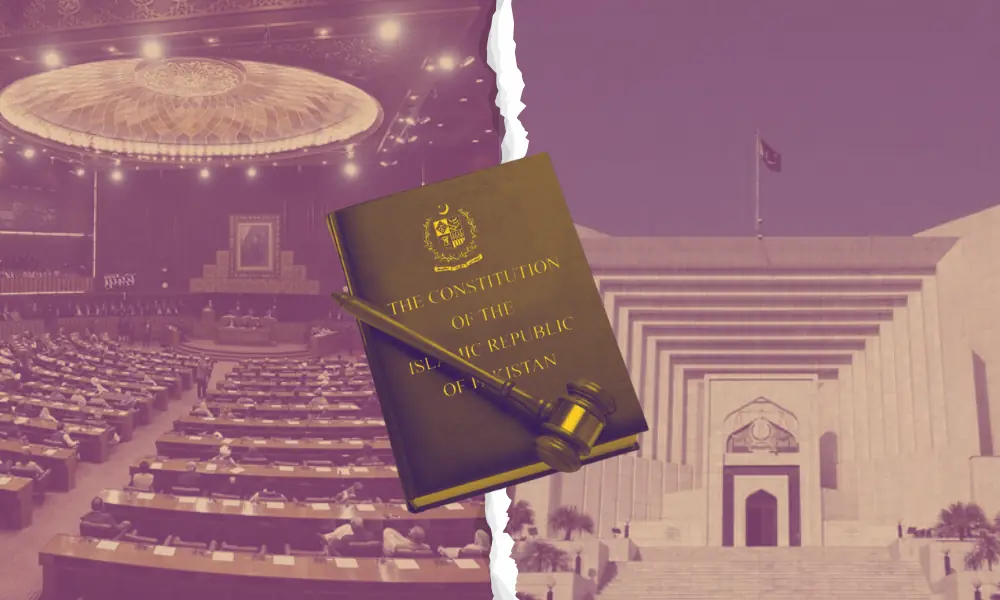
Article 239 of the Constitution of Pakistan forms the constitutional amendment provision, whereby Parliament can make changes to the very constitution that has provided it with its powers. No other constitutional provision has had as much controversy associated with it. This is because it lies at the junction of two conflicting constitutional doctrines: Parliamentary Sovereignty
The Anti-Terrorism (Amendment) Bill, 2026, passed by the Punjab Assembly, raises a well-known doctrinal question in counterterrorism law: the extent of the trade-off between procedures to safeguard justice-delivery staff and the defendant's right to a fair trial. This legislation was adopted through an opposition boycott and a controversial quorum; however, its provisions are more significant.
The Permanent Court of Arbitration’s (PCA) decision puts legal rules above politics, making it clear that countries cannot unilaterally suspend an international treaty even during armed conflicts. The award by PCA of rejecting India’s attempt to hold the IWT ‘in abeyance,’ the Court reflected that on India’s move that it is not a valid legal
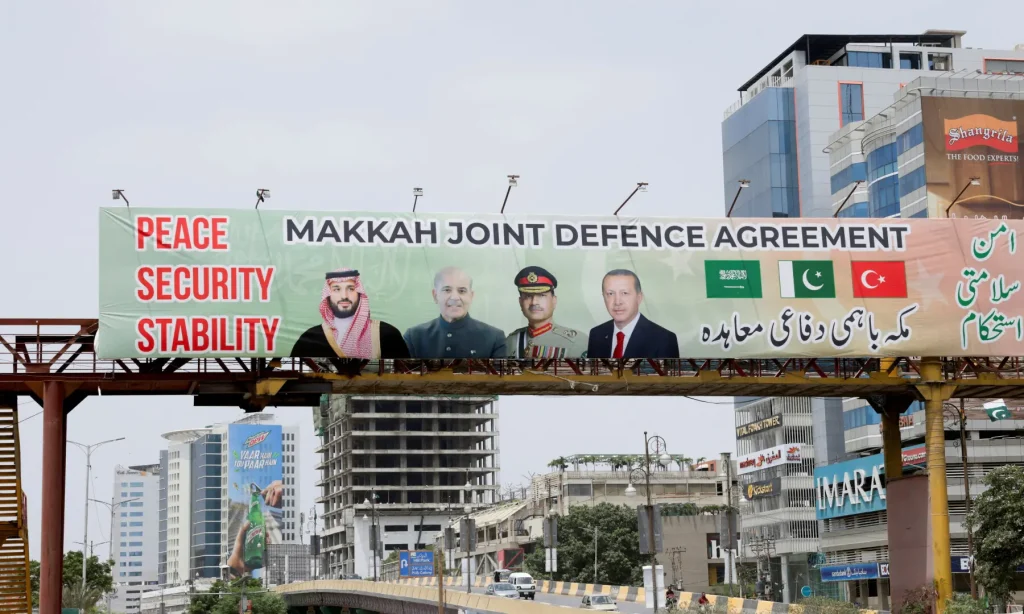
The future of the Makkah Joint Defence Agreement should not be determined by how effectively it can transform a political commitment into a credible regional security architecture. The need for expansion arises from the changing nature of threats confronting the three founding members, Saudi Arabia, Pakistan and Türkiye. The agreement signed in Al Safa Palace,
The Centre for Law and Security (CLAS) is a non-partisan policy research institution that aims to define the future of national security in Pakistan
No 68, Behind Nescom, H-11/4,
Islamabad
Pakistan
Phone: +92 51 4866181-7