Author Recent Posts Wajeeha Ashfaq Latest posts by Wajeeha Ashfaq (see all) How has the Middle Eastern War Transformed the Iran-Gulf Relations? – July 15, 2026 Will Water Emerge as the Next Battlefield between India and Pakistan? – July 15, 2026 The U.S.-Iran Peace Process and the Lebanon Question – July 15, 2026
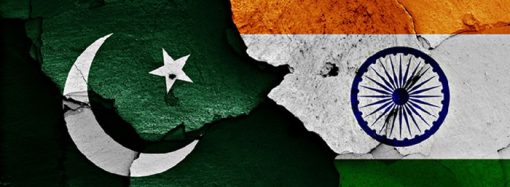
The relations between India and Pakistan have come to a complete stalemate after the violent confrontation of May 2025. Though mediated into a ceasefire without a full scale escalation, this event marked the end of even minimal cooperation at the bilateral level. Pakistan defended its right of self-determination under Article 51 of the United Nations’ Charter. It was not an act of aggression on the part of Pakistan, but reflection of a clear stance: any irrational and self-proclaimed stance to initiate a war would not be tolerated. India has suspended all forms of communication with Pakistan. The most important of which is the Indus Water Treaty held in abeyance, which had survived for decades. Both the countries need to revive their relations through trust building and bilateral talks, considering that a complete cutoff is beneficial to none.
Both states have embroiled in repeated conflicts, with the time span between each conflict decreasing post Kargil War, 1999. Although the nuclear deterrence has prevented a full scale war, but it has rendered each state the confidence of involving in conventional skirmishes and a strategic retreat just before full escalation. Such low intensity conflicts have further deteriorated the mutual trust between India and Pakistan, persistent since partition in 1947. The most recent escalation of May 2025, which took the two countries at the brink of a nuclear war, resulted in a standoff. This highlights the delicate nature of relations as both countries are always at the risk of a renewed war.
The hostilities between India and Pakistan, in the aftermath of Pahalgam incident and the subsequent Operations, have intensified. India unilaterally suspended the Indus Water Treaty, which had withstood decades of conflicts, even the bloody wars of 1965 and 1971. This unilateral suspension has ended the mutual understanding that water could remain isolated from political antagonism. India’s use of water for geopolitical leverage makes dispute resolution more complex. Additionally, the cease of direct trade between both countries in 2019 has been entrenched, with little to no possibility of resumption. India also cancelled visas for Pakistani citizens, ousted military advisors form Pakistan’s High Commission in New Delhi, and called back its own officials from Islamabad. Furthermore, Kashmir remains a point of contention given that India has adopted the pattern of blaming Pakistan for any such incident in India and the Indian-occupied Kashmir.
Beyond the high politics, this animosity extends to the low politics areas. One such instance is the sports, where the bitter relations between the neighboring states reflect. The Indian Cricket team refused to shake hands with their Pakistani counterpart during the Asia Cup in 2025 and the T20 World Cup in 2026. They also declined to accept the trophy from Mohsin Naqvi, the Asian Cricket Council president and the Pakistan Cricket Board chairman, during the Asia Cup. More Recently, on 31st December 2025, Indian Minister of External Affairs, Jaishankar, and Pakistan’s National Assembly Speaker, Ayaz Sadiq, shook hands in Bangladesh at the funeral of Khalida Zia. While some saw it as symbolic step towards reconciliation, but it seems merely a ‘contextual wisdom’, given the presence of other states’ officials. It has not progressed towards any improvement of relations as some analysts expected earlier. Despite India’s reluctant attitude, Pakistan has facilitated the Sikh Pilgrims from India, with 2942 visas issued in November 2025. Moreover, Kartarpur corridor also remains fully operational from Pakistan’s side, but India does not allow its Sikh citizens to travel to Pakistan since May 2025. It is also violating the Bilateral Protocol of 1974 by not allowing Pakistani Zaireen to visit, while denying visas to Pakistani citizens.
The possibility of rapprochement between India and Pakistan is minimal but not unattainable. Both the countries need to engage in confidence building measures primarily to enhance cooperation at all levels. Both countries got involved in Composite Dialogue several times, with the last time in 2004. Although it did not yield the desired result, but it provided a blueprint for managing relations between two states, marked by enduring rivalry. Both countries should accept that there is a need for at least minimum level of mutual assurance to prevent the further worsening of relations during such crises. This can help provide an alternate way, other than military confrontation, to resolve bilateral issues. There is a need to revive the people to people connection through traditional agreements, and set up new agreements to further enhance it. Backchannel diplomacy between high level officials can help set the stage for further correspondence.
Water sharing, alongside creating a risk, also renders opportunity of cooperation between both countries. The hydrological condition of Indus Basin is changing rapidly. Glaciers are shrinking, alongside the depletion of ground water. Consequently, the timing and intensity of monsoon is also changing, which poses a threat to both countries. It is in the best national interest of both to continue the cooperation mechanism through Indus Water Treaty. One such instance is the Israel Jordan Peace Treaty, which demonstrates that cooperation on water security can be sustained even through tense political relations. The cooperation in water sharing can be expanded to other areas as well to improve resilient relations in formal and political sphere. Such type of functionalism, as proposed by David Mitrani, can prove beneficial in India-Pakistan case, where a direct attempt at political negotiations may prove futile.
The realization that indirect trade through third party is only imposing an unnecessary burden on both countries, can also make cooperation possible. Both countries’ have diversified their trade through Gulf countries to reduce direct dependence on each other. However, the Hormuz crises has inflicted greater harm on both economies. It has pointed out the vulnerability of tense relations with a neighbor, sharing a potential for mutual trade. Direct interdependence through trade can help bring both countries together, reducing the trade deficit. India has a number of issues with China, but both of them do not consider them as an obstacle to their mutual trade, reaching about $155.6 billion in 2025. It sets a precedent for Pakistan and India that the political differences can be set aside for mutual economic benefit.
Pakistan and India can reduce the historical animosity through proactive strategies, given that there is a political will from both sides. For all these efforts to materialize, India needs to let go of its ‘dominance’ strategy and start considering Pakistan a reality. India, under Modi, has adopted a ‘madman strategy’ which does not consider the international obligations when it comes to Pakistan. India has to respect the territorial sovereignty of Pakistan, as obligated under United Nations’ Charter Article 2(1) and 2(4). Pakistan has emerged as an important global player, which requires India to rethink its policy of complete isolation from it. Constructive engagement, even at a bare

- How has the Middle Eastern War Transformed the Iran-Gulf Relations? - July 15, 2026
- Will Water Emerge as the Next Battlefield between India and Pakistan? - July 15, 2026
- The U.S.-Iran Peace Process and the Lebanon Question - July 15, 2026