
Author Recent Posts Rabia Anwaar Latest posts by Rabia Anwaar (see all) The Islamabad Accord: How Pakistan’s Ceasefire Mediation Reshapes Its Global Standing – April 28, 2026 Oil as a weapon of war during the recent U.S.-Israel-Iran War 2026 – March 31, 2026 Strategic Motives behind US-Israel joint Pre-emptive Strikes against Iran – March 27,
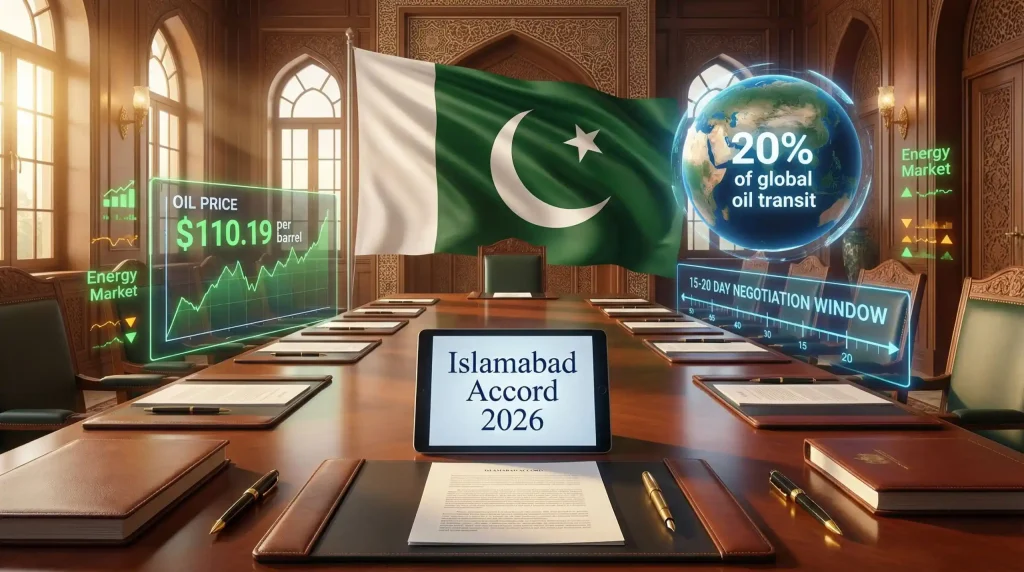
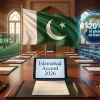
Pakistan’s international narrative has been defined by internal instability, militant violence and geopolitical hedging a reputation as a problem state rather than a solution provider. In a stunning reversal, Pakistan has emerged as the indispensable mediator between the United States and Iran, successfully brokering a two-week ceasefire that averted a catastrophic regional war. The first round of direct peace talks, held in Islamabad, marked the first time in years that American and Iranian officials sat at the same table. With the second round expected soon, Pakistan is no longer a passive observer of great power rivalries but an active architect of global peace, leveraging its unique geography and strategic relationships to reshape its international image from a security state to a credible guarantor of stability.
Pakistan’s rise as a peacemaker rests on a foundation of strategic ambiguity that few nations possess. Unlike Qatar or Oman which have traditional mediation roles, Pakistan maintains simultaneous working relationships with Washington, Tehran, Riyadh and Beijing—a set of power quadruples that rarely see eye to eye. When the US-Israel war on Iran erupted in February 2026, threatening to block the Strait of Hormuz through which one-fifth of global oil passes, Pakistan stepped into a void that no other nation could fill. Prime Minister Shehbaz Sharif and Army Chief Field Marshal Asim Munir engaged counterparts across all capitals simultaneously, transforming Pakistan from a country often accused of supporting the Taliban into the world’s most unlikely peace broker. The White House Press Secretary publicly acknowledged that Pakistan “incredibly conducted effective mediation,” while Iranian officials expressed “gratitude and appreciation” for Islamabad’s tireless efforts.
The first round of talks in Islamabad that lasted over twenty hours, demonstrated Pakistan’s capacity to host high-stakes diplomacy despite its own economic and political challenges. US Vice President JD Vance and Iranian Parliament Speaker Mohammad Bagher Ghalibaf both thanked their Pakistani hosts by name, a rare moment of unified praise from sworn adversaries. Even without an immediate comprehensive agreement, the fact that both delegations traveled to Islamabad and that approximately 80% of key issues reportedly saw convergence—represents a diplomatic coup. This trust, born of necessity and decades of careful relationship management serves as Pakistan’s most valuable diplomatic currency.
The impact on Pakistan’s international image has been immediate and profound, dismantling years of negative narratives in a single stroke. The New York Times reported that Pakistan has “established itself as a guarantor of peace,” while the Atlantic Council’s Michael Kugelman noted that the country is now seen not as a problem but as a “solution provider” and the list goes on. For a nation that fought a war with India just last year and faced two rounds of conflict with Afghanistan, this reputational shift is remarkable. Western observers have also called it one of Islamabad’s greatest foreign policy successes in decades. The Pakistani diaspora, long accustomed to defending their homeland’s image, is now proudly displaying green passports on social media a symbol of a country that has succeeded beyond expectations.
Beyond reputational gains, this mediation effort directly serves Pakistan’s economic interests in tangible ways. The blockade of the Strait of Hormuz threatened Pakistan’s energy security directly, as the majority of its oil and gas transit through those waters. Pakistan protected its own economy from a catastrophic fuel crisis by helping secure a ceasefire and the strait’s reopening,. Moreover, the goodwill generated from Washington and Tehran creates openings for economic relief: potential US assistance, renewed access to Iranian energy markets through the long-stalled Iran-Pakistan gas pipeline and financial support from Gulf Arab states grateful for Pakistan’s role in de-escalation. Even if the second round of talks faces hurdles, as recent Iranian statements suggesting reluctance indicate, Pakistan has already positioned itself as a nation whose diplomatic services carry value.
The second round of talks, expected to resume in Islamabad, will test whether this momentum can be sustained into a durable settlement. Iranian officials have expressed deep distrust of Washington, cited ceasefire violations. Yet Pakistan’s unique position—as a trustworthy neighbor of Iran and strategic partner of the U.S.—means that no alternative mediator exists with comparable leverage. The army chief’s recent trip to Tehran to prepare the ground for further negotiations signals that Pakistan is not abandoning its role despite setbacks. For the Trump administration, facing domestic political pressure and a war it did not anticipate, Pakistan offers a face-saving path to de-escalation. For Iran, exhausted by forty days of conflict and seeking sanctions relief, Pakistan remains the only viable channel to Washington.
Pakistan’s emergence as a global peacemaker through the US-Iran ceasefire represents a fundamental shift in how the world perceives this oft-maligned nation. From a country associated with extremism and instability, Pakistan has transformed into a trusted mediator whose geography, strategic relationships, and demonstrated capacity for crisis management make it indispensable. The first round of Islamabad talks proved that Pakistan can host world-class diplomacy; the expected second round offers an opportunity to cement a durable peace. Whether or not a final agreement is reached, Pakistan has already achieved what seemed impossible: it has changed the narrative. For a nation long defined by its problems, that is the most valuable prize of all— and one that will pay dividends in diplomatic clout and economic opportunity for years to come.





Leave a Comment
Your email address will not be published. Required fields are marked with *