

Author Recent Posts Mahnoor Sohail Latest posts by Mahnoor Sohail (see all) HOW DOES NUCLEAR ISSUE BECOME A FLASHPOINT BETWEEN THE U.S AND IRAN CONFLICT – March 31, 2026 SIGNIFICANCE OF STRAIT OF HORMUZ AND OIL TRADE – March 31, 2026
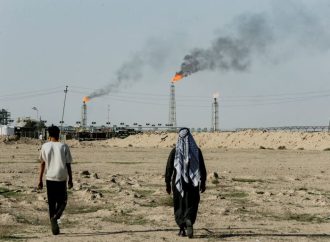
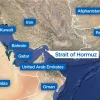
Geography has a massive power at the Strait of Hormuz, and such power is silent. It can seem that it is nothing but a small strip of water not much more than 33 kilometres across, but behind this humble facade runs a river of oil truly enormous. It is close to being one-fifth of the global oil as nearly a passageway, so it is much more than a sea route. It acts as a life blood of the world economy which keeps industries, transport infrastructure and even countries alive. Its silent presence is concealing a very strong fact this narrow street has a tremendous economic load. It links Persian Gulf which is rich in oil to the Gulf of Oman which is an important exporter. Saudi Arabia, Iraq, Kuwait, and the United Arab Emirates are countries that are dependent on this route. Oil goes through Hormuz and covers long distances to industrial powerhouses such as China, India and Japan. The strait is a vital part of the world because it supports production and trade globally. A discontinuity in this channel has immediate shock effects in the global markets.
A little bit of upheaval is enough to cause major repercussions. Oil prices go high, economies are straining and the world shakes. This shows the extent to which the world is relying on one small road. Hormuz in this regard is not only a transit route but also it symbolizes global economic dependence. It silently influences the destinies of the countries with each tanker passing by. Its position is dynamic and ever present strengthening its core position in international trade. Strait represents both the stability and vulnerability simultaneously. Nevertheless, the Hormuz tale is not just about oil, but also about power, politics and geopolitics. Its geographical position has rendered it a traditional chokepoint whereby business, politics and military interests overlap. This is its weakness, which adds to its significance, and narrows it down to a few weaknesses. The energy supply of the world has been destabilized in one single act, like a tanker seizure, naval confrontation, or local conflict. In this way, the strait is scrutinized by the international community at all times. It is the place where minor steps may have global repercussions.
Iran is a nation with great strategic power over the passage, on its northern coast. It has leverage that is well beyond its physical size due to its geographical proximity. The fact that the world may be shaken by the prospect of limiting access and remodel international relationships can change the global markets. This is a strategic status, which promotes Iranian role in the global politics. This power to affect such an important route makes a strong bargaining factor. In this situation, geography is directly converted into political power. That is why such a powerful state as the United States has a strong presence in the area by the naval forces. Together with their allies, they are trying to provide the secure and continuous movement of oil. Nonetheless, there is a paradox in this security set up. Military presence is also supposed to stabilize the region but in the process, more chances of miscalculation are created. Even a simple misunderstanding or misjudgement may lead to a bigger conflict. In this way, the security activities themselves can be a cause of instability.
The legal frameworks like the United Nations Convention on the Law of the Sea assure the right of transit passage. Theoretically, these laws are meant to ensure that free shipping is applied in the international waters. As a matter of fact, though, legal regulations tend to fight with both political stressors and security issues. The Hormuz region is a good example of the close connection between law, trade, and geopolitics. It points out the constraints of international law in very disputed areas. Finally, the principle of power tends to prevail over law. Although the need to decrease the use of this single path has been made known, the significance of this path has not been diminished. The Gulf countries have constructed other pipelines towards the Red Sea and the gulf of Oman. These paths are set to reduce the Hormuz risks. Nevertheless, they will not be able to completely substitute its capacity and efficiency. The quantity of transported oil at the strait is unparalleled. This makes it remain the core energy logistics artery in the world.
Simultaneously, Hormuz is a kind of mirror of a larger geopolitics conflict, in particular, between Iran and the United States. The possibility of breaking passage, even figuratively, is an effective tactic. It affects negotiation, coalition, and world politics. This is the current tension that has kept the strait in the focus of the international community. It is not physical space alone but also it is a political tool. In the future, the entire world trend of using renewable energy is also not expected to make Hormuz any less relevant in the nearest future. Its waters will remain the passage of oil and gas shipments and rising liquid natural gas business. It will continue to play the essential role in the energy network of the world in decades to come. It has been entrenched in the nature of the current economic structures. It will not be a sudden change.
The Strait in this manner enlightens a bigger story of globalization itself. It is an oxymoron of reliance and powerlessness. This is the one route through which nations that might be political adversaries are interconnected economically. Conflict becomes essential despite cooperation is necessary. This underscores the difficulty in contemporary international relations. It takes strategic compromise to survive economically. After all, the Strait of Hormuz may be tiny, but it is very mighty. It shows how geography still influences wealth, power as well as world stability. Natural features have their influence even in a highly technological world. The strait is created to remind the world of the vulnerability of world systems. International prosperity has a tendency of being based on thin lines. It is not only a waterway, it is a strong image of interdependence all over the world.

- HOW DOES NUCLEAR ISSUE BECOME A FLASHPOINT BETWEEN THE U.S AND IRAN CONFLICT - March 31, 2026
- SIGNIFICANCE OF STRAIT OF HORMUZ AND OIL TRADE - March 31, 2026









Leave a Comment
Your email address will not be published. Required fields are marked with *