

Author Recent Posts Rabia Anwaar Latest posts by Rabia Anwaar (see all) Oil as a weapon of war during the recent U.S.-Israel-Iran War 2026 – March 31, 2026 Strategic Motives behind US-Israel joint Pre-emptive Strikes against Iran – March 27, 2026 The future of Pakistan’s strategic balancing between U.S – China – March 19, 2026
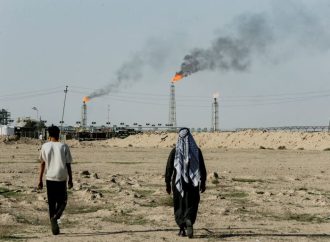
Oil has been utilized as the most dangerous weapon of war, used in the recent US. – Iran- Israel conflict. It has been used to interrupt global trade, transforming energy infrastructure into primary military targets, turning the global economy into a hostage where disrupting supply chains inflicts economic devastation that no missile alone can achieve. The oil tanker burned for hours in the Strait of Hormuz was not simply a casualty of war; it was the weapon. In the recent conflict between the U.S.-Israel alliance and Iran, a brutal re-education in geopolitical reality has unfolded: oil is no longer just a resource to be fought over; it has become the primary mechanism of warfare itself. This war has been defined less by territorial gains and more by the systematic targeting of energy infrastructures and turning the global oil economy into a hostage.
A terrifying escalation has emerged in the transformation of energy infrastructure into a legitimate military target. This was not a war of tanks crossing borders but of drones targeting refineries. In a devastating tit-for-tat cycle, Israel struck a major Iranian gas field. Iran retaliated not only by targeting Israeli infrastructure but by striking Qatar’s Ras Laffan Industrial City which processes roughly a fifth of the world’s liquefied natural gas, causing damage estimated to take years to repair. Simultaneously, Iranian drones hit Kuwaiti oil refineries and facilities in the UAE, dragging the entirety of the Gulf’s energy heartland into the crossfire. The message was unambiguous: energy security is indivisible. An attack on one producer is an attack on all, and the price of that insecurity would be paid by every consumer on the planet.
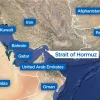
The most chilling development has been the unprecedented yet most effective closure of the Strait of Hormuz, the world’s most critical maritime chokepoint. The waterway through which approximately 20 percent of global petroleum liquids trade normally passes became a no-go zone. Maritime data firm Lloyd’s List Intelligence reported that in the weeks following the outbreak of war, only 77 vessels made it through the strait while over 150 oil and gas tankers remained anchored in open waters, too terrified to transit. The Iranians, unable to match American airpower, wielded their asymmetric advantage: the ability to strangle global supply. The sinking of the Marshall Islands-flagged tanker MKD Vyom served as a gruesome warning to any shipowner weighing the risks of the passage. This was not merely about disrupting Iran’s own exports; it was about weaponizing fear to drive insurance premiums sky-high and effectively impose a siege on global energy flows.
A devastating cost has accompanied this energy strategy, extending far beyond the closed doors of trading floors. The war’s economic shockwave has acted as an inflationary tax on households worldwide. In Asia, particularly in oil-import dependent nations like India, Thailand, and the Philippines, fuel prices spiked almost immediately, driving up the cost of everything from transportation to fertilizer. In the Middle East itself, the toll was spiked unnaturally. One can look at the village near Hebron in the West Bank, where four Palestinian women from the same family were killed by an Iranian cluster missile while preparing a meal for Ramadan. One can look at the Thai agricultural worker killed in central Israel by shrapnel. They were not soldiers; they were the human interest payments on a debt of energy insecurity that the entire world is being forced to pay.
A critical juncture has now been reached in the conflict, with reports suggesting a potential American invasion of Kharg Island the hub of Iranian oil exports or a blockade of its ports. The strategic calculus remains brutally simple. The U.S. wants a short, decisive war, ideally lasting four to eight weeks, to avoid the political fallout of high gasoline prices during an election year. Iran, having lost much of its air superiority and naval capacity, seeks to drag the conflict out, using the threat of a prolonged closure of the Strait of Hormuz to force concessions. The ultimate weapon is not a missile but time. Analysts warn that if the war drags on for months, oil prices could surge to $180 a barrel, causing a global recession.
A sobering conclusion remains. In this war, oil is not merely fuel for the war machine; it is the machine itself. It is the target, the ammunition and the prize. The leaders speak of decapitation strikes and naval victories, the true battle is being waged on the balance sheets of energy companies and the budgets of ordinary families. The halt of global trade, burning tankers in the Gulf, the strategic reserves being drained, and the spiking prices at the pump are all reminders that in the modern age, energy security has become indistinguishable from national security. Until the world diversifies away from this dependency, the Strait of Hormuz will remain not just a geographical chokepoint but a geopolitical trigger, waiting to plunge us all into the next conflict. As long as the world runs on oil, it will be fought over it and with it.

- Oil as a weapon of war during the recent U.S.-Israel-Iran War 2026 - March 31, 2026
- Strategic Motives behind US-Israel joint Pre-emptive Strikes against Iran - March 27, 2026
- The future of Pakistan’s strategic balancing between U.S – China - March 19, 2026














Leave a Comment
Your email address will not be published. Required fields are marked with *