
Author Recent Posts Muammad Abubakar Nazar Latest posts by Muammad Abubakar Nazar (see all) May 2025 conflict: The role of AI in Military Warfare – March 2, 2026 U.S tariff relief and underlying complexities – August 28, 2025 ROLE OF EUROPE IN HUMANITARIAN CRISIS IN GAZA – August 20, 2025
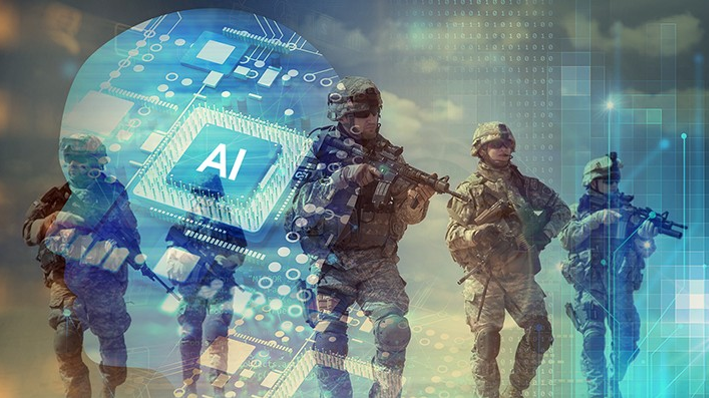
The role of AI along with military technology has changed modern warfare. It is being used by the states in order to influence the outcome of an event. One of the most impacted areas is modern military warfare and its altering dynamics. These have made States employ the use of AI to complement their weaponry and tactical systems to gain benefit over their enemy. The war of May 2025 between India and Pakistan witnessed such approach where both States indulged into using AI as a tool of military affairs. The way it did so is worth noting and an example of the sway of technological advancements.
The States are using emerging technologies, including AI, as a force multiplier to complement their material capabilities. This application is visible in number of conflicts around the globe with Russia-Ukraine war, and Israel’s war on Gaza being at the top. The precedent set was followed during the war between India and Pakistan too. Pakistan’s air force used C2ISR framework, which is a blend of Command, Control and Surveillance systems against the Indian Airforce. This system evidently furthered the capabilities of PAF which claimed to have downed 6 Indian Rafale fighter jets. India also reported to have deployed various AI applications among which is Anuman 2.0 which basically is used to gain a real time weather assessment by the Indian Army along the border. This extensive use of AI during South Asia’s first multi domain war portrays its multiplying effect on the military capabilities of both the countries.
The conflict also witnessed the use of drones, which was central to offer real time data and precision to strike. This was the first time where both the sides, India and Pakistan, had deployed drones during the skirmish. The military benefit of this tactic was that it gave the benefit of “response time” to the parties. Drones were used in cross border strikes and targeting infrastructure in an efficient way. They also shifted the traditional way of wars with boots on ground, lowering the risks of heavy life loss. These drones themselves are not fully AI driven autonomous weapons, but they do need AI assisted navigation to operate. The result is continued observance of adversary’s position and information regarding the battlefield, providing a chance to make better decisions in less time.
The role of AI in cyber and information warfare is another domain of modern conflicts including that of India and Pakistan. The war was not limited to traditional weapons and machinery but spread to digital platforms such as social media. The disinformation as in surge during the small war and AI generated deepfakes were shared across social media, specifically X. The public opinion was shaped in the desired way as some in India believed that a port in Lahore had been destroyed. The level of false narratives was such that it created a fog of war, where some claimed victory while others conceded defeat in the deepfakes. The use of AI assisted very well the Indian trend of weaponizing the information to shape international opinion through state aligned agenda. The impact of AI in this regard is that although reality was different on ground, a strategy of digital manipulation influences the outcome.
The integration of AI with military systems has to some extent worsened the concern of Nuclear Deterrence between two nuclear armed states. This simply means that there are chances of premature or unpremeditated nuclear signaling, leading to disastrous results. There are talks of OODA loop (Observe-Orient-Decide-Act) being affected, as an Indian Chief spoke about “Third Revolution in Warfare”. The point of concern is that the AI automated responses give a very short amount of time and uncertainty for a decision maker to reach a rational decision at a critical point. This can lead to destabilization of established deterrence and increase the chances of a nuclear exchange between two hostile nations.
The part AI played during the conflict between India and Pakistan is itself an example of how significant it has become in the military affairs. It shaped the outcomes and narratives on both sides during the conflict, showing that it can effect military warfare through multiple dimensions. The main point to ponder is whether States and decision makers will be able to understand the dynamics of modern warfare or not. Kenneth Waltz’s “More May Be Better” can make the State behavior to integrate AI with military more understandable. India and Pakistan’s war was a first drone war between two nuclear armed nations and has since enhanced the inclination of both towards furthering the capabilities.

- May 2025 conflict: The role of AI in Military Warfare - March 2, 2026
- U.S tariff relief and underlying complexities - August 28, 2025
- ROLE OF EUROPE IN HUMANITARIAN CRISIS IN GAZA - August 20, 2025














Leave a Comment
Your email address will not be published. Required fields are marked with *