Author Recent Posts Zahid Hussain Latest posts by Zahid Hussain (see all) Weaponizing the Strait of Hormuz – May 5, 2026 Success of Pakistan’s Diplomacy – April 16, 2026 Strategic Motives Behind Operation Ghazab lil Haq – March 31, 2026
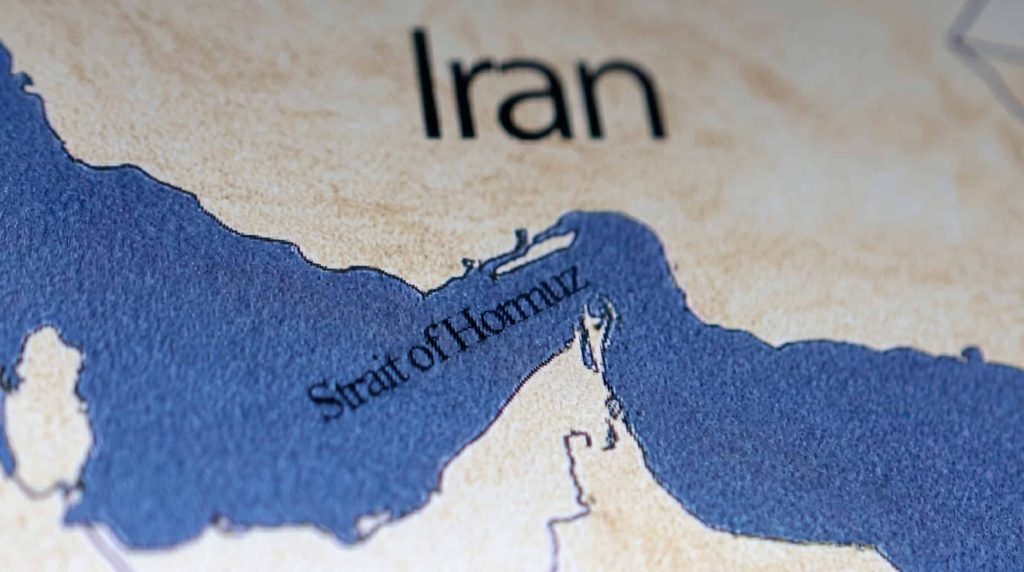
The Strait of Hormuz has long been one of the most strategically significant waterways in the world. It has transformed into an active instrument of warfare during the ongoing confrontation between Iran and the United States. Rather than depending on a single decisive battle, Iran weaponized the strait through a calculated mix of military tactics, economic disruption, and psychological pressure, turning a commercial lifeline into a global issue. Geography is the center of this strategy, as this strait is narrow, heavily trafficked, and bordered in part by Iran’s coastline, giving Tehran an advantage. Iran signaled that it could monitor and potentially target any vessel passing through by positioning radar systems, missile batteries, and patrol units along this stretch. This alone was enough to elevate tensions and make global shipping companies cautious. Geography, in this sense, became the foundation of weaponization; control of space translated directly into strategic leverage.
One of the most effective tools used in this process was the deployment of naval mines. Mines are relatively inexpensive and simple compared to large naval platforms. They are capable of creating massive disruption if deployed in a narrow strait like Hormuz. Mines that are present in shipping lanes have forced tankers to slow down, reroute, or halt altogether. Clearing these mines will prove difficult and time-consuming for the United States. Thus, highlighting how a low-cost tactic could neutralize a technologically superior navy. The result was not widespread destruction but sustained uncertainty, which was enough to disrupt global energy flows.
Iran has also relied heavily on the seizure of commercial vessels. Fast attack boats and naval patrol units have been used to shadow tankers, issue warnings, and, in some cases, detain ships. These actions were carefully calibrated. They demonstrated Iran’s ability to assert control over the strait. Each seizure or confrontation sent a message, not just to the United States but to the international community, that the passage through the strait could no longer be taken for granted. Missile and drone threats further amplified this sense of danger. By deploying anti-ship missiles and unmanned aerial systems along its coastline, Iran extended its reach across the entire width of the strait. Importantly, these weapons did not need to be used frequently to be effective. Their presence alone created a constant risk environment. Shipping companies and insurers responded accordingly, raising costs and reducing traffic. In this way, the threat of force became as impactful as its actual use.
Perhaps the most powerful dimension of this strategy was psychological. Iran understood that modern markets react as much to perception as to reality. Public statements, military exercises, and widely reported incidents all contributed to a narrative of instability. Oil prices surged, insurance premiums soared, and global markets reacted sharply to even minor events. This demonstrated that weaponizing the strait did not require constant physical disruption; shaping perceptions could achieve similar results. A key feature of Iran’s approach was to fully close the Strait of Hormuz, which has provoked overwhelming retaliation from the United States. At times, ships were allowed to pass; at others, they were delayed, inspected, or turned away. This unpredictability made it difficult for the United States to formulate a consistent response. It also kept the conflict below the threshold of total war while still imposing significant costs.
The United States seeks to counter this strategy by securing the waterway. Naval forces, particularly those under the U.S. Fifth Fleet, were deployed to escort tankers, conduct surveillance, and clear mines. However, these efforts revealed the limitations of even the most powerful navy. The confined geography of the strait, combined with Iran’s asymmetric tactics, meant that complete security was impossible. The United States could mitigate risks, but it could not eliminate them entirely. The global impact of this weaponization is profound. Countries dependent on oil exports, such as those in the Gulf region, and major importers like China, Pakistan, and Bangladesh were directly affected. Supply chains have been disrupted, prices have fluctuated sharply, and economic uncertainty has spread far beyond the immediate area of conflict. The Strait of Hormuz thus has become not just a regional flashpoint but also a catalyst for global economic meltdown.
This weaponization of the Strait of Hormuz during the 2026 Iran–USA crisis illustrates how modern warfare extends beyond traditional military engagements. Through a combination of geography, asymmetric tactics, and psychological pressure, Iran transformed a vital trade route into a strategic weapon. The result was a conflict in which influence over perception and economy proved as important as control of territory. The Strait of Hormuz will continue to be both a lifeline and a vulnerability as long as the world remains dependent on oil flowing through this narrow passage.

- Weaponizing the Strait of Hormuz - May 5, 2026
- Success of Pakistan’s Diplomacy - April 16, 2026
- Strategic Motives Behind Operation Ghazab lil Haq - March 31, 2026