
Author Recent Posts Zahid Hussain Latest posts by Zahid Hussain (see all) Strategic Recalibration in the U.S – Pakistan Relations – March 19, 2026 Why regulating AI is essential for national security? – March 2, 2026 Establishing a U.S. Peace Board: Legal Frameworks in International Law – February 16, 2026
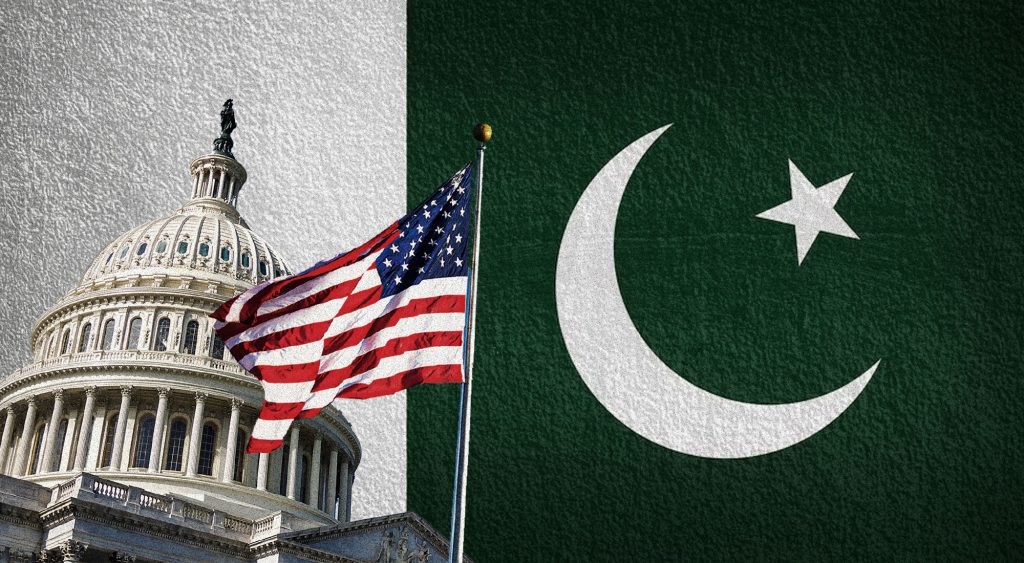
The relationship between the United States and Pakistan stands at an inflection point. Once defined on matters of counterterrorism cooperation and military aid, it is now navigating a phase of strategic recalibration. Beneath diplomatic engagements and careful joint statements lies a deeper struggle: balancing America’s Indo-Pacific priorities with Pakistan’s economic survival, regional relevance and sovereign decision-making. The withdrawal of U.S. forces from Afghanistan in 2021 changed the nature of bilateral ties. For Washington, Pakistan was no longer a logistics corridor. For Islamabad, the frontline ally label lost its strategic currency. The result was not rupture but drift. Counterterrorism cooperation continued, yet the emotional intensity and transactional urgency of the previous era dissipated. What remains is a relationship searching for a new organizing principle.
Pakistan’s internal realities complicate this recalibration. Economic fragility, political polarization and security challenges from militant resurgence place Islamabad in a vulnerable position. The country seeks external investment, access to global markets and diplomatic legitimacy. The United States, as a leading voice within the IMF and World Bank, retains leverage that extends beyond military cooperation. Yet American policymakers increasingly frame South Asia through the lens of strategic competition with China. In that case, Pakistan’s deepening alignment with Beijing through the China-Pakistan Economic Corridor (CPEC) generates caution in Washington. CPEC, a flagship component of China’s Belt and Road Initiative, symbolizes both opportunity and constraint for Pakistan. It promises infrastructure modernization, energy expansion and connectivity. At the same time, it anchors Islamabad within Beijing’s geopolitical orbit. For Washington, the concern is not merely economic but strategic: port access, digital infrastructure and long-term influence. Thus, any U.S.-Pakistan recalibration must grapple with the reality that Islamabad will not sever ties with China, nor can it afford to alienate Western financial institutions.
India’s rise further reshapes the equation. The United States has cultivated a long-term partnership with India, viewing it as a counterbalance to China in the Indo-Pacific. Defense agreements, technology transfers and high-level summits underscore a convergence of interests. For Pakistan, this evolving alignment generates unease. The perception of strategic imbalance feeds domestic narratives that Washington has “tilted” decisively toward New Delhi. Yet American officials argue that partnership with India does not preclude constructive engagement with Pakistan. The challenge lies in convincing Islamabad that cooperation need not be zero-sum. Counterterrorism remains a residual pillar. Militant groups operating along the Afghan-Pakistan border continue to threaten regional stability. Intelligence sharing and limited security assistance endure, albeit at a reduced scale. Washington seeks assurances that Pakistani territory will not serve as a platform for transnational militancy. Islamabad, meanwhile, emphasizes the sacrifices it has made combating extremism. The trust deficit shaped by decades of mutual accusations lingers thus constraining deeper collaboration.
Economic diplomacy may offer the most viable path forward. Pakistan’s youthful population, expanding digital sector and geostrategic location present untapped potential. American private investment in technology, renewable energy and agriculture could diversify the relationship beyond security. For Washington, it requires recognizing that episodic engagement has undermined credibility. For Islamabad, it necessitates policy consistency and institutional coherence that reassure investors and allies alike. Strategic autonomy does not preclude strategic partnership; rather, it requires clarity of priorities and transparency of commitments.
Regional dynamics further complicate the landscape. Iran’s border tensions with Pakistan, instability in Afghanistan and shifting Gulf alliances intersect with American interests. Islamabad’s growing ties with Middle Eastern powers, particularly in energy and labor markets, diversify its diplomatic portfolio. Washington must assess whether it seeks a narrowly transactional relationship or a broader framework that accommodates Pakistan’s multi-vector foreign policy. This recalibration of U.S.-Pakistan relations is less about dramatic breakthroughs and more about managed expectations. The era of grand bargains may have passed. What emerges instead could be a pragmatic equilibrium: limited but stable security cooperation, incremental economic engagement and cautious diplomatic dialogue. Success will depend not on rhetoric but on institutionalized mechanisms that survive political transitions in both capitals.
In this evolving equation, neither side can afford indifference. For the United States, Pakistan remains a nuclear-armed state of over 250 million people situated at the crossroads of South Asia, Central Asia and the Middle East. For Pakistan, access to Western markets, technology and financial systems remains indispensable. Strategic recalibration, therefore, is not a choice but a necessity. Whether this phase matures into durable partnership or settles into managed coexistence will hinge on reconciling competing imperatives: America’s Indo-Pacific strategy, Pakistan’s economic stabilization, China’s expanding footprint and India’s ascent. The relationship may never return to its former intensity, but it can evolve into something steadier, yet more sustainable.

- Strategic Recalibration in the U.S – Pakistan Relations - March 19, 2026
- Why regulating AI is essential for national security? - March 2, 2026
- Establishing a U.S. Peace Board: Legal Frameworks in International Law - February 16, 2026














Leave a Comment
Your email address will not be published. Required fields are marked with *