
Author Recent Posts Ariba Kausar Latest posts by Ariba Kausar (see all) Evaluating The Role Of Us As A Potential Mediator In Indo-pak Conflict Under Trump Administration – June 17, 2025 STRATEGIC UTILISATION OF PAKISTAN’S MINING RESOURCES – June 17, 2025
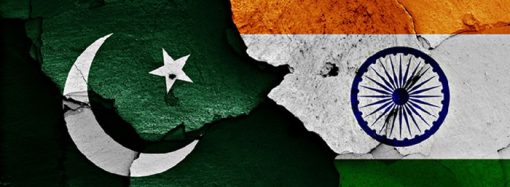
To avert the armed conflict between India and Pakistan, in the aftermath of the Pahalgam terrorist attack, there was a need for third-party intervention to protect the peace of the region. The international community, especially the major powers however limited themselves to mere statements while they could’ve constructively intervened on time. Speaking of the role of the US, it initially adopted a hands-off approach, clearly declaring that no intervention from the US would take place but eventually, the US became suddenly involved. The US mediation under Trump’s administration can be appreciated but cannot be trusted as Trump being a business mind relies more on business calculations rather than diplomatic balance. He will be inclined more towards the state in which it sees any business opportunity beneficial to the US because in International relations and diplomacy what always comes first is the national interest.
In the wake of the recent 5-day armed conflict between India and Pakistan, the United States of America, initially reluctant to meddle in the dispute between the two neighboring countries, subsequently acted as a crisis manager once again. The role of the US in the de-escalation of the Indo-Pak conflict followed the same past pattern but a key difference this time was that it initially refrained from intervening in the matter stating that it is somewhat to be settled by the parties to the conflict themselves but then lately US jumped right away and announced the issue to be brokered by the US. Therefore, the 5-day war came to an end with the help of US mediation under Trump’s administration, breaking its initial hands-off posture.
The experts have laid down several reasons behind this sudden intervention of the US in the armed conflict between India and Pakistan under Trump’s administration. According to some, it was because the US might have viewed this war as a question mark on its superpower. According to others, the US might have felt that if a war occurred then it would ultimately affect the US as well, as both countries would then shift their budget to defense rather than focusing on trade ties with the US that could have affected the US, being largest trade partners of both the countries. But to better construe US mediation in this conflict it is important to consider Trump’s business-oriented mindset and strategic interest in India and Pakistan. Trump whose foreign policy was centered on America-First, offered trade with both parties to the armed conflict amid the rising tensions between them and used trade as a way to de-escalate further violence. According to experts, Trump prides himself on ‘the art of the deal’ when he sees a potential for a deal, he pursues it. In the present case, the stakes were already high and his administration helped broker a deal. Even if there is a minor benefit to the US from a state or its business, Trump will never let it go and will take every possible measure to secure it.
President Trump not only maintained friendly relations with India under Prime Minister Narendra Modi’s administration but also had strong trading ties with the country. Trump after coming into power and gaining the presidency for the second time announced expanded US military sales to India from 2025.US is the third largest arms supplier to India. The reason why the US is more inclined towards India is due to the rift between the US and China and the economic prospects of China will keep on engaging the US in the region. The US wants to make India a strong competitor to China. India is a very close partner of the US as it is the most workable location to lessen US dependency on China. In its efforts to become the regional hegemon, India viewed the US under Trump’s administration as a strategic partner to strengthen its position in the region. But recently Trump stopped Apple’s company production in India putting India at risk of losing Apple’s business, which many experts see as a bargaining tactic for India’s tariffs negotiations. India is looking to the Trump administration to reduce tariffs on India and to add up to US nuclear exports to India. Trump offered trade while brokering the armed conflict considering India’s wish for economic growth and geopolitical assurance amidst India’s distrust of China.
Due to the US engagement in Afghanistan, it needed an ally in the region and Pakistan has a history of anti-terrorism drive in cooperation with the US. Initially, Trump’s first administration gave a tough time to Pakistan by suspending aid to Pakistan but subsequently, it somewhat got normalized during the Afghan peace process. The United States is the largest trading partner of Pakistan and amid this tariff war between the US and China among other countries the US has also imposed a 29% tariff on Pakistan. Pakistan seeks to purchase more goods from the US particularly those aimed at strengthening its defense. Recently a crypto deal has been taking place between the government of Pakistan and a firm called WLFI (World Liberty Financial) in which Trump kin has a 60% stake aimed at turning Pakistan into a South- Asian crypto hub. In addition to that, a significant portion of the Pakistani overseas community contributes to the US labor population. Apart from that, Pakistan bears great strategic significance for the US. The US needs Pakistan to maintain influence in Afghanistan, Iran and even China.
Despite Trump’s announcement of a successful ceasefire brokered by the US, both sides have avoided admitting that it was initiated at their request. There was no comment on it by the Indian government even though there was a mention of boosting trade and peace, India’s domestic politics and strategic priorities may impede entertaining this thought. On the other hand, Pakistan welcomed this idea warmly and appreciated that the US averted a nuclear war through its mediation. Pakistan also welcomed the idea of Trump resolving the Kashmir issue. President Trump presented the same idea during his first administration but any suggestion of third-party intervention on this issue is not acceptable to India, declaring the issue to be bilateral.
Trump’s business-first diplomacy undermines the neutrality essential for sustainable mediation. While Trump offered to mediate the Indo-Pak conflict during both of his administrations, the US in recent years has consistently favored India over Pakistan. Considering Trump’s America-first policy in his second administration it’s out and out that India will remain the main South Asian partner of the US during the Trump administration. Therefore, Pakistan cannot rely on Trump for mediation in the Indo-Pak conflict especially concerning the Kashmir issue. The aversion to the 5-day conflict via US mediation by Trump offering trade to both countries is a radically different approach to mediating in an armed conflict, reflecting Trump’s business-oriented mind even in his diplomacy and foreign policy but when it comes to the issue of Kashmir, the root cause of most Indo-Pak conflicts, Trump cannot be considered a reliable and neutral mediator as not only the issue is quite critical, complex, sensitive and significant to both the neighboring countries but also his approach tends to be potential bias, driven more by business calculations rather than by diplomatic balance. His personality is more of a dealmaker rather than a peacemaker, which raises serious concerns about fairness and long-term peace in such delicate and sensitive regional matters.