
Author Recent Posts Tooba Nazakat Latest posts by Tooba Nazakat (see all) Why Talks Between Pakistan and Afghan Taliban Fail? – December 24, 2025 27th Amendment: The Future of Public Trust and Perception in Judiciary – December 18, 2025 Legal Dimensions of Cross-Border Engagement – December 11, 2025
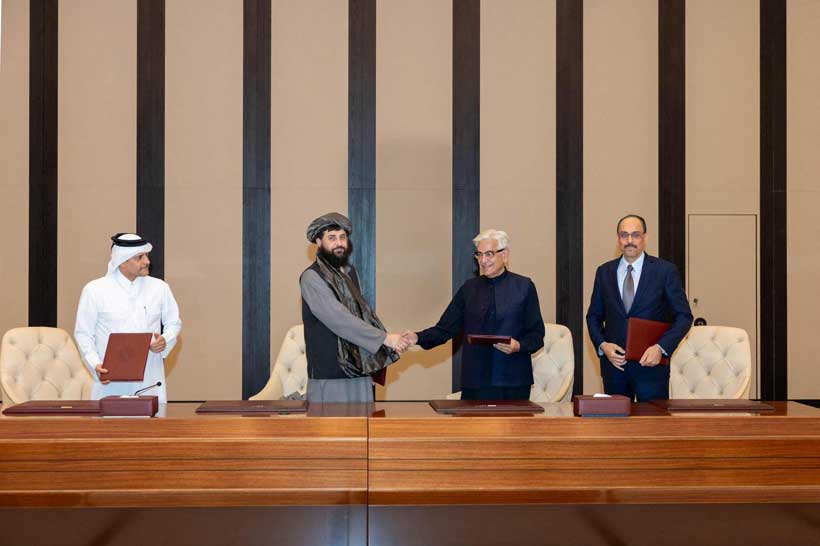
The lack of mutual trust between Pakistan and Afghanistan led to the failure of talks. Since 2021, with the rise of the Afghan Taliban Tehrik-e-Taliban Pakistan (TTP) has become an existential threat to Pakistan’s national security. Pakistan has made many attempts to engage the Afghan Taliban in diplomatic talks to solve the security issues. The recent Istanbul Talks, following the Doha talks, are a clear illustration of this. Despite the three rounds of negotiations, delegations of both states returned home without any plan for future meetings. This prompted the question: why are dialogues between Pakistan and the Afghan Taliban unable to bring meaningful outcomes?
The unwillingness of the Afghan Taliban to treat TTP as a hostile entity resulted in the collapse of negotiations between Pakistan and Afghanistan. The Afghan Taliban consider TTP as ideological allies. Despite the fact that the Afghan Taliban leadership denies any interference or support towards Tehrik-e-Taliban, the historical ties between these militant groups are undeniable. The USA invasion of Afghanistan had observed the inherent ideological ties between Tehrik-e-Taliban Pakistan and the Afghan Taliban, when both militant groups fought together against the USA. That’s the reason the leadership of the sanctioned group Tehrik-e-Taliban Pakistan (TTP) considers any action taken by the Afghan Taliban against them as a breach of alliance commitment.
The Afghan Taliban has prioritized regime stability over counterterrorism cooperation. The Afghan Taliban refuses to act against Tehrik-e-Taliban to prevent the threat of internal revolt. In addition to the ideological ties, the Afghan Taliban has familial and tribal ties to TTP fighters as well. The Afghan Taliban considers any decisive military action against the TTP as a great threat to its own security. The Afghan Taliban fighters would consider any kinetic operation against the TTP as a betrayal of the shared ideology and compromise on the ‘purer’ and ‘uncompromised’ jihad. Ultimately led to the joining of the IS-Khorasan group.
The lack of a unified command structure of the Afghan Taliban administration serves as a failure of negotiation between Pakistan and Afghanistan. The Afghan Taliban government is a coalition of factions with different tribal, ideological, and regional loyalties, not a monolithic entity. Some of these have stronger ties with Tehrik-e-Taliban Pakistan than with the central leadership of Afghanistan. The local commanders in the border province prevent the central government from taking any action against the sanctioned militant group TTP. The dialogues between the central governments of Afghanistan and Pakistan are often ignored due to internal fragmentation.
The absence of a formal diplomatic framework between Pakistan and the Afghan Taliban became a central reason behind the failure of talks between both states. Afghanistan’s de facto government is not bound by the conventions, bilateral treaties, and international pressure. All these collectively result in the absence of continuity, responsibility, and accountability. Pakistan cannot record any protest in the absence of diplomatic relations for the enforcement of treaties. In addition to this, international arbitration to ensure compliance doesn’t remain the subject of negotiation between two states. The engagement between Pakistan and Afghanistan remains symbolic and heavily dependent on goodwill, which leaves no room for dialogue.
Humanitarian and economic tensions between Pakistan and Afghanistan prevent both states from finding common interests. The repatriation of undocumented Afghan refugees by Pakistan has generated deep resentment within Afghanistan. The act that became a legal necessity for Pakistan has been seen as a violation of trust by the Afghan Taliban. The tension further escalated after Pakistan decided to tighten the security on the Torkhan and Chaman borders. Humanitarian grievances overshadow the core security talks between Pakistan and Afghanistan.
Economic challenges make relations between Pakistan and Afghanistan tense. An increased taxation on Afghan goods and strict trade restrictions by Pakistan further strain relations. The landlocked Afghanistan is heavily dependent on Pakistan’s ports to carry trade. A temporary closure of routes by Pakistan causes inflated prices and shortages of essential commodities. The frequent border closures have damaged Afghanistan’s economy. This all led to the anti-Pakistan political notion within the Afghan Taliban leadership. Though Pakistan takes measures as necessary regulations, yet Afghanistan de facto government considers it a coercive tool to influence its political decisions. Dialogue between two states becomes difficult when one state is struggling to maintain the everyday livelihoods of its citizens.
Moving forward, the talks between Pakistan and Afghanistan have not yet come to a solution due to the mutual mistrust between these states. Both these states should involve China and Iran to resolve the disagreements among them. A long-term regional security policy should has to be observed by Pakistan, which strengthens local policing capacities. The Afghan Taliban must recognize Tehrik-e-Taliban Pakistan (TTP) as a sanctioned group and take action against it. The ideological loyalties must remain separate from state responsibilities. A shift from expectation-based negotiation to capacity-based cooperation can help in building trust between Pakistan and Afghanistan to counter terrorism.

- Why Talks Between Pakistan and Afghan Taliban Fail? - December 24, 2025
- 27th Amendment: The Future of Public Trust and Perception in Judiciary - December 18, 2025
- Legal Dimensions of Cross-Border Engagement - December 11, 2025










Leave a Comment
Your email address will not be published. Required fields are marked with *