

Author Recent Posts Rabia Anwaar Latest posts by Rabia Anwaar (see all) Reignited Pak-Afghan Tensions: What Could Be the Way Forward? – November 4, 2025 Geopolitics and the Future of Gaza: Who Are the Real Stakeholders? – October 15, 2025 Iran’s Nuclear Ambitions and Israel’s Aggressive Dominance in the Region – July 15, 2025
The domestic politics of India and the war hysteria surrounding Pakistan are inextricably linked with each other. The escalation of tensions between India and Pakistan is not merely a reflection of territorial disputes or ideological differences but is also a product of the political mechanisms within India that exploit nationalism for electoral gain. The political landscape within India has contributed significantly to the cultivation of war hysteria, which has been directed particularly toward Pakistan. This phenomenon is shaped by both historical grievances and contemporary political agendas, where the ruling establishment uses external threats to consolidate domestic power. Alongside, the nuclearization of South Asia, although deters direct military confrontation, yet has not eliminated the scope for other forms of hostility, between both hostile neighbors. The induced war hysteria by the political leaders in India, have not only exacerbated the flames of hatred and abhor between the people of two neighboring states but also brought them at a dangerous brink of war that could turn into destruction of peace and stability of the region.
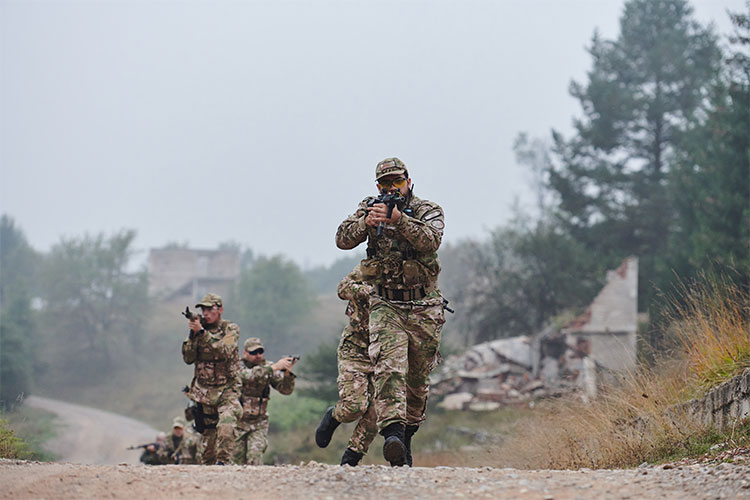
The recent 5-day war was escalated after a suspected militant attack in Pahalgam, a popular tourist town in illegally Indian occupied Kashmir. The incident was immediately framed by the BJP and its media allies as another example of Pakistan’s continued support for terrorism. The incident, without any probe and investigation pointed fingers at Pakistan. The BJP’s political machine quickly resorted for heavy military responses. National security became the focal point of the narrative, with media outlets amplifying voices calling for forceful retaliation. As with the earlier incidents, the media played a critical role in inflaming public opinion, while the BJP used the situation to reinforce its image as a party that does not tolerate attacks on India’s sovereignty especially from Pakistan.
The rise of hyper-nationalism often manifests itself in an assertive foreign policy stance under BJP government against Pakistan. The BJP’s domestic political strategy frequently hinges on presenting Pakistan as a hostile neighbor that poses a constant threat to India’s security, a narrative that resonates with a large segment of the Indian electorate. The Modi administration’s approach to Pakistan has been characterized by a more aggressive posture compared to previous governments. After the 2016 Uri attack and the 2019 Pulwama attack, both of which were blamed on Pakistan-based terrorist groups, India adopted retaliatory military actions such as the surgical strikes and the Balakot airstrike. These actions were presented as a direct response to Pakistan’s alleged support for cross-border terrorism and were framed as necessary steps to protect India’s sovereignty and security. Such events were portrayed in domestic political discourse as evidence of India’s growing strength and its capacity to stand up to Pakistan.
This brand of nationalism has helped the BJP consolidate its position domestically, as it appeals to voters who perceive a need for a strong, decisive government in the face of security challenges. The image of Modi is tightly intertwined with his foreign policy stance, which is often portrayed as uncompromising, especially concerning Pakistan. The administration has succeeded in linking the issue of Pakistan with national identity, which creates an environment where any criticism of the government’s handling of relations with Pakistan is painted as unpatriotic.
War hysteria, spurred by media coverage and political rhetoric, often serves as a tool for political mobilization within India. It has cultivated an atmosphere of fear and urgency regarding the external threat posed by Pakistan. India’s war hysteria with Pakistan is a quintessential application of diversionary theory. Political leaders can deflect attention from domestic issues such as economic instability, unemployment, or social unrest. When external threats are exaggerated or manipulated, they provide a convenient diversion for leaders facing criticism on the domestic front. For the Modi government, Pakistan has served as a useful scapegoat, particularly during election cycles. In 2019, ahead of the general elections, the government capitalized on the aftermath of the Balakot airstrike to showcase its strength and decisiveness. The strike, presented as a retaliation for the Pulwama attack, not only provided the government with a platform to demonstrate its resolve but also galvanized nationalistic sentiment. The rhetoric surrounding surgical strikes and fighting terror bolstered the BJP’s electoral appeal, helping secure its re-election.
The focus on war hysteria comes at a significant economic and social cost. The overemphasis on security threats and military action diverts attention and resources away from addressing pressing domestic issues, including economic growth, poverty alleviation and education. Moreover, the growing hostility between India and Pakistan has tangible social repercussions. The increasing polarization of communities along religious lines, combined with the militarization of national discourse has led to heightened domestic tensions. The rise of Hindu nationalism under the BJP’s leadership has exacerbated communal violence, with Pakistan being used as a political tool to unite certain segments of the population.
The political strategies of the ruling government, amplified by media sensationalism and nationalism, have created an environment in which the relationship with Pakistan is framed as a matter of survival for India. The challenge for India under Modi lies in navigating this complex political terrain while ensuring that foreign policy does not become a tool for short-term political gain at the expense of long-term peace and stability in the region. Ultimately, the role of the state and political parties in shaping public opinion is crucial. For peace to prevail, a more nuanced and balanced discourse on India’s relationship with Pakistan, grounded in diplomacy and cooperation, needs to replace the war hysteria that currently dominates political narratives but it would be a hard nut to crack, apparently, it seems impossible, at least under the Indian leadership powered by RSS and inspired by Hindutva ideology.

- Reignited Pak-Afghan Tensions: What Could Be the Way Forward? - November 4, 2025
- Geopolitics and the Future of Gaza: Who Are the Real Stakeholders? - October 15, 2025
- Iran’s Nuclear Ambitions and Israel’s Aggressive Dominance in the Region - July 15, 2025












Leave a Comment
Your email address will not be published. Required fields are marked with *