

Author Recent Posts Tooba Nazakat Latest posts by Tooba Nazakat (see all) Why Talks Between Pakistan and Afghan Taliban Fail? – December 24, 2025 27th Amendment: The Future of Public Trust and Perception in Judiciary – December 18, 2025 Legal Dimensions of Cross-Border Engagement – December 11, 2025
Pakistan’s counter-insurgency strategy relies on a dual approach: kinetic operations in addition to non-kinetic operations. The Pak-Afghan border is a region where regional rivalries, militancy, and politics intersect with each other. Since 2021, the number of terrorist attacks has been initiated against Pakistan from Afghanistan soil through a non-state actor, Tehrik-e-Taliban Pakistan. Due to widespread radicalized groups’ operations, Pakistan has been forced to enhance its counter-terrorism framework. Here’s the question raised: How is Pakistan countering this growing threat to its security from the non-state actors’ armed activities?
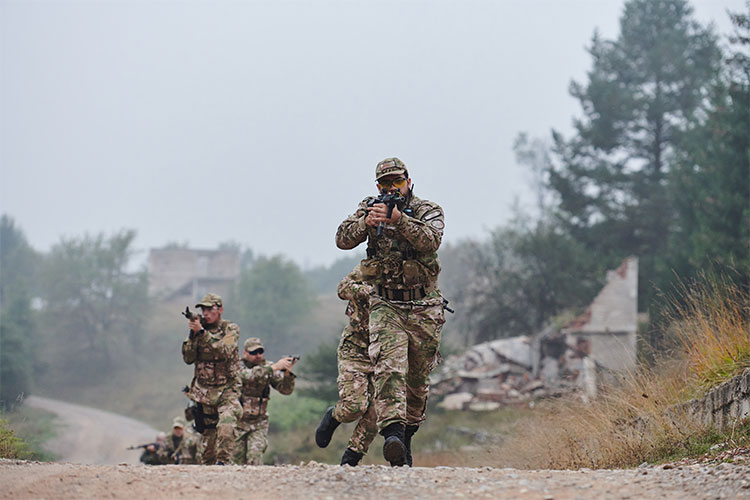
Extensive operations have been carried out by Pakistan’s military to counter the terrorist activities of non-state actors. During the American occupation of Afghanistan, through the integration of Pakistan’s military operation Zarb-e-Azb and U.S. drone strikes, TTP had faced a significant decline. Most of the senior leadership of the sanctionary group had been eliminated as a result of these actions. In addition to this, Operation Rad-ul-Fasad, following Zarb-e-Azb, had been initiated by Pakistan Army Chief General Qamar Javed Bajwa in February 2017. This provides a great hand to Pakistan to maintain security against militant operations of terrorist organizations.
Pakistan has strengthened its security against terrorism through legislative reforms. To counter terrorism doesn’t remain isolated to the direct military response. Pakistan also initiated programs to counter extremist ideologies. De-radicalisation centers have also been operated by the government of Pakistan, for the psychological rehabilitation, vocational training and religious counselling of the former militants. Pakistan, through the international border management security system by using biometric verification at the crossing, has reinforced the border management.
In addition to these measures, in 2023, an updated National Risk Assessment (NRA) was completed by Pakistan for terrorist financing. A number of terrorist organizations have been analyzed. Pakistan revised its National Action Plan (NAP), enhanced cyber monitoring, terror financing control, and intelligence sharing. Parliament approval for a number of laws to regulate the donations, which were the main source of funding for terrorist groups. For instance, the Islamabad Capital Territory Waqf Properties Act, 2020. The removal of Pakistan’s name from the Grey list of the Financial Action Task Force (FATF) was the result of alignment with the recommendations of FATF to counter terrorism.
The deportation of undocumented Afghan refugees helps to achieve another milestone in counter-militant activities within Pakistan. Though Pakistan has provided its soil to Afghan refugees for decades. Yet amicable relations with neighbouring states cannot be enjoyed at the expense of national security. By deporting undocumented Afghan refugees, Pakistan has closed all the doors to safe havens for the militant groups. This policy was implemented to ensure the safety of the Pakistani people. While following the legal protocols of International Humanitarian Law.
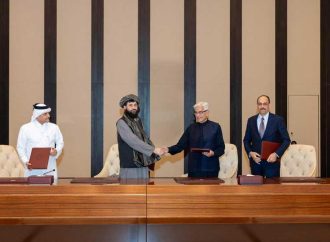
To counter terrorism through the use of force becomes the last resort when all the means of diplomatic talks have failed to serve. The support of the Afghan Taliban Government to Tahrik-e-Taliban Pakistan is undeniable. Since 2021, with the rise of the Afghan Taliban Government, Pakistan has made many attempts to resolve disputes through diplomatic ways. Back in 2021, the Government of former cricketer Imran Khan made many efforts to bring Afghanistan de facto government to the dialogue tables. Similarly, the invitations to diplomatic talks were observable in the Shehbaz Sharif Government as well.
Pakistan take military action over cross-border to strengthen its national security. Though Pakistan has been removed from the FATF Grey list after complying with all the requirements to make anti-terrorism policies and take actions against the non-state actors. However, the rise of the Afghan Taliban Government resurged the TTP, which posed a great threat to Pakistan’s national security. Despite the multiple efforts of Pakistan to resolve disputes through mediation and other diplomatic means. Continued refusal from the neighbouring state left no option for Pakistan except the preemptive strikes targeting the hideouts of the sanctioned group.
The enhancement of socio-economic initiatives to minimize the local vulnerabilities which facilitate militancy is a cornerstone of counter-terrorism policies. Pakistan has introduced a number of development projects, particularly in the merged districts of Khyber Pakhtunkhwa (KP). Youth-focused programs to counter extremist narratives have been launched by the Government. And to the communities affected by conflict, alternative livelihoods have been provided. Regulating the educational system and keeping a check and balance over madrasas helps to reduce the terrorism. All these initiatives underscore a core principle that counter-terrorism policies must not remain isolated to the kinetic operations.
Moving forward, though the Pakistan has taken multiple approaches to counter the terrorism including both the kinetic and non-kinetic operations. Yet in long term for the stability not only in these both states but in south Asia, both states have to ensure diplomatic ties. Pakistan have to strengthen the border management mechanism. In addition to this, also have to expand the de-radicalization programs at a large scale to counter extremist narratives and improve socio-economic policies particularly in merged districts of KPK. All these measure would ensure the transparency in counter militant operations. By adopting these measures, Pakistan can navigate the threats to its security arising from the hostile Pak-Afghan border with a better approach and ensure the long-term national security.

- Why Talks Between Pakistan and Afghan Taliban Fail? - December 24, 2025
- 27th Amendment: The Future of Public Trust and Perception in Judiciary - December 18, 2025
- Legal Dimensions of Cross-Border Engagement - December 11, 2025



















Leave a Comment
Your email address will not be published. Required fields are marked with *