
Author Recent Posts Zamran Mengal Latest posts by Zamran Mengal (see all) Do Pakistan’s Cyber laws address today’s Misinformation crisis? – December 24, 2025 Pakistan Afghanistan tension through the lens of international law – December 11, 2025
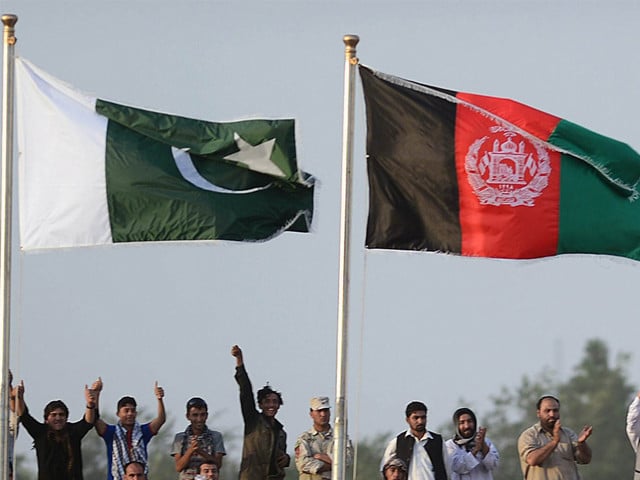
The Fragility of Pakistan— Afghanistan relation sounds like a mixture of unresolved dispute and terrorist havens aggravate this situation. Imagine Close neighbours with shared faith are in a trap, where every step leads to regional instability. In October 2025, fire ignited between Pakistan and Afghanistan, which led to an open conflict, as airstrikes pierced the sky through the Hindukush for hunting notorious terrorists, but in return, it exposed proxy war, betrayal and the nexus of RAW and GDI. This isn’t a mere border clash but an unresolved chapter of a history book that has been opened again; moreover, its waves can be peeled from Islamabad to New Delhi and beyond. This hunt for terrorists, and the Afghan government claims that they are not with TTP or is it a cousin protecting another cousin?
Pakistan conducted airstrikes in Afghanistan, targeting TTP leader Noor Wali Mehsud, an internationally designated terrorist, Because Afghan government is providing safe-haven to terrorist outfit that use Afghan soil and commit act of terrorism in Pakistan. The TTP claims members of the government were killed in the airstrike by Pakistan, which they consider as violation of our sovereignty as Pakistan air force crossed border and attacked us but in contrast it was attack on safe havens that is under the Afghan government nose and impossible for them to have no knowledge about it .Afghan Taliban launched “retaliatory operations” on Pakistan’s military posts, causing casualties on both sides. Heavy fighting resumed. After that, Qatar announced a ceasefire agreement.
Multiple catalysts are involved in this conflict. The debate usually begins from the Afghan end with the 1893 agreement of the Durand Line, which it rejects after the independence of Pakistan in 1947. Although Pakistan’s position is supported by the legal principle of ” Uti Possidetis Juris, ” which holds that newly independent states should retain the colonial borders they possessed at independence to prevent endless territorial disputes. Although it can be viewed that the Afghan government’s claims of the Durand Line dispute are rejected by international law, they still claim that Pakistan is violating their sovereignty by fencing the borders , which they claim belong to them.
Pakistan’s recent airstrike attacks on specific targets have their own security concerns, which led to taking this important measure. Pakistan’s main target was Noor Wali Mehsud (according to the UN Security Council, a declared international terrorist).which is backed by the Afghan Taliban government, as per the report by the UN’s 35th report of the Analytical Support and Sanctions Monitoring Team—has described the relations between the Afghan Taliban with Al-Qaeda and TTP This report furthermore highlighted the logistical, training, and financial support, with mention of a monthly stipend for Noor Wali Mehsud,. Along with it, this report also mentions that the TTP has created new training camps in Nangarhar, Kunar, and Paktika, while increasing recruitment including from Afghan Taliban ranks. It suggested that the Afghan Taliban are providing protection to the banned TTP, which is a violation of the Doha Accord, in which it was mentioned that Afghan soil will not be used for terrorist activities or as operational ground for terrorists.
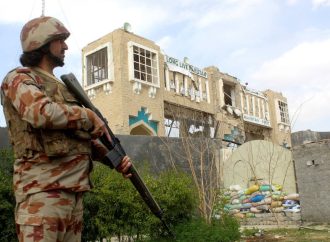
The Afghan Taliban is providing safe haven to terrorists which are involved in disrupting peace and security of its neighbor country with the same religious belief. The TTP has orchestrated multiple attacks in Pakistan, and among them are attacks on a girls’ school in the Mir Ali area of North Waziristan,. In a report by PIPS, out of the 521 attacks in 2024, 335 were carried out by religiously inspired militant groups, mainly including the TTP and affiliated local Taliban factions such as the Hafiz Gul Bahadur group. These are the reasons that led Pakistan’s security forces to launch attacks on TTP camps located inside Afghanistan, as under Article 51 of the UN Charter, it is Afghanistan’s responsibility for any attack being planned from inside their territory. Moreover, Pakistan has the right to self-defense under Article 51 of the UN Charter. This aligns with findings from UN reports and the long-standing international legal principle affirmed in cases like the Corfu Channel Case. These are the reasons behind Pakistan’s conduct regarding operations against the TTP in Afghanistan and Waziristan.
Pakistan has closed borders with Afghanistan, although the Afghan economy, battered by multiple crises, relies heavily on Pakistan, which absorbs 40 percent of Afghan exports.but this step is an way forward to protect people of Pakistan and its resources ,because these trade routes are used for drug trafficking ,terrorist operation and the list goes on.Pakistan’s deportation of foreign nationals is another policy for controlling national security issues and economical challenges arising from undocumented foreign people in Pakistan. after the Soviet invasion of 1979, which caused the largest refugee crisis of the 1980s, it affected Pakistan and is affecting till now, as a high proportion of the population is migrating from Afghanistan into Pakistan and comprising infiltration groups that are mostly behind terrorism in Pakistan. Pakistan therefore has started an initiative to deport undocumented people back to their country, and as per the Pakistan government, this policy is a measure to address security concerns. It cites that it is not a signatory to the 1951 Refugee Convention. It claims that the deportations are in accordance with international and domestic norms.
The international response to the ongoing Pakistan and Afghanistan conflict involves diplomatic mediation efforts by Turkey, Qatar, China, USA, Russia, and Saudi Arabia to de-escalate the ongoing situation. In this, Qatar and Turkey played a key role in the mediation process, which resulted in a ceasefire. China has also encouraged both sides to use diplomacy to avoid conflict, as it has key concerns for China’s grand strategy of the Belt and Road Initiative. Moreover, Iran and Saudi Arabia have also shown keen interest in mediating between both countries—as they have the same religious similarities, and Saudi Arabia’s current position with Pakistan regarding security is also linked to the participation of Saudi Arabia to resolve this conflict. Russia, on the other hand, has also called for de-escalation of the situation. Furthermore, the USA has held talks with Pakistan’s officials regarding peace and stability in the region, in which Donald Trump has also shown interest to step as mediator between both countries.
Islamabad has grown concerned about Kabul’s ties with India. The Taliban’s acting foreign minister, Amir Khan Muttaqi, recently visited New Delhi, and the recent war between Pakistan and India—all are interrelated to a grand strategy set up by India, and Afghanistan is joining hands with them. The quagmire remains impossible to resolve as Afghans are being double-faced, and moreover, the Afghan Taliban lacks willingness to contain the TTP and stop the violation of Article 51 of the UN and the Doha Accord. The pattern of the Afghan Taliban not taking steps against the TTP is evident, although an Afghan official, the spokesman for the Taliban government in Afghanistan, shortly after the ceasefire claimed that “Afghanistan would commit to not supporting groups that carry out attacks on Pakistan,” but it can be seen as merely a claim with no effect. Although the Taliban could at least disarm the TTP, they won’t, as India is the main player in this game, where Afghanistan is a mere pawn being used.

- Do Pakistan’s Cyber laws address today’s Misinformation crisis? - December 24, 2025
- Pakistan Afghanistan tension through the lens of international law - December 11, 2025











Leave a Comment
Your email address will not be published. Required fields are marked with *