
Author Recent Posts Zahid Hussain Latest posts by Zahid Hussain (see all) An International Law Analysis of the U.S. Intervention in Venezuela – January 23, 2026 Misinformation in the Digital Age: Assessing Pakistan’s Current Laws and Gaps (Zahid) – January 13, 2026 Is It Time for Pakistan to Consider a New Regional Counterterrorism Framework? –
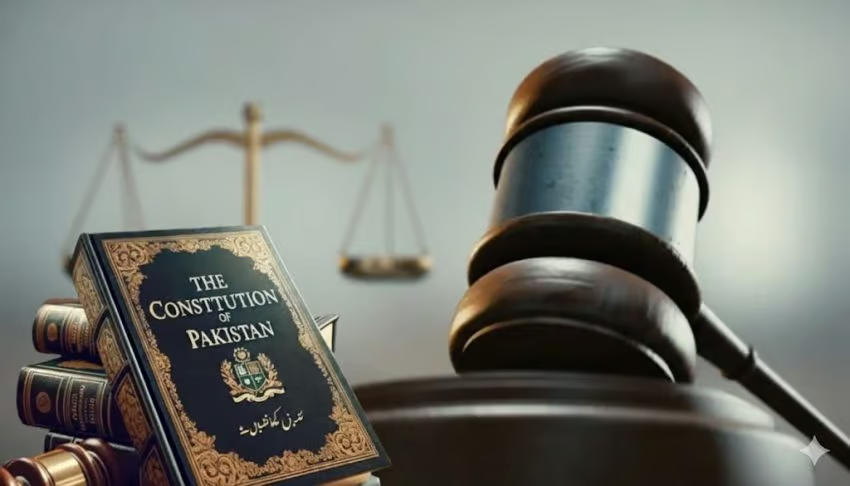
The digital age has transformed how information is produced, decimated, and consumed. Social media platforms, online news portals, and messaging applications have allowed instant communication, but they have also facilitated the wave of misinformation. In Pakistan, where digital penetration has increased significantly over the past decade, misinformation has emerged as a serious social, political, and legal challenge. False narratives can influence elections, incite violence, damage reputations, and undermine public trust in institutions. As a result, the state has attempted to address this problem through legislation. Pakistan’s main legal framework for dealing with online misinformation is the Prevention of Electronic Crimes Act (PECA) 2016. PECA was introduced to deal with cybercrimes such as hacking, online fraud, and digital terrorism. While it was not initially designed solely to counter misinformation, several of its provisions relate to online content, including criminal defamation, spreading false information, and unauthorized use of data. The law empowers law enforcement agencies to investigate electronic offenses and allows the Pakistan Telecommunication Authority (PTA) to block or remove unlawful online content.
In order to curb the growing influence of social media and concerns over fake news, the government has introduced amendments to PECA in recent years. These amendments clearly criminalize the deliberate dissemination of “false or fake information” that may cause public fear, panic, or disorder. Under the revised provisions, individuals accused of spreading misinformation can face imprisonment and heavy fines. The amendments also expand the state’s regulatory reach by creating a dedicated authority responsible for monitoring social media platforms and ensuring compliance with content regulations. Supporters of Pakistan’s current legal approach argue that such laws are necessary to maintain public order and national security. In a politically sensitive environment, misinformation can easily spark unrest, damage diplomatic relations, or inflame sectarian tensions. Proponents believe that stronger legal deterrents can discourage malicious actors, including coordinated disinformation campaigns and foreign interference. They also argue that a centralized regulatory authority can ensure faster responses to harmful content, particularly during emergencies such as elections, protests, or public health crises.
Despite these intentions, Pakistan’s digital misinformation laws face serious criticism. One of the most significant gaps lies in the undefined and broad language used to define misinformation. Terms such as “fake or false information are not clearly defined, leaving wide space for interpretation. This confusion creates the risk of selective enforcement, were legitimate journalism, political dissent, or critical opinions may be labeled as misinformation. As a result, individuals may engage in self-censorship out of fear of legal consequences.
Another major concern is the impact of these laws on freedom of expression. Journalists, media organizations, and human rights groups profess that empowering state institutions to decide what constitutes truth undermines democratic principles. The fear that laws designed to combat misinformation could be used to silence critics or opposition voices has led to protests and condemnation from press bodies. Pakistan’s already fragmented media environment risks further restriction if digital laws are implemented without sufficient safeguards. Enforcement practices also highlight gaps in the current legal framework. Content blocking and platform restrictions are often implemented without transparent justification or clear avenues for appeal. In some cases, online content critical of state institutions has been restricted under the pretext of misinformation. This raises questions about whether the focus is truly on combating false information or on controlling digital narratives. The absence of independent oversight further weakens public trust in regulatory decisions.
Additionally, Pakistan’s approach relies heavily on reactionary measures while neglecting preventive strategies. Legal enforcement alone cannot address the main causes of misinformation, such as low digital literacy, sensationalist media practices, and algorithm-driven amplification of false content. Without educating citizens on how to verify information and think critically, misinformation will continue to thrive despite strict laws. In conclusion, Pakistan’s current laws reflect an honest attempt to address the growing threat of misinformation in the digital age. However, major gaps remain in terms of clarity, accountability, and rights protection. To create a balanced and effective framework, Pakistan must refine legal definitions, ensure transparency and judicial oversight, protect freedom of expression, and invest in digital literacy initiatives. Only through a comprehensive and rights-respecting approach can the country effectively combat misinformation while upholding democratic values.

- An International Law Analysis of the U.S. Intervention in Venezuela - January 23, 2026
- Misinformation in the Digital Age: Assessing Pakistan’s Current Laws and Gaps (Zahid) - January 13, 2026
- Is It Time for Pakistan to Consider a New Regional Counterterrorism Framework? - December 17, 2025




















Leave a Comment
Your email address will not be published. Required fields are marked with *