
Author Recent Posts Zahid Hussain Latest posts by Zahid Hussain (see all) Strategic Motives Behind Operation Ghazab lil Haq – March 31, 2026 Why NATO is not willing to join the U.S.- Israel-Iran war? – March 31, 2026 Strategic Recalibration in the U.S – Pakistan Relations – March 19, 2026
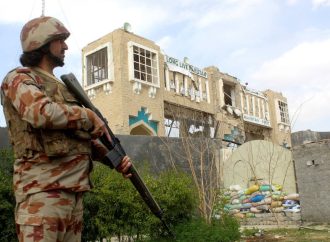
The sudden rise in cross-border militancy, the recent deterioration in Pakistan–Afghanistan relations, and the failure of repeated rounds of dialogue with Kabul raise an unavoidable question: Has Pakistan reached the limits of its traditional counterterrorism tools, and is it time to push for a new regional framework? For decades, Pakistan’s counterterrorism posture has relied on three pillars: internal kinetic operations, border management, and bilateral engagement with Afghanistan. While these measures have yielded significant results at numerous occasions, the evolving threat landscape suggests that Pakistan cannot rely exclusively on existing approaches. The resurgence of the TTP, facilitated by safe havens inside Afghanistan, has become the most persistent and destabilizing security challenge for Pakistan.
After the fall of Kabul in August 2021, expectations of improved counterterrorism cooperation under the Taliban government did not fulfil. Instead, the TTP expanded its presence strengthened recruitment, and increased the frequency and sophistication of its attacks. Pakistan’s recent intelligence-led strikes on terrorist hideouts inside Afghanistan shows a growing willingness to adopt deterrence through calculated force but the long-term sustainability of retributive action depends on a supportive diplomatic and regional environment. Cross-border strikes may curtail militant networks, but they do not fundamentally alter the structural realities enabling these networks to operate. Moreover, the breakdown of dialogue mechanisms with Kabul has reduced political space for normalization. Without regional coordination, Pakistan risks entering a cycle of intermittent tensions that neither produce stability nor reduce terrorism.
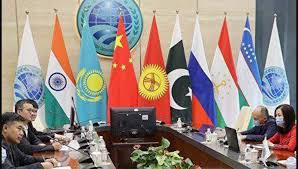
This is where concept of a regional counterterrorism framework becomes both relevant and important. South and Central Asia share interconnected security ecosystems. Militant groups, smuggling routes, illegal weapons flows, and extremist ideologies transcend borders more easily than state institutions can track. No single country, including Pakistan, can manage these threats under isolation. A regional approach would not only distribute the burden but could also create new pathways for intelligence sharing, verification mechanisms, and cooperative border security. A multilateral platform bringing together Pakistan, Afghanistan, China, Iran, and the Central Asian states could address cross-border militancy as a shared threat rather than a bilateral grievance. China and the Central Asian republics, facing threats from ETIM and other transnational groups, have strong strategic incentives to support such a mechanism. Existing structures such as the SCO Regional Anti-Terrorist Structure (RATS) could serve as foundations, but they would require expanded mandates and deeper operational cooperation to address the specificities of militancy emanating from the Afghanistan–Pakistan corridor.
Regional intelligence coordination must become more structured and predictable. Occasional exchanges or ad hoc meetings are insufficient. A formalized joint intelligence cell, supported by secure communication channels and cooperative monitoring of high-risk zones, would help preempt attacks and reduce the space for militant organizations to exploit jurisdictional blind spots. Some states may resist such arrangements due to sovereignty concerns, but clearly defined protocols and limited, case-specific data sharing could offer a workable middle ground.
Economic and political incentives must accompany security measures. Afghanistan’s economic collapse and isolation have created fertile ground for militant recruitment and criminal networks. A regional framework linking counterterrorism cooperation to gradual economic integration trade corridors, energy projects, transit facilitation could raise the opportunity cost for Kabul’s non-cooperation. Pakistan, China, Iran, and Central Asian states all have genuine economic interests in stabilizing Afghanistan as leveraging these interests collectively would give any counterterrorism framework far greater strategic weight. However, while the case for a regional framework is strong, several challenges still remain. Afghanistan under the Taliban neither recognizes international norms and neither it follows predictable diplomatic processes. The leadership in Kabul rejects accusations of safeguarding militant groups and sees cross-border strikes as violations of sovereignty. These political realities cast confusion on whether the Taliban would participate meaningfully in any multilateral counterterrorism arrangement.
Moreover, regional rivalries complicate the picture. India’s increasing engagement with Afghanistan through diplomatic presence, humanitarian aid, and outreach to religious institutions such as Darul Uloom Deoband signals New Delhi’s intent to shape the regional narrative in ways that limit Pakistan’s strategic space. Balancing these competing interests requires subtle diplomacy. Despite these obstacles, the alternative continuing with a fragmented, bilateral, crisis-driven approach has repeatedly failed to curb terrorism. The current trajectory is neither sustainable nor strategically sound. Pakistan needs a broader canvas, one that acknowledges the interconnectedness of regional security threats and leverages the shared interests of neighboring states. A new regional counterterrorism framework will not be a magic solution, nor will it replace the need for strong internal reforms, political stability, and cohesive governance within Pakistan. But it can serve as an essential multiplier amplifying Pakistan’s existing efforts and distributing responsibility across the wider region. In an era where militant groups operate without borders, Pakistan must not be constrained by old diplomatic habits. Today’s threats require new architecture. And for Pakistan, the question is no longer whether a regional counterterrorism framework is desirable, but whether it can afford not to pursue one.t time for Pakistan to consider new regional counterterrorism framework.

- Strategic Motives Behind Operation Ghazab lil Haq - March 31, 2026
- Why NATO is not willing to join the U.S.- Israel-Iran war? - March 31, 2026
- Strategic Recalibration in the U.S – Pakistan Relations - March 19, 2026















Leave a Comment
Your email address will not be published. Required fields are marked with *