
Author Recent Posts Muammad Abubakar Nazar Latest posts by Muammad Abubakar Nazar (see all) U.S tariff relief and underlying complexities – August 28, 2025 ROLE OF EUROPE IN HUMANITARIAN CRISIS IN GAZA – August 20, 2025 Uncontrollable threat in Gilgit Baltistan – August 7, 2025
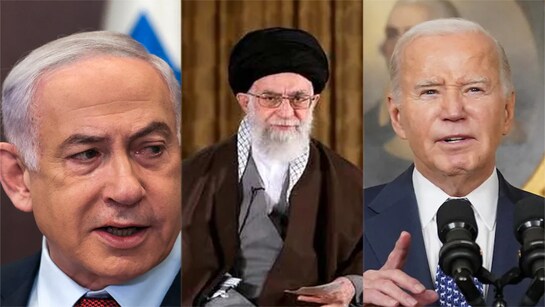
In the Middle East, Israel’s war with Iran has affected the regional stability paradigm, potentially shaping the future. Israel, on June 13, launched deadly attacks on Iran, targeting its nuclear and military sites, killing a number of Iran’s top nuclear scientists and military leaders, among other civilians. Iran retaliated by firing missiles towards Israel, which resulted in the start of a brutal war. The US, Israel’s strongest ally and top arms supplier, also briefly got involved on the final day of the battle. It claimed to have destroyed Iran’s alleged nuclear weapon program during strikes. The question is how these actions have disrupted peace and stability in the Middle East.
The war was inconclusive, and there is a dispute over who won the war, with both sides claiming victory. Israel claims to have attacked a number of Iran’s military sites, killing top military leaders and key nuclear scientists. Iran, on the other hand, claims victory for not only having defended itself but also retaliating in a way that made Israel’s defense systems, worth billions of dollars, vulnerable.
The countries of the Middle East have been forced to reassess their options with regard to future trajectories. Gulf countries, which had started to take pride in their longstanding stability, have been awakened to a rising challenge. Israel has been carrying out a genocide in Gaza and has been bombing its neighbouring countries. This situation has made it compulsory for the Gulf countries to become wary of a militarily aggressive Israel. The recent war between Israel and Iran did not involve any other regional country, but the spillover effects were felt all across the region. The largest US military base in Qatar was targeted by Iran’s missiles, which, although they did not result in any casualties, raised concerns regarding the defense capabilities of these countries. Israel’s defense system might be a lucrative thing for these countries, which now would want to further their defense systems.
The proxies and their roles in the Middle East have also been affected by the recent conflict. In the past, these proxies, such as Hamas, Houthis, and Hezbollah, have played a significant role in shaping the region’s stability. Israel’s brutal and illegal war on Gaza started after Hamas launched attacks at its border areas. This was used as a justification by Israel to attack other neighbouring countries, and deadly attacks were mobilised, which continue to this day. These attacks have already lowered the position in which they once stood. The support is not the same; in fact, it has reduced significantly. Hence, a Middle East with lesser influence of proxies can be expected to emerge.
The conflict has also had a certain impact on the chances of significant US involvement in the region. Iran’s nuclear capabilities have always been opposed by the US, an example of which can be seen in the withdrawal of the USA from the Iran Nuclear Deal (JCPOA) in 2018 under the Trump administration. Even now, Trump’s “maximum pressure” policy continues to put Iran under severe pressure and contain it from furthering nuclear endeavours. With all this going on, when Israel attacked Iran, it was noteworthy what the US would do? Now, we can understand this by looking at two angles. First, Israel wanted the US to get involved because in order to actually destroy Iran’s nuclear facilities, which lie about 100 meters underground, it needed the US to drop its 30,000-pound bunker-buster bombs. This was done by the US on the final day of this war, although Iran denied the destruction of its nuclear facilities, while Washington claimed to have done reversible damage. Second, Trump has prioritized his “America First” policy under which it would be unlikely for the US to get involved in the region in a more “committed” way. In addition to this, a violence-loving Israel would never want a superior power to come into the region, because without another major power in the Middle East, Israel will be able to do anything with restraint. This impacts the region’s stability in a very negative way because Israel has long undermined ceasefire agreements and has never taken International Law into consideration at all.
Ultimately, the above-discussed impacts are going to shape the future trajectory of the Middle East. Iran and Israel will both reasses their options. Iran can use Straight of Hormuz to get a strategic benefit in economic terms. It will also look forwarf to not only further its ties with Russia, major arms supplier to Iran, but also with China. However, there are very less chances for any of these to support Iran as much as US supports Israel. Israel, comparatively, will try to use carrot and stick policy to get other countries in the region, on its side. A variety of circumstances await the Middle East but this time it will be different because, Iran is not like its neighbors that have been attacked in the past. It is one of the oldest civilizations in the world and will not give up very easily. However, the extent to which Israel might be willing to move is unimaginable.

- U.S tariff relief and underlying complexities - August 28, 2025
- ROLE OF EUROPE IN HUMANITARIAN CRISIS IN GAZA - August 20, 2025
- Uncontrollable threat in Gilgit Baltistan - August 7, 2025
















Leave a Comment
Your email address will not be published. Required fields are marked with *