

Author Recent Posts Zahid Hussain Latest posts by Zahid Hussain (see all) Strategic Motives Behind Operation Ghazab lil Haq – March 31, 2026 Why NATO is not willing to join the U.S.- Israel-Iran war? – March 31, 2026 Strategic Recalibration in the U.S – Pakistan Relations – March 19, 2026
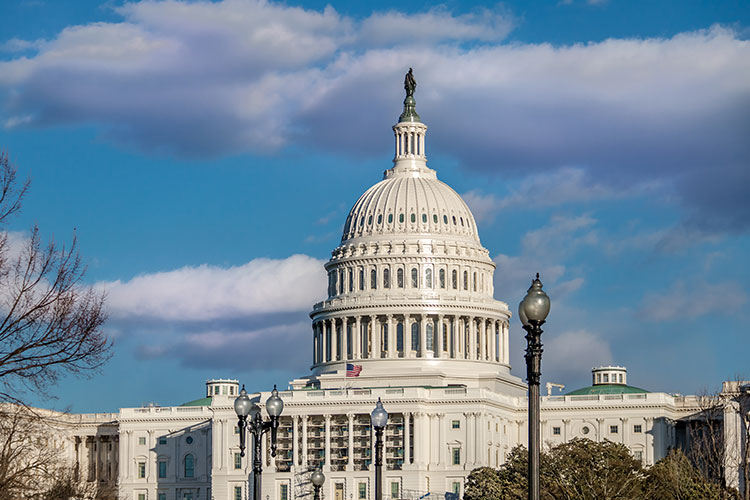
U.S. Peace Board has gained attention as search for more effective ways to prevent conflict in an increasingly unstable international system. Rather than reacting to crises after they escalate into armed conflict, a Peace Board would institutionalize prevention, mediation, and long-term peacebuilding within U.S. foreign policy. While such a body would be domestic in structure, its legitimacy, authority, and effectiveness would depend on careful alignment with international law, including the United Nations Charter, customary international law, and international human rights.
A U.S. Peace Board could be structured as a permanent advisory and coordination body focused on conflict analysis, mediation support, and policy guidance. Its purpose would be to integrate peacebuilding considerations into U.S. decision-making at an early stage, offering alternatives to military responses. Unlike the Department of Defense or even traditional diplomatic structures, the Board would prioritize legal compliance, multilateral cooperation, and preventive diplomacy. It could advise Congress and the Executive Branch, support international mediation initiatives, and assess the peace and legal implications of U.S. foreign policy actions. From a constitutional standpoint, while Congress clearly has the authority to establish such a body, the distribution of foreign policy powers raises practical concerns. A Peace Board with only advisory authority may lack influence over executive decision-making, particularly during crises when military and security priorities dominate. Conversely, granting the Board greater operational authority could provoke constitutional disputes over executive power and blur the separation of powers. This tension highlights a structural dilemma: a Peace Board must be influential enough to matter but constrained enough to remain legally and politically acceptable.
International law provides a framework that both enables and restricts the Peace Board’s activities. The United Nations Charter strongly supports peaceful dispute resolution, offering legal legitimacy to mediation and preventive diplomacy. However, the Charter also enshrines the principles of sovereignty and non-intervention, which sharply limit unilateral action. In practice, U.S. peace initiatives are often viewed with suspicion, particularly in regions where past interventions have left lasting harm. Even well-intentioned mediation efforts may be perceived as coercive or self-serving, undermining their legal and moral credibility. Customary international law further complicates the picture. While preventive diplomacy is generally accepted, its boundaries are ambiguous. Early warning analysis, for example, can slide into political pressure or conditionality that other states may interpret as interference. A U.S. Peace Board operating without explicit invitations or multilateral authorization could inadvertently violate the spirit, if not the letter, of non-intervention norms. This raises the critical question of whether a nationally based Peace Board can truly function as a neutral actor in international conflicts.
The integration of international human rights and humanitarian law into the Peace Board’s mandate is often cited as a key strength. Yet this too presents contradictions. The United States has a mixed record of compliance with international legal norms, including selective treaty ratification and inconsistent enforcement of humanitarian standards. A Peace Board tasked with promoting legal compliance abroad may lack credibility if U.S. policies—such as arms transfers to conflict zones or the use of force without clear international authorization—undermine the same norms. In this sense, the Board could expose rather than resolve existing gaps between U.S. rhetoric and practice. The doctrine of Responsibility to Protect illustrates another area of tension. While a Peace Board focused on prevention aligns with R2P’s first pillar, the doctrine’s controversial history has made many states wary of any U.S.-led initiative framed in its language. Even preventive measures may be interpreted as precursors to intervention, particularly in the Global South. This skepticism suggests that legal alignment alone is insufficient; legitimacy also depends on trust, historical context, and power asymmetries.
Coordination with international and regional organizations is often proposed as a solution to these legitimacy concerns. However, meaningful multilateralism would require the Peace Board to defer to international mandates and accept constraints on U.S. autonomy. Without such restraint, cooperation risks becoming symbolic, reinforcing perceptions that the Board serves national interests more than global peace. Ultimately, the idea of a U.S. Peace Board exposes a deeper tension within international law and U.S. foreign policy: the gap between normative commitments to peace and the realities of power politics. While legally feasible, the Board’s success would depend less on formal legal frameworks than on political will, institutional independence, and a willingness to subordinate short-term strategic goals to long-term peacebuilding. Without these conditions, a U.S. Peace Board may offer the appearance of legal and moral leadership while leaving the underlying drivers of conflict fundamentally unchanged.

- Strategic Motives Behind Operation Ghazab lil Haq - March 31, 2026
- Why NATO is not willing to join the U.S.- Israel-Iran war? - March 31, 2026
- Strategic Recalibration in the U.S – Pakistan Relations - March 19, 2026












Leave a Comment
Your email address will not be published. Required fields are marked with *